


Landscape of immunogenic tumor antigens in successful immunotherapy of virally induced epithelial cancer
- PMID: 28408606
- PMCID: PMC6295311
- DOI: 10.1126/science.aak9510
Landscape of immunogenic tumor antigens in successful immunotherapy of virally induced epithelial cancer
Abstract
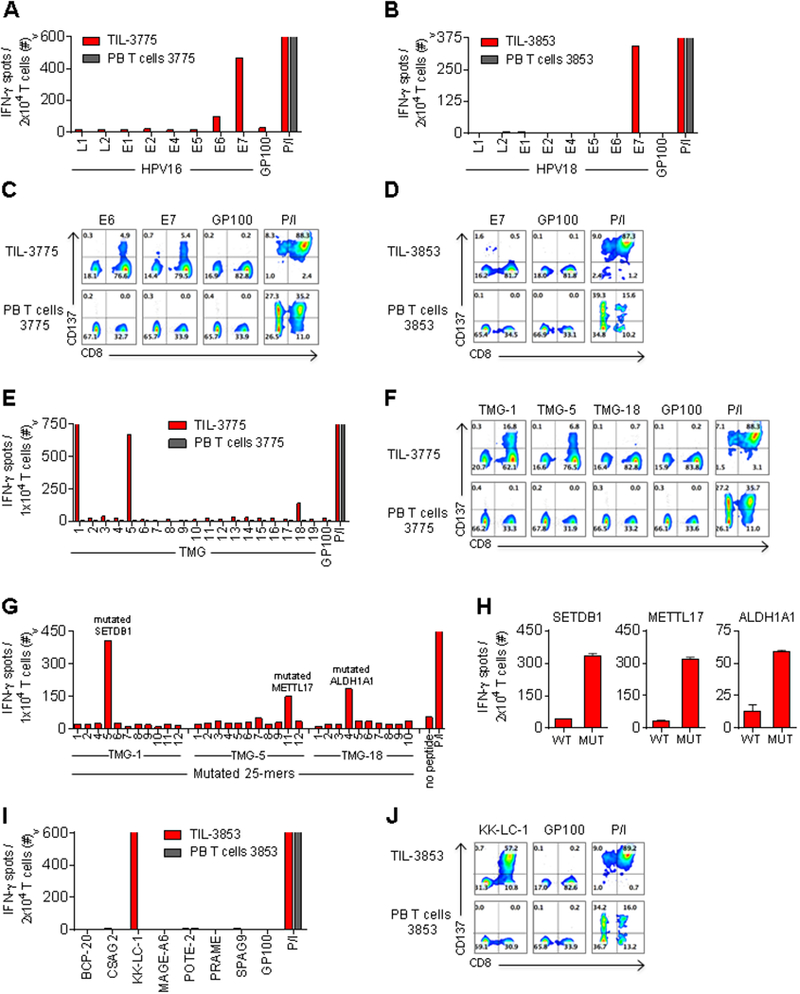
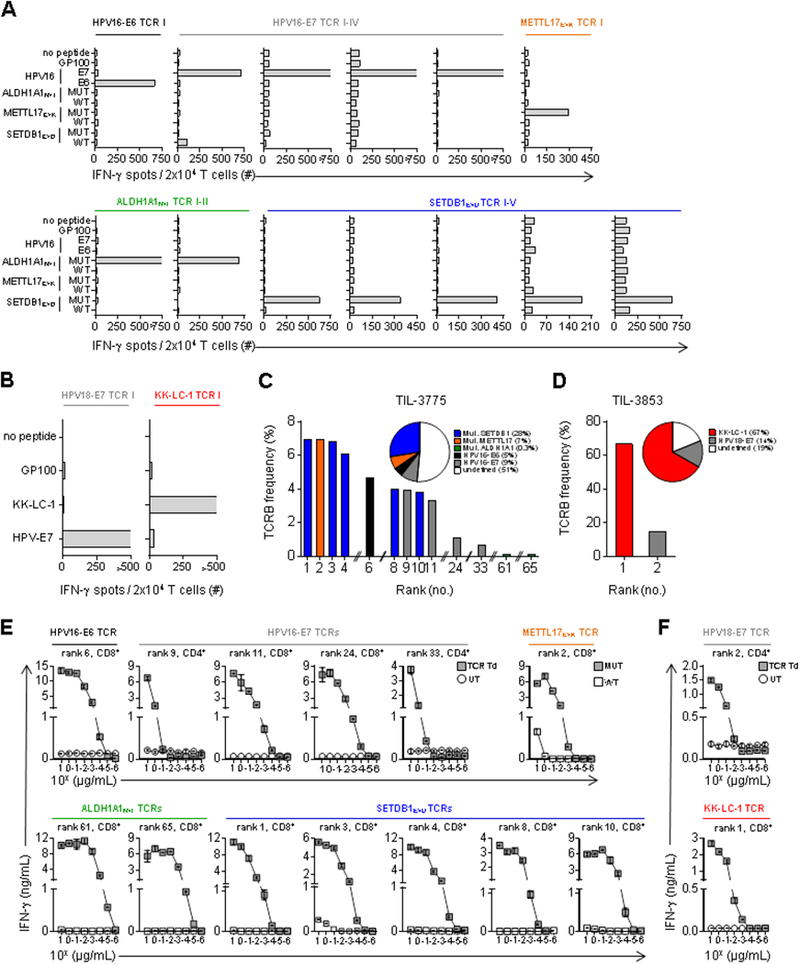
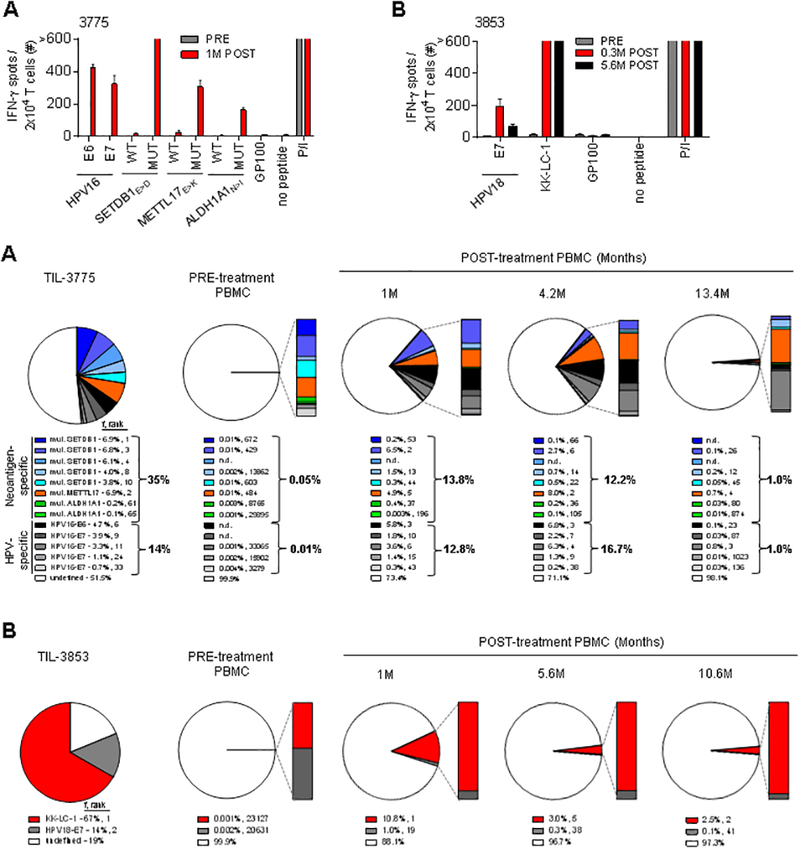
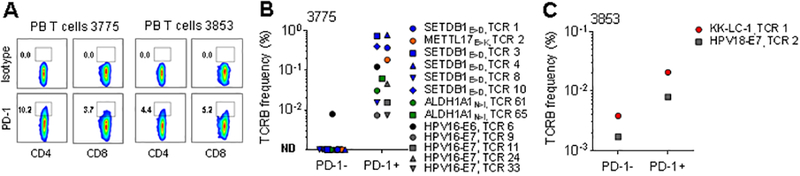
Immunotherapy has clinical activity in certain virally associated cancers. However, the tumor antigens targeted in successful treatments remain poorly defined. We used a personalized immunogenomic approach to elucidate the global landscape of antitumor T cell responses in complete regression of human papillomavirus-associated metastatic cervical cancer after tumor-infiltrating adoptive T cell therapy. Remarkably, immunodominant T cell reactivities were directed against mutated neoantigens or a cancer germline antigen, rather than canonical viral antigens. T cells targeting viral tumor antigens did not display preferential in vivo expansion. Both viral and nonviral tumor antigen-specific T cells resided predominantly in the programmed cell death 1 (PD-1)-expressing T cell compartment, which suggests that PD-1 blockade may unleash diverse antitumor T cell reactivities. These findings suggest a new paradigm of targeting nonviral antigens in immunotherapy of virally associated cancers.
Copyright © 2017, American Association for the Advancement of Science.
Figures
References
-
- Seiwert TY et al., Safety and clinical activity of pembrolizumab for treatment of recurrent or metastatic squamous cell carcinoma of the head and neck (KEYNOTE-012): an open-label, multicentre, phase 1b trial. Lancet Oncol 17, 956–965 (2016). - PubMed
-
- Morris VK, Ciombor KK, Salem ME, A multi-institutional eETCTN phase II study of nivolumab in refractory metastatic squamous cell carcinoma of the anal canal (SCCA). J Clin Oncol 34, (2016).
-
- van der Burg SH, Melief CJ, Therapeutic vaccination against human papilloma virus induced malignancies. Curr Opin Immunol 23, 252–257 (2011). - PubMed
-
- Kenter GG et al., Phase I immunotherapeutic trial with long peptides spanning the E6 and E7 sequences of high-risk human papillomavirus 16 in end-stage cervical cancer patients shows low toxicity and robust immunogenicity. Clin Cancer Res 14, 169–177 (2008). - PubMed
Publication types
MeSH terms
Substances
Grants and funding
LinkOut - more resources
Full Text Sources
Other Literature Sources
Medical
Molecular Biology Databases
