


Plasticity of premotor cortico-muscular coherence in severely impaired stroke patients with hand paralysis
- PMID: 28409112
- PMCID: PMC5379882
- DOI: 10.1016/j.nicl.2017.03.005
Plasticity of premotor cortico-muscular coherence in severely impaired stroke patients with hand paralysis
Abstract
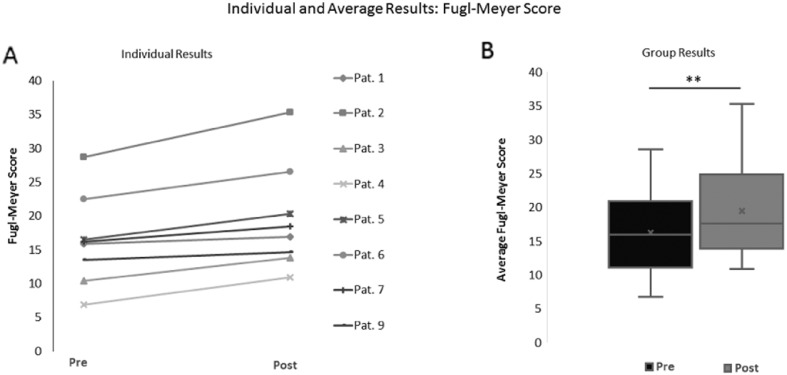
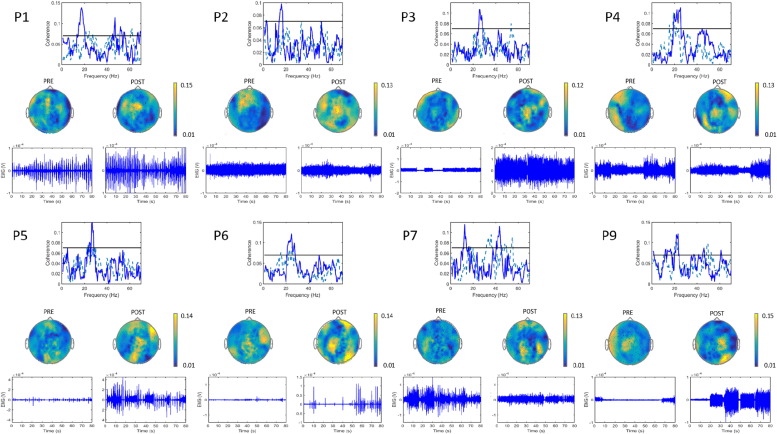
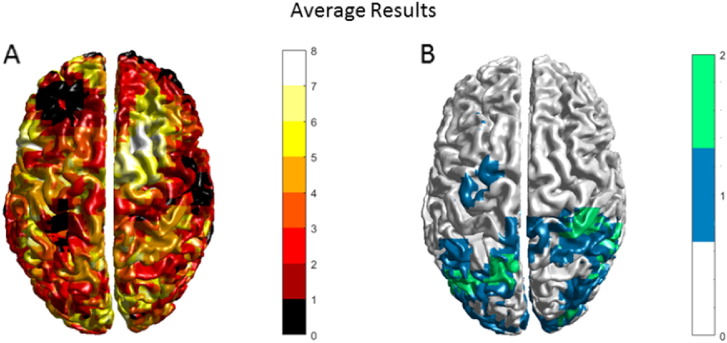
Motor recovery in severely impaired stroke patients is often very limited. To refine therapeutic interventions for regaining motor control in this patient group, the functionally relevant mechanisms of neuronal plasticity need to be detected. Cortico-muscular coherence (CMC) may provide physiological and topographic insights to achieve this goal. Synchronizing limb movements to motor-related brain activation is hypothesized to reestablish cortico-motor control indexed by CMC. In the present study, right-handed, chronic stroke patients with right-hemispheric lesions and left hand paralysis participated in a four-week training for their left upper extremity. A brain-robot interface turned event-related beta-band desynchronization of the lesioned sensorimotor cortex during kinesthetic motor-imagery into the opening of the paralyzed hand by a robotic orthosis. Simultaneous MEG/EMG recordings and individual models from MRIs were used for CMC detection and source reconstruction of cortico-muscular connectivity to the affected finger extensors before and after the training program. The upper extremity-FMA of the patients improved significantly from 16.23 ± 6.79 to 19.52 ± 7.91 (p = 0.0015). All patients showed significantly increased CMC in the beta frequency-band, with a distributed, bi-hemispheric pattern and considerable inter-individual variability. The location of CMC changes was not correlated to the severity of the motor impairment, the motor improvement or the lesion volume. Group analysis of the cortical overlap revealed a common feature in all patients following the intervention: a significantly increased level of ipsilesional premotor CMC that extended from the superior to the middle and inferior frontal gyrus, along with a confined area of increased CMC in the contralesional premotor cortex. In conclusion, functionally relevant modulations of CMC can be detected in patients with long-term, severe motor deficits after a brain-robot assisted rehabilitation training. Premotor beta-band CMC may serve as a biomarker and therapeutic target for novel treatment approaches in this patient group.
Keywords: Brain-computer interface; Brain-machine interface; Brain-robot interface; Cortical reorganization; Cortico-spinal coherence; Functional restoration; Hemiparesis.
Figures

References
-
- Bauer R., Fels M., Royter V., Raco V., Gharabaghi A. Closed-loop adaptation of neurofeedback based on mental effort facilitates reinforcement learning of brain self-regulation. Clin. Neurophysiol. 2016;127:3156–3164. - PubMed
-
- Bauer R., Vukelić M., Gharabaghi A. What is the optimal task difficulty for reinforcement learning of brain self-regulation? Clin. Neurophysiol. 2016;127:3033–3041. - PubMed
Publication types
MeSH terms
LinkOut - more resources
Full Text Sources
Other Literature Sources
Medical
