


Influence of host factors and parasite biomass on the severity of imported Plasmodium falciparum malaria
- PMID: 28410415
- PMCID: PMC5391917
- DOI: 10.1371/journal.pone.0175328
Influence of host factors and parasite biomass on the severity of imported Plasmodium falciparum malaria
Abstract
Objectives: Imported malaria in France is characterized by various clinical manifestations observed in a heterogeneous population of patients such as travelers/expatriates and African migrants. In this population, host factors and parasite biomass associated with severe imported malaria are poorly known.
Methods: From data collected by the Centre National de Référence du Paludisme, we identified epidemiological, demographic and biological features including parasite biomass and anti-plasmodial antibody levels (negative, positive and strongly positive serology) associated with different disease severity groups (very severe, moderately severe, and uncomplicated malaria) in 3 epidemiological groups (travelers/expatriates, first- and second-generation migrants).
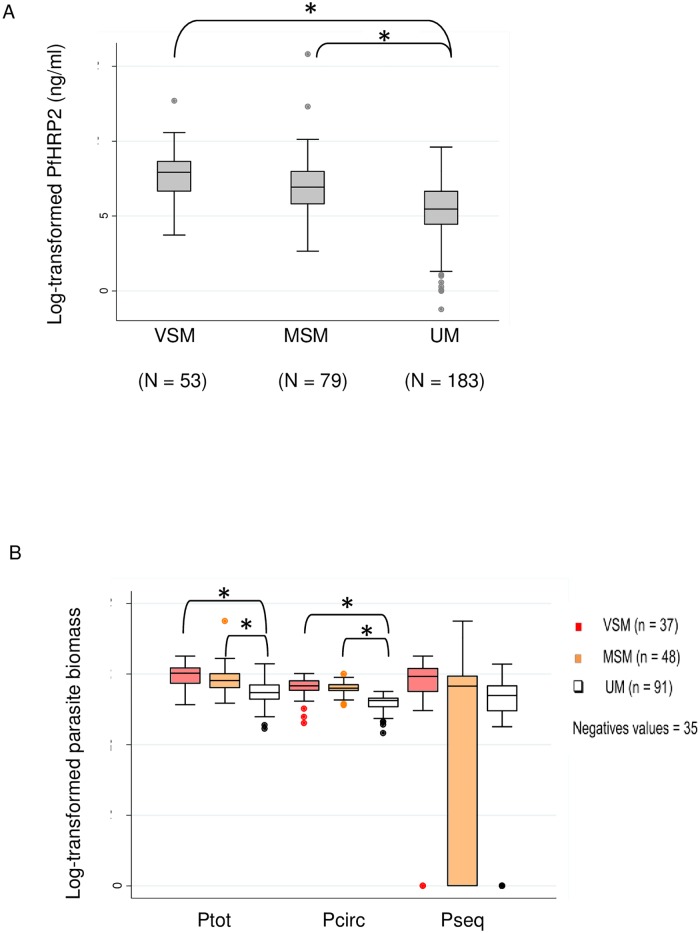
Results: Age, ethnicity, absence of prior infection with P. falciparum, antibody levels, plasma PfHRP2 levels, total and circulating parasite biomass were related to severe malaria onset. Sequestered parasite biomass tended to be increased in very severe malaria, and was strongly correlated to the antibody level of the host.
Conclusions: Prior exposure to P. falciparum is associated with high anti-plasmodial antibody levels which influence clinical presentation of imported malaria and its correlated circulating and sequestered parasite burden.
Conflict of interest statement
Figures
References
-
- European Centre for disease prevention and control. Annual epidemiological report. 2014. - PubMed
MeSH terms
Substances
LinkOut - more resources
Full Text Sources
Other Literature Sources
