. 2016 Oct 25;26(40):7281-7290.
doi: 10.1002/adfm.201603146. Epub 2016 Sep 9.

Ferromagnetic, folded electrode composite as a soft interface to the skin for long-term electrophysiological recording

Affiliations

Ferromagnetic, folded electrode composite as a soft interface to the skin for long-term electrophysiological recording

Kyung-In Jang et al. Adv Funct Mater. .

Abstract

This paper introduces a class of ferromagnetic, folded, soft composite material for skin-interfaced electrodes with releasable interfaces to stretchable, wireless electronic measurement systems. These electrodes establish intimate, adhesive contacts to the skin, in dimensionally stable formats compatible with multiple days of continuous operation, with several key advantages over conventional hydrogel based alternatives. The reported studies focus on aspects ranging from ferromagnetic and mechanical behavior of the materials systems, to electrical properties associated with their skin interface, to system-level integration for advanced electrophysiological monitoring applications. The work combines experimental measurement and theoretical modeling to establish the key design considerations. These concepts have potential uses across a diverse set of skin-integrated electronic technologies.

Keywords: composite; dry electrodes; electrophysiology; equivalent circuit model; ferromagnetism; finite element method; folded electrode; impedance; stretchable electronics.


Figures
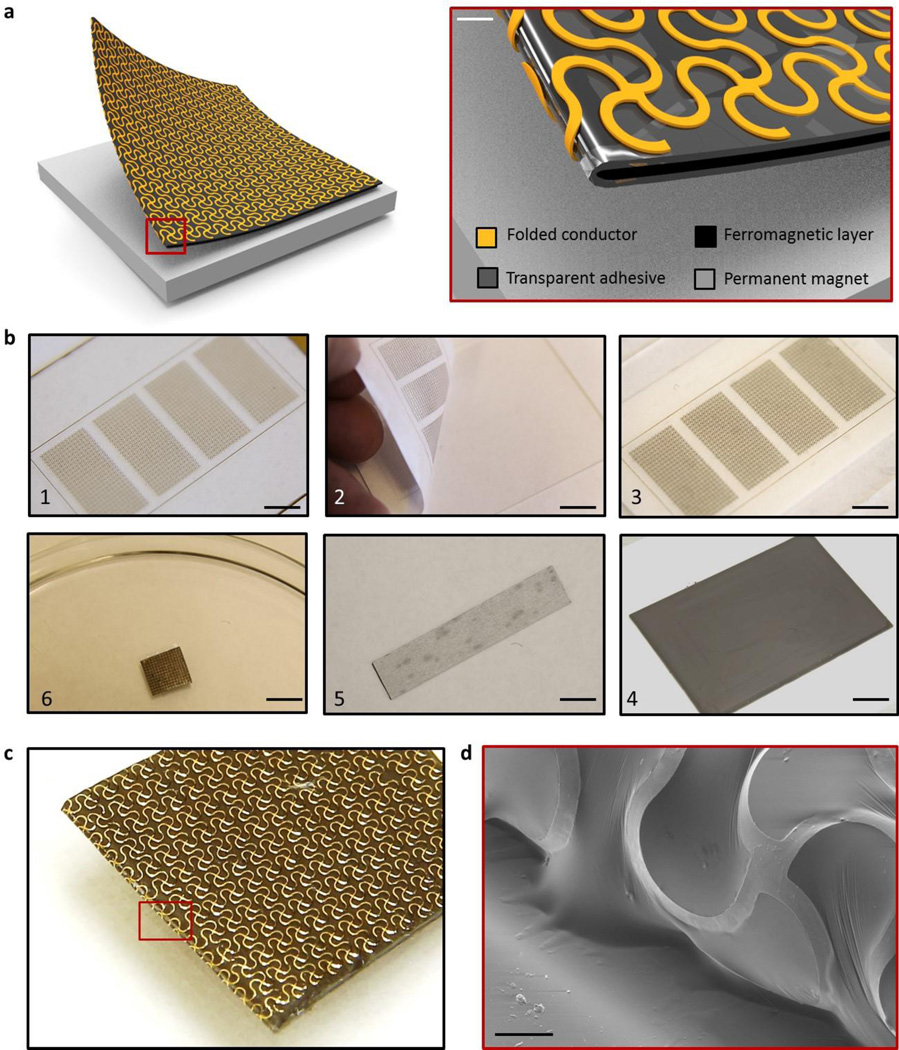
Figure 1
Figure 1. Ferromagnetic, folded, soft electrode composite
(a) Schematic diagram of the electrode design and its magnified view, (b) Fabrication procedure; scale bar is 1cm, (c) An optical image and scanning electron microscope (SEM) image of fabricated electrode; scale bar is 100 µm.
Figure 2
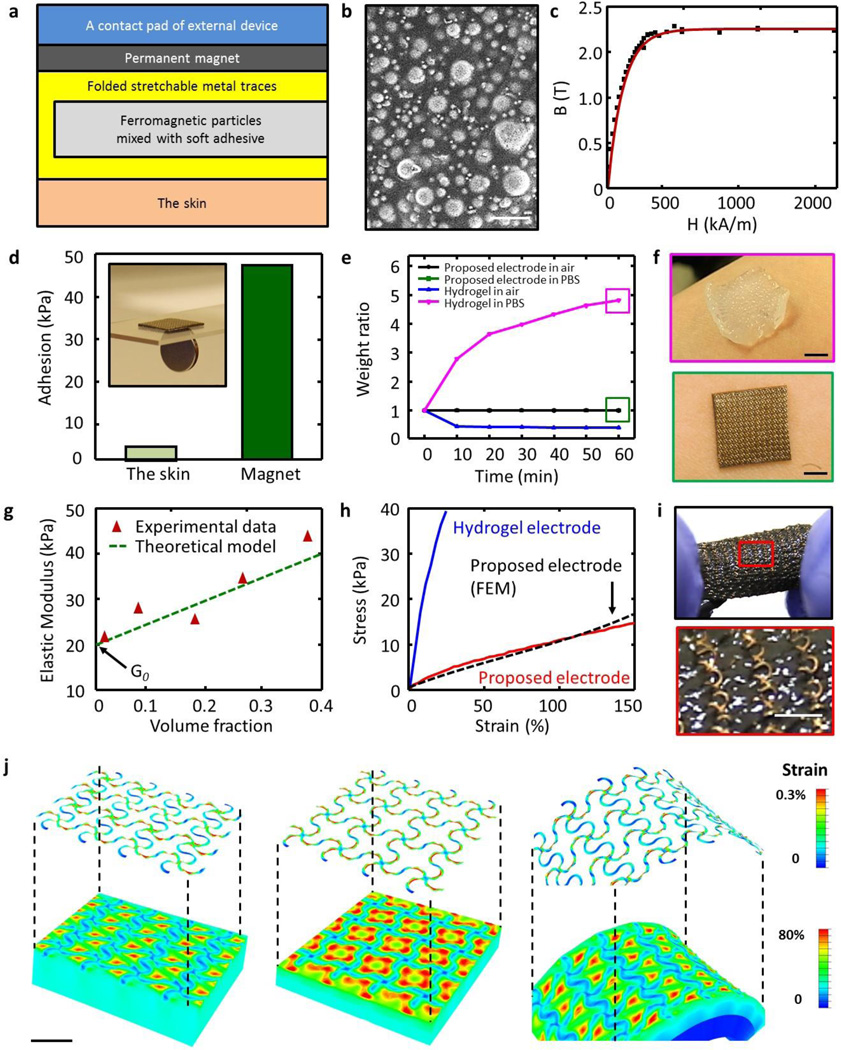
Figure 2. Physical properties of the electrode composite
(a) Information on the structure of the composite and its interface with the skin and the contact pad of the external (or wearable) device. (b) SEM image of ferromagnetic (carbonyl iron) particles in an elastomer matrix; scale bar is 4 µm. (c) Magnetization curve of carbonyl iron powder. (d) Comparison of adhesion strength of the electrode composite to the skin and the magnet. Inset: image of the ferromagnetic properties of the electrode composite. (e, f) Effect of hydration on the proposed composite and on a commercially available hydrogel electrode. (g) Elastic modulus as a function of volume fraction of CI particles in the ferromagnetic composite. (h) Mechanical responses of the composite and a commercial hydrogel to applied strain. (i) Optical image of the electrode composite under stretching; scale bar is 1 mm. (j) Finite element study for uniaxial stretching (left), biaxial stretching (center), and folding (right); scale bars are 1 mm.
Figure 3
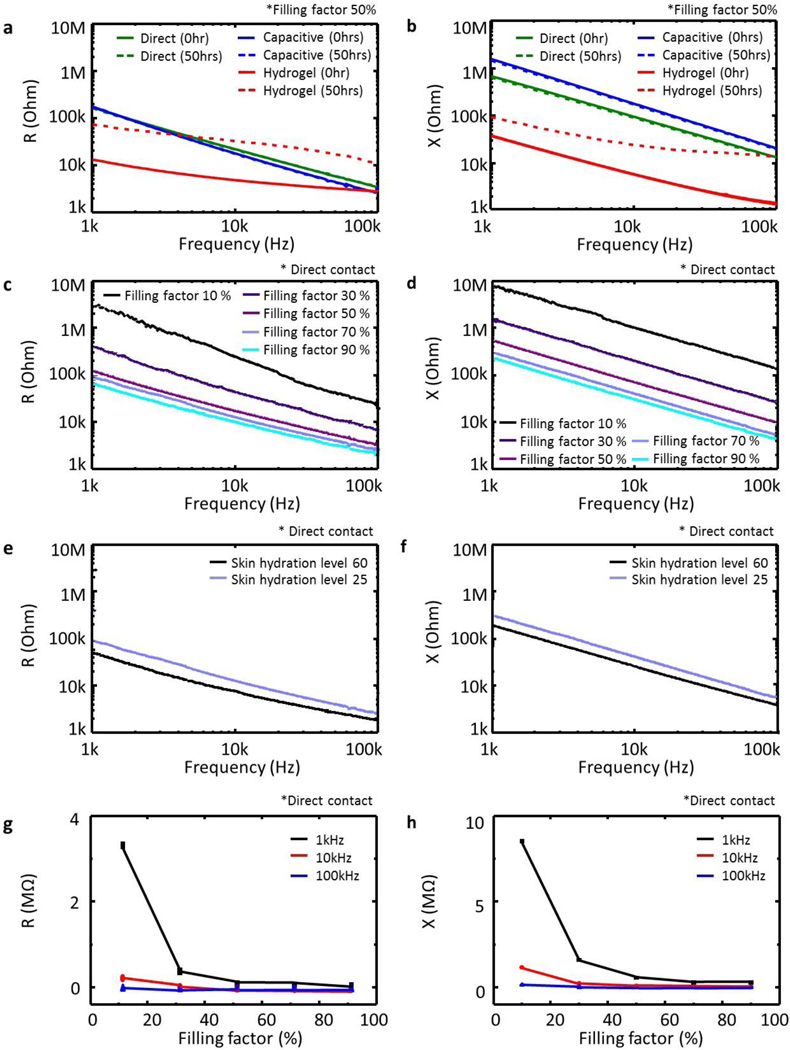
Figure 3. Impedance measurements associated with contact between the electrodes and the skin
(a, b) Type of contact: direct, capacitive, hydrogel. (c, d) Filling factor of direct contact area to entire electrode, (e, f) skin hydration level, (g, h) frequency. Dotted lines present fitted curves to the measured data.
Figure 4
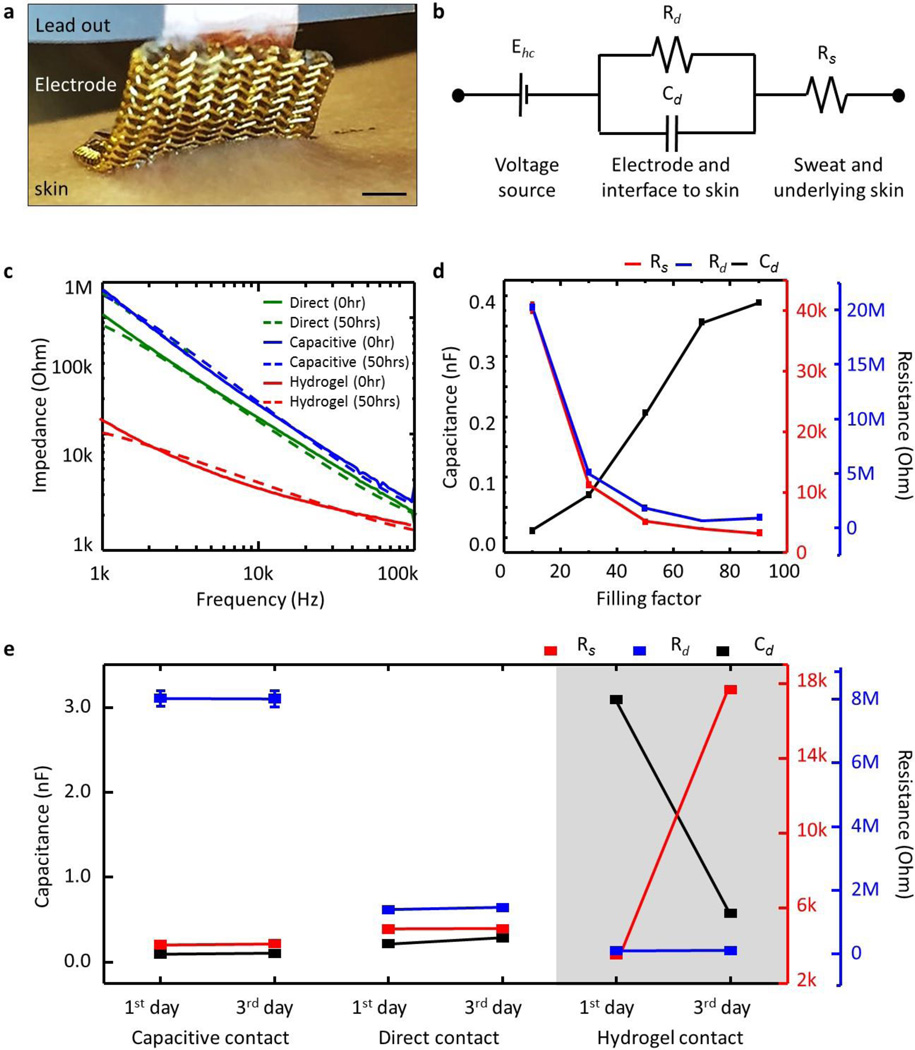
Figure 4. Impedance analysis with equivalent circuit model
(a) Optical image of electrode system on the skin, and (b) equivalent circuit model. (c) Measured impedance data and their fitted curve. (d) Extracted parameters according to filling factor, (e) type of electrode and elapsed time.
Figure 5
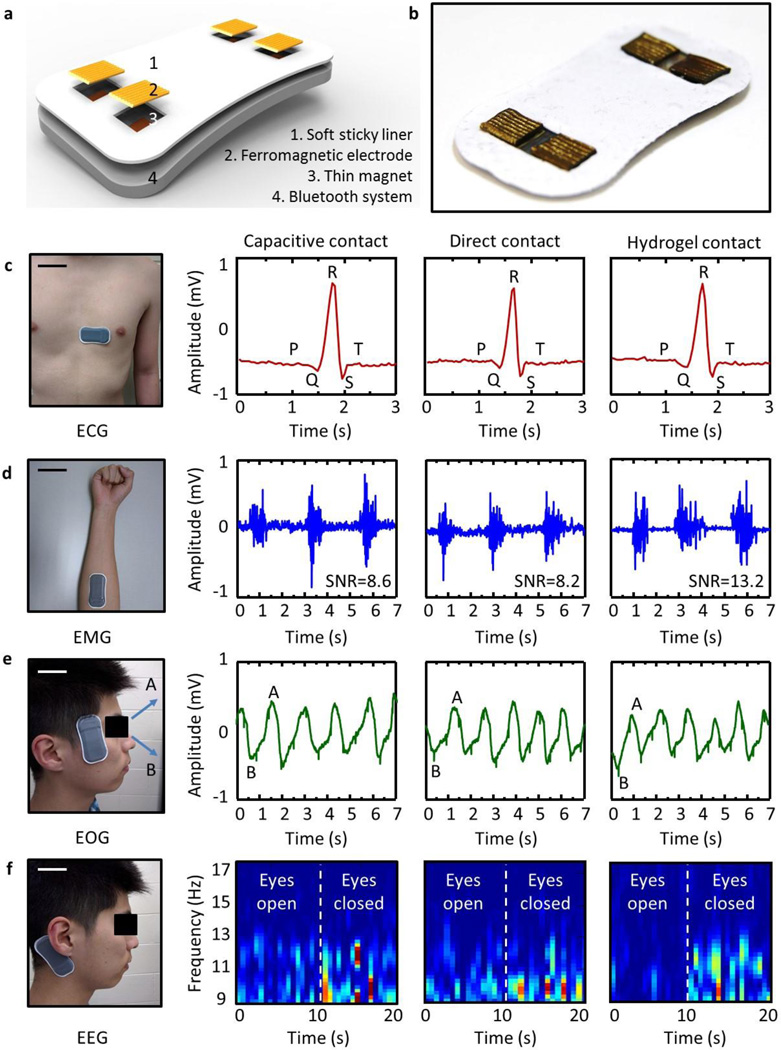
Figure 5. Device-level integration of the proposed electrode composite
(a) Schematic illustrations and (b) optical images of wireless electrophysiology (EP) monitoring systems integrated with soft, folded magnetic electrode composites. Optical images of the device on the body and associated captured EP data: (c) electrocardiogram (ECG), (d) electromyogram (EMG), (e) electrooculogram (EOG), and (f) electroencephalogram (EEG). Scare bars are 10 cm in (c, d) and 5cm (e, f).
Figure 6
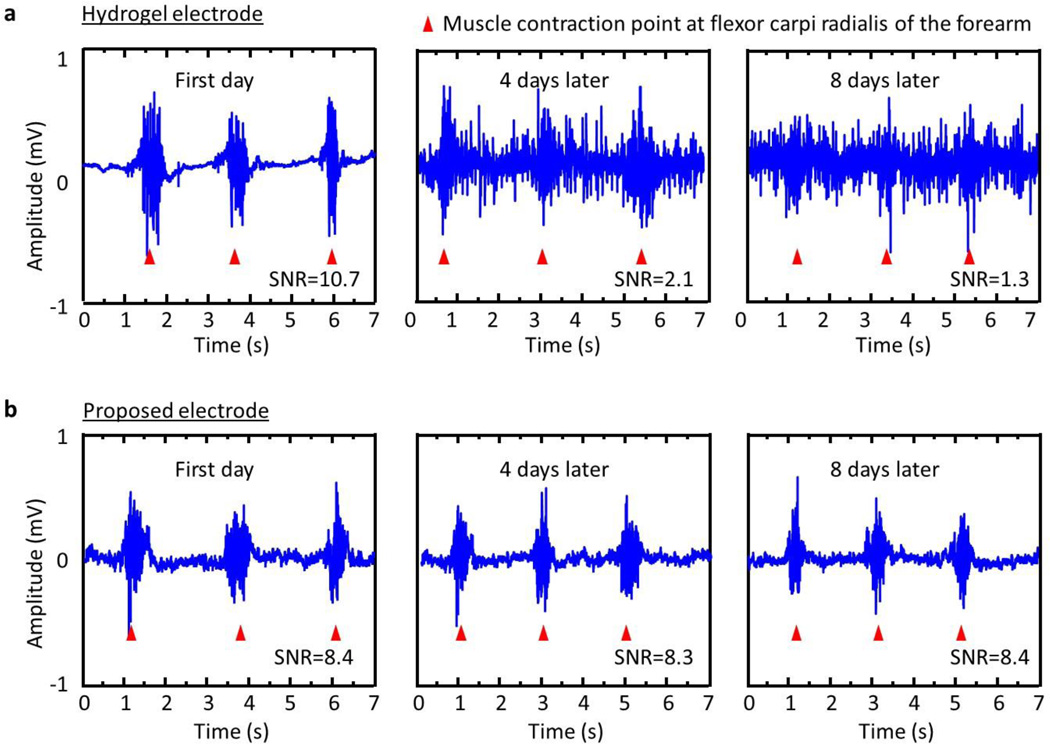
Figure 6. Long-term usability with wireless EMG recording
Data captured using (a) a hydrogel electrode, (b) soft, folded magnetic electrode. Each red triangle indicates a specific point of muscle contraction of the flexor carpi radialis of the forearm.

References

    1. Chi YM, Jung T-P, Cauwenberghs G. IEEE Rev. Biomed. Eng. 2010;3:106. - PubMed
    1. Myers AC, Huang H, Zhu Y. RSC Adv. 2015;5:11627.
    1. Hairston WD, Whitaker KW, Ries AJ, Vettel JM, Bradford JC, Kerick SE, McDowell K. J. Neural Eng. 2014;11:046018. - PubMed
    1. Searle A, Kirkup L. Physiol. Meas. 2000;21:271. - PubMed
    1. Mukhopadhyay SC. Wearable Electronics Sensors For Safe and Healthy Living. Switzerland: Springer; 2015.