


Biphasic Finite Element Modeling Reconciles Mechanical Properties of Tissue-Engineered Cartilage Constructs Across Testing Platforms
- PMID: 28414616
- PMCID: PMC5549831
- DOI: 10.1089/ten.tea.2016.0191
Biphasic Finite Element Modeling Reconciles Mechanical Properties of Tissue-Engineered Cartilage Constructs Across Testing Platforms
Abstract
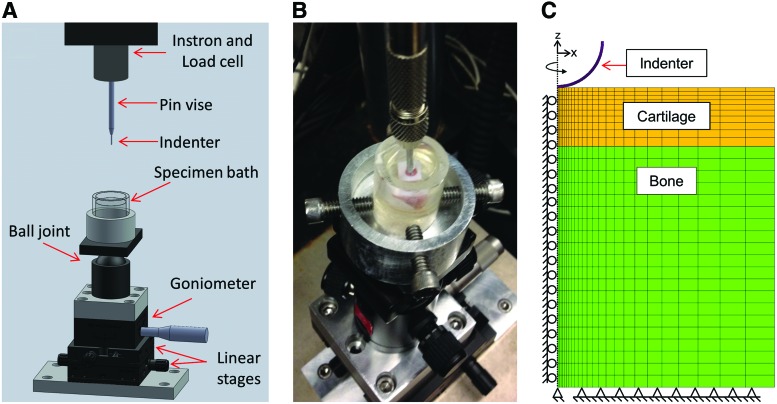
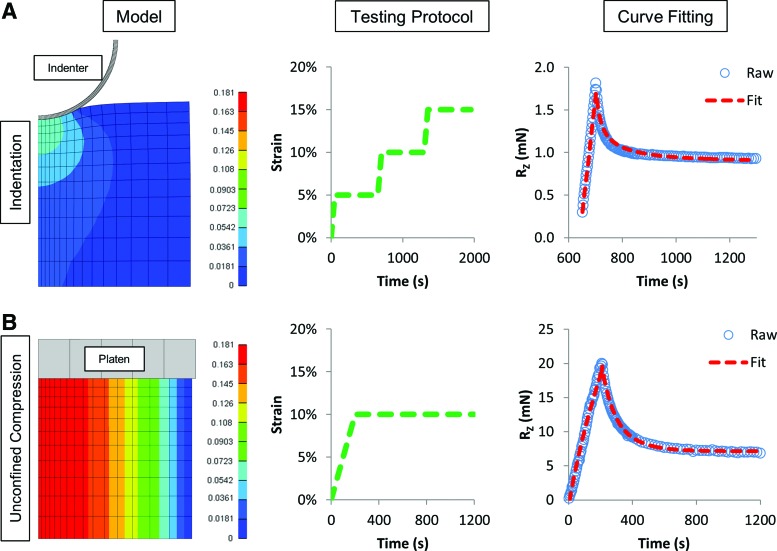
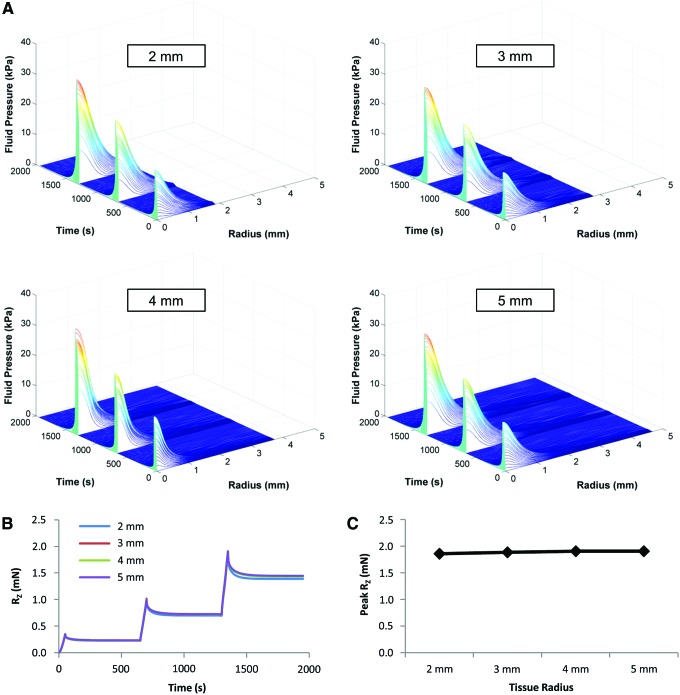
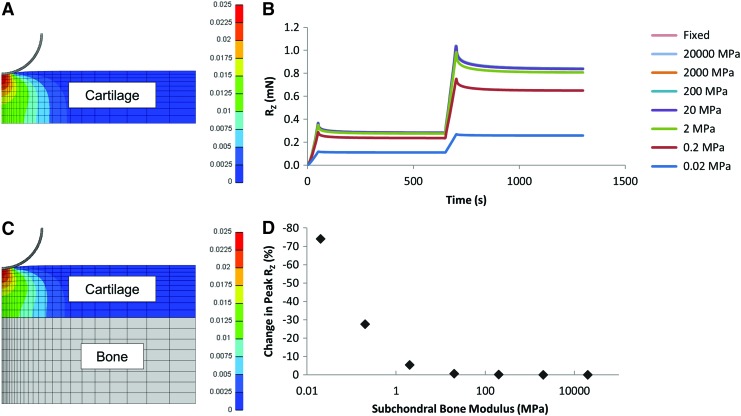
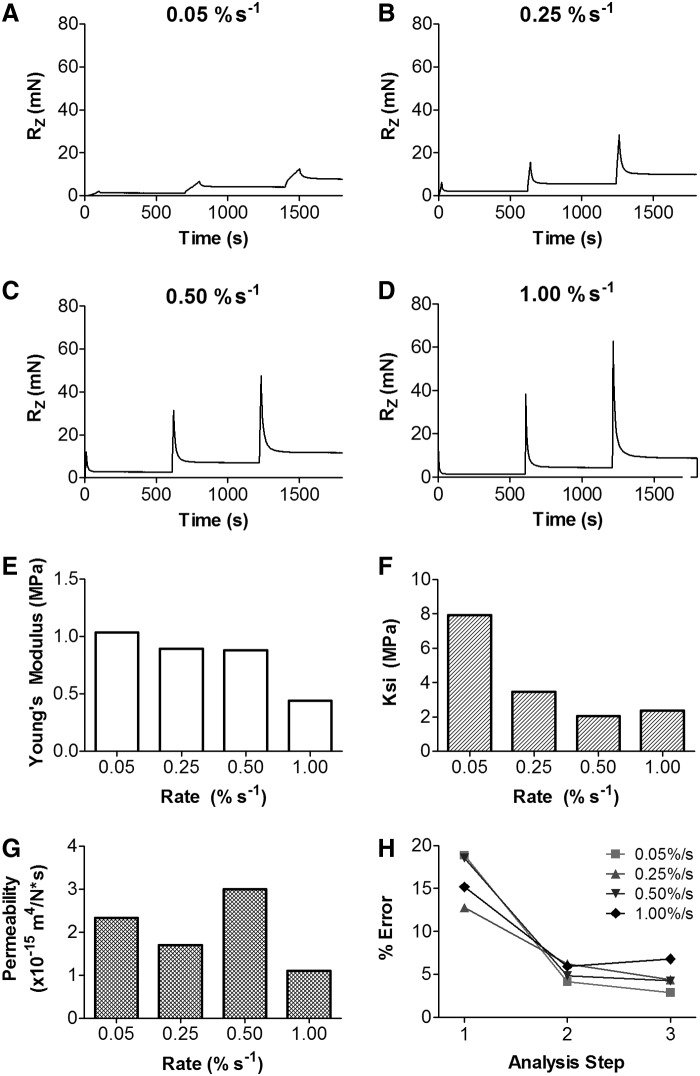
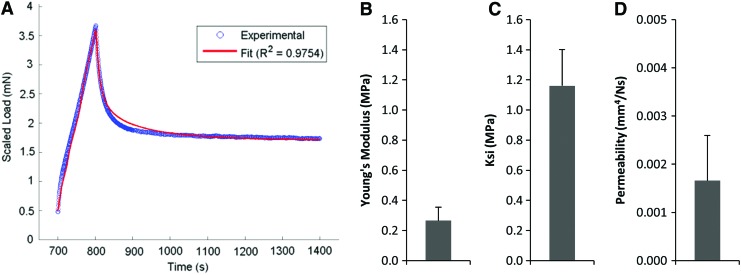
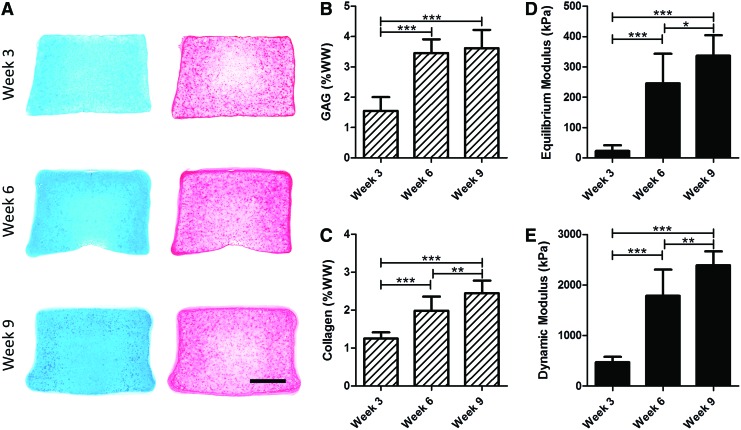
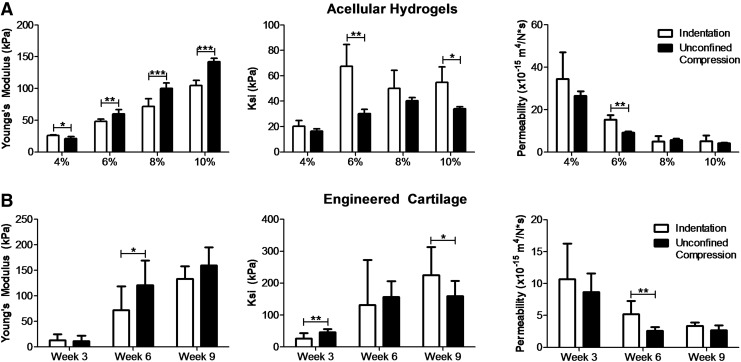
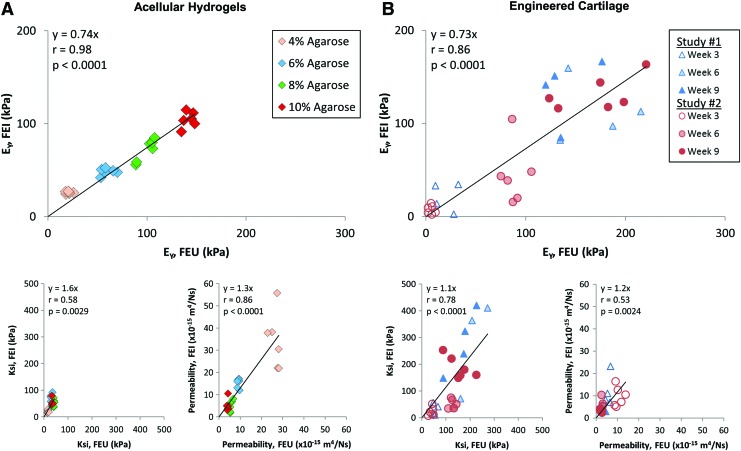
Cartilage tissue engineering is emerging as a promising treatment for osteoarthritis, and the field has progressed toward utilizing large animal models for proof of concept and preclinical studies. Mechanical testing of the regenerative tissue is an essential outcome for functional evaluation. However, testing modalities and constitutive frameworks used to evaluate in vitro grown samples differ substantially from those used to evaluate in vivo derived samples. To address this, we developed finite element (FE) models (using FEBio) of unconfined compression and indentation testing, modalities commonly used for such samples. We determined the model sensitivity to tissue radius and subchondral bone modulus, as well as its ability to estimate material parameters using the built-in parameter optimization tool in FEBio. We then sequentially tested agarose gels of 4%, 6%, 8%, and 10% weight/weight using a custom indentation platform, followed by unconfined compression. Similarly, we evaluated the ability of the model to generate material parameters for living constructs by evaluating engineered cartilage. Juvenile bovine mesenchymal stem cells were seeded (2 × 10⁷ cells/mL) in 1% weight/volume hyaluronic acid hydrogels and cultured in a chondrogenic medium for 3, 6, and 9 weeks. Samples were planed and tested sequentially in indentation and unconfined compression. The model successfully completed parameter optimization routines for each testing modality for both acellular and cell-based constructs. Traditional outcome measures and the FE-derived outcomes showed significant changes in material properties during the maturation of engineered cartilage tissue, capturing dynamic changes in functional tissue mechanics. These outcomes were significantly correlated with one another, establishing this FE modeling approach as a singular method for the evaluation of functional engineered and native tissue regeneration, both in vitro and in vivo.
Keywords: cartilage tissue engineering; mechanical evaluation; mesenchymal stem cells.
Conflict of interest statement
No competing financial interests exist.
Figures
References
-
- Johnstone B., et al. . Tissue engineering for articular cartilage repair—the state of the art. Eur Cells Mater 25, 248, 2013 - PubMed
-
- Franke O., et al. . Mechanical properties of hyaline and repair cartilage studied by nanoindentation. Acta Biomater 3, 873, 2007 - PubMed
-
- Ahern B.J., et al. . Preclinical animal models in single site cartilage defect testing: a systematic review. Osteoarthritis Cartilage 17, 705, 2009 - PubMed
Publication types
MeSH terms
Grants and funding
LinkOut - more resources
Full Text Sources
Other Literature Sources
