. 2017 Apr 17;12(4):e0175844.
doi: 10.1371/journal.pone.0175844. eCollection 2017.

Transcriptional networks are associated with resistance to Mycobacterium tuberculosis infection

Affiliations

Transcriptional networks are associated with resistance to Mycobacterium tuberculosis infection

Chetan Seshadri et al. PLoS One. .

Abstract

Rationale: Understanding mechanisms of resistance to M. tuberculosis (M.tb) infection in humans could identify novel therapeutic strategies as it has for other infectious diseases, such as HIV.

Objectives: To compare the early transcriptional response of M.tb-infected monocytes between Ugandan household contacts of tuberculosis patients who demonstrate clinical resistance to M.tb infection (cases) and matched controls with latent tuberculosis infection.

Methods: Cases (n = 10) and controls (n = 18) were selected from a long-term household contact study in which cases did not convert their tuberculin skin test (TST) or develop tuberculosis over two years of follow up. We obtained genome-wide transcriptional profiles of M.tb-infected peripheral blood monocytes and used Gene Set Enrichment Analysis and interaction networks to identify cellular processes associated with resistance to clinical M.tb infection.

Measurements and main results: We discovered gene sets associated with histone deacetylases that were differentially expressed when comparing resistant and susceptible subjects. We used small molecule inhibitors to demonstrate that histone deacetylase function is important for the pro-inflammatory response to in-vitro M.tb infection in human monocytes.

Conclusions: Monocytes from individuals who appear to resist clinical M.tb infection differentially activate pathways controlled by histone deacetylase in response to in-vitro M.tb infection when compared to those who are susceptible and develop latent tuberculosis. These data identify a potential cellular mechanism underlying the clinical phenomenon of resistance to M.tb infection despite known exposure to an infectious contact.


Conflict of interest statement

Competing Interests: The authors have declared that no competing interests exist.

Figures

Fig 1
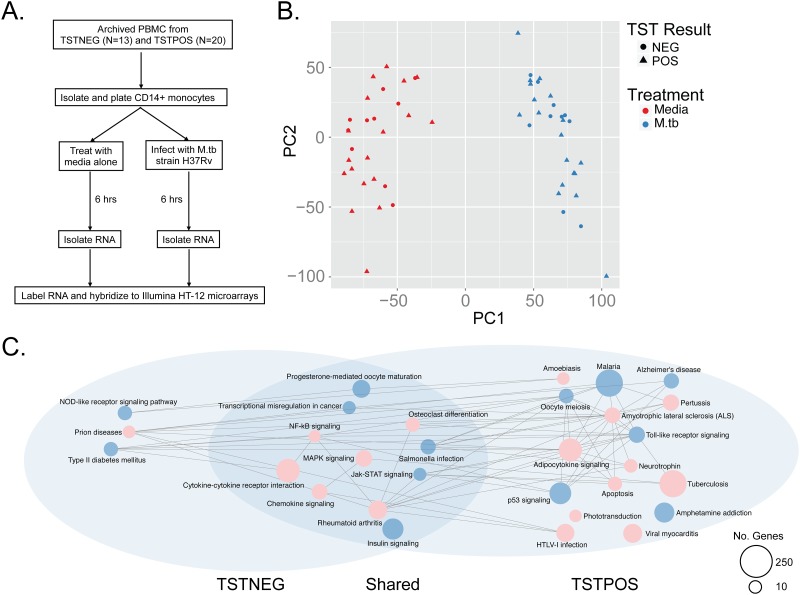
Fig 1. The early monocyte transcriptional response to M.tb infection.
(A) Schematic of study design. CD14+ monocytes from cases or controls were isolated from cryopreserved PBMC and exposed to either media or M.tb strain H37Rv for six hours prior to harvesting total RNA for transcriptional profiling with Illumina HT-12 microarrays. (B) Principal components analysis was performed on quantile normalized data and reveals M.tb infection as the major source of variability in the data. (C). Network diagram generated from KEGG pathways identified through Signaling Pathway Interaction Analysis (SPIA) reveals that largely overlapping cellular processes are perturbed after infection. The color of each node represents the status of the pathway as either activated (red) or inhibited (blue). The size of the node is proportional to the number of genes in the pathway.
Fig 2
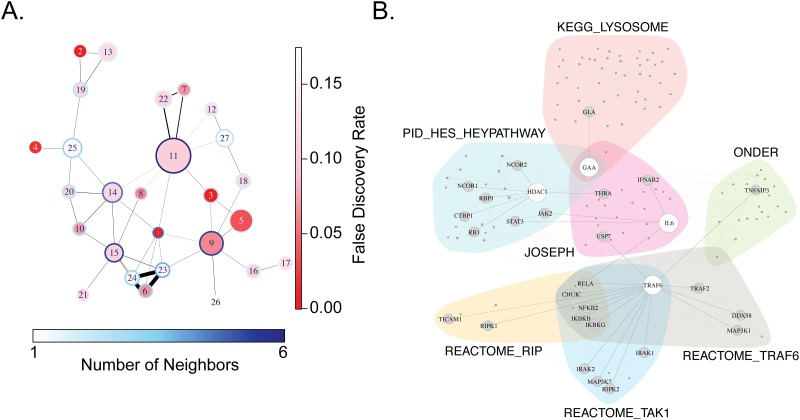
Fig 2. Network analysis of gene sets unique to cases demonstrating resistance to M.tb infection.
(A) A network diagram was generated from the results of GSEA listed in Table 2 with a FDR < 20%. In this network, each node corresponds to a gene set (pathway); an edge is drawn between two gene sets with a black line if the genes in the two gene sets overlap. Here, the diameter of each node corresponds to the relative number of genes in each gene set; the degree of blue color shading in the perimeter of each node represents the number of its neighbors (number of gene sets whose members overlap); the degree of central red color shading reflects significance (FDR value); and the thickness of each edge corresponds to the number of genes shared by the two neighboring gene sets (proportional to the Jaccard Index between pathways). Gene set 1 is ‘JOSEPH_RESPONSE_TO_SODIUM_BUTYRATE.’ (B) Venn diagram centered on the ‘JOSEPH’ gene set and its 6 neighboring gene sets in diagram. Each shaded area corresponds to a gene set, and edges between pairs of genes correspond to gene-gene interactions defined in KEGG, obtained using the ‘graphite’ R-package. Genes present in the gene set but absent from the KEGG database are not shown for clarity. The location of HDAC1, GAA, TRAF6, and IL-6 are highlighted along with their neighbors.
Fig 3
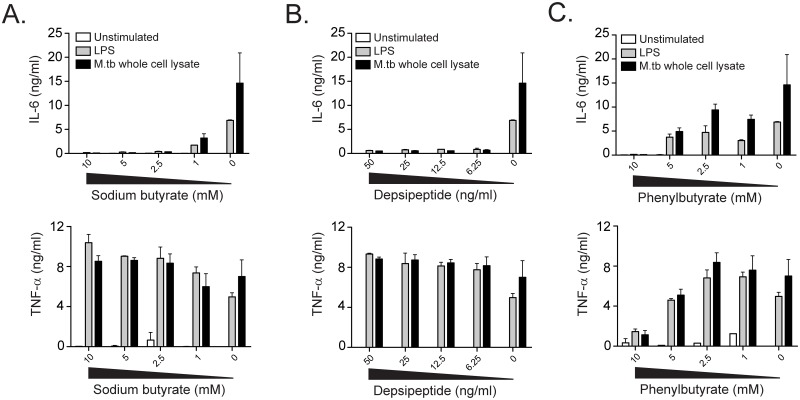
Fig 3. Histone deacetylase inhibitors modulate the innate immune response to M.tb.
U937 cells were stimulated with media alone, LPS at a final concentration of 100 ng/ml, or M.tb whole cell lysate at a final concentration of 25 μg/ml after one hour pre-treatment with titrating doses of histone-deacetylase inhibitors. IL-6 and TNF-α were quantified in supernatants harvested after 18 hours for (A) sodium butyrate, (B), depsipeptide, and (C) phenylbutyrate. These data are representative of at least three independent experiments.
Fig 4
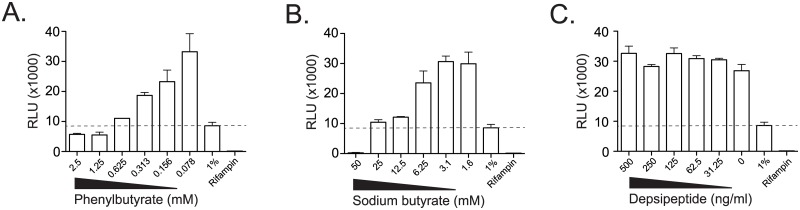
Fig 4. The effect of histone deacetylase inhibitors on M.tb growth.
The effect of histone deacetylase inhibitors (A) depsipeptide, (B) sodium butyrate, and (C) phenylbutyrate on mycobacterial growth in broth culture was measured using an autoluminescent strain of M.tb that has been stably transfected with the bacterial Lux operon. Controls included rifampin (RIF) at a final concentration of 1 microgram/ml and 1% of the inoculum (1%) to assess the minimum inhibitory concentration 99% (MIC99—dashed line). The asterix indicates the first dose at which luminescence is not significantly different from or less than the 1% inoculum. M.tb was grown in media supplemented with titrating doses of HDACi for seven days prior to measuring relative light units (RLU). Results are representative of at least three independent experiments.
Fig 5
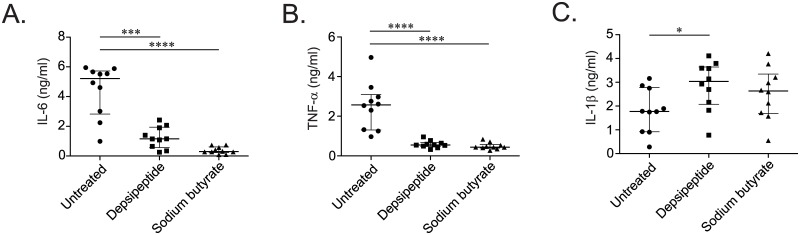
Fig 5. Histone-deactylase inhibitors suppress the secretion of inflammatory cytokines by primary human monocytes in response to M.tb infection.
CD14+ peripheral blood monocytes from ten healthy adults were infected with M.tb strain H37Rv at a multiplicity of infection of 2.5:1 for 24 hours after one hour pre-treatment of histone deacetylase inhibitors (HDACi) depsipeptide and sodium butyrate at a final concentration of 50 ng/ml and 5mM, respectively. Cultured supernatants were tested for production of the pro-inflammatory cytokines (A) IL-6, (B) TNF-α, and (C) IL-1β. Results are representative of two replicate experiments. (*p<0.05, ***p<0.001, ****p<0.0001 by two-tailed Mann-Whitney test).

References

    1. WHO (2015) Global Tuberculosis Report.
    1. Mogues T, Goodrich ME, Ryan L, LaCourse R, North RJ (2001) The relative importance of T cell subsets in immunity and immunopathology of airborne Mycobacterium tuberculosis infection in mice. J Exp Med 193: 271–280. - PMC - PubMed
    1. Flynn JL, Goldstein MM, Chan J, Triebold KJ, Pfeffer K, et al. (1995) Tumor necrosis factor-alpha is required in the protective immune response against Mycobacterium tuberculosis in mice. Immunity 2: 561–572. - PubMed
    1. Flynn JL, Chan J, Triebold KJ, Dalton DK, Stewart TA, et al. (1993) An essential role for interferon gamma in resistance to Mycobacterium tuberculosis infection. J Exp Med 178: 2249–2254. - PMC - PubMed
    1. Casanova JL, Abel L (2002) Genetic dissection of immunity to mycobacteria: the human model. Annu Rev Immunol 20: 581–620. 10.1146/annurev.immunol.20.081501.125851 - DOI - PubMed