


DNA barcoding evaluation and implications for phylogenetic relationships in Lauraceae from China
- PMID: 28414813
- PMCID: PMC5393608
- DOI: 10.1371/journal.pone.0175788
DNA barcoding evaluation and implications for phylogenetic relationships in Lauraceae from China
Abstract
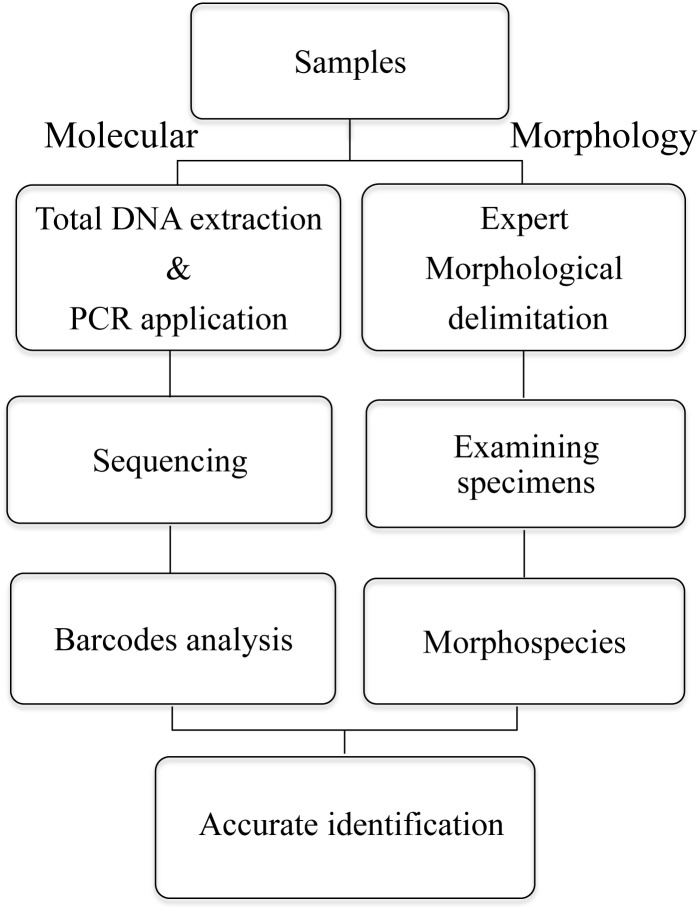
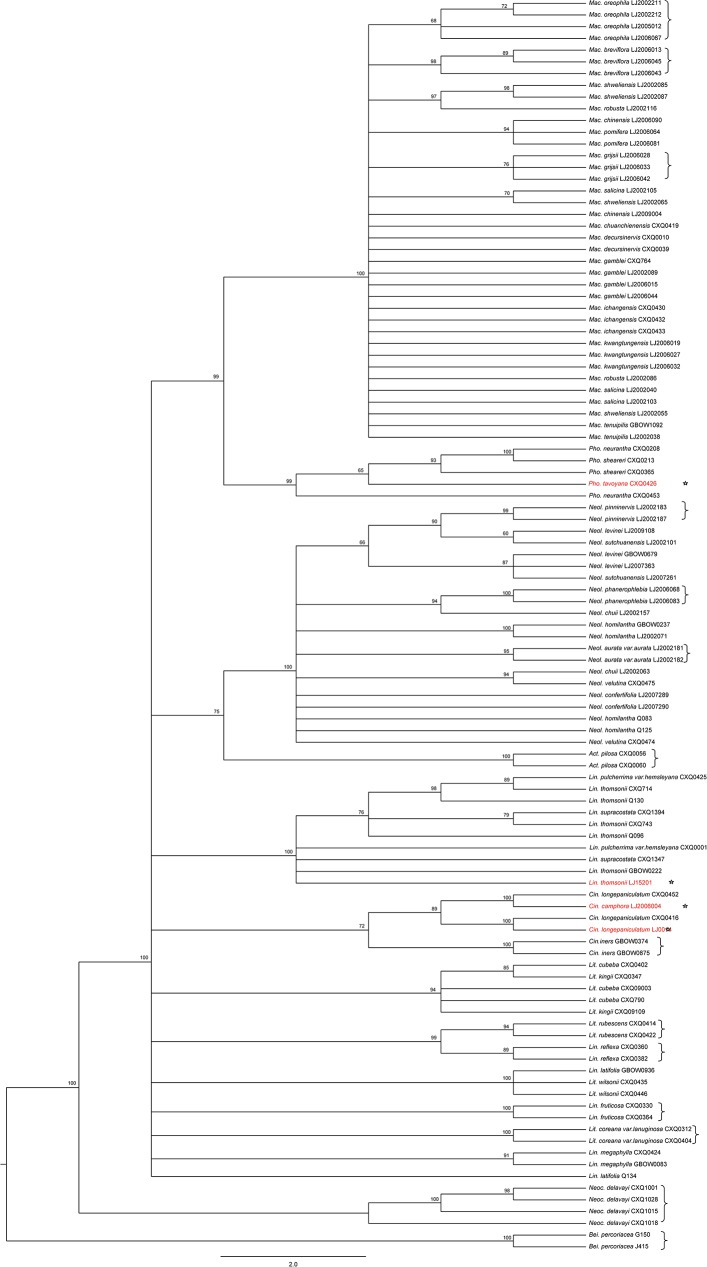
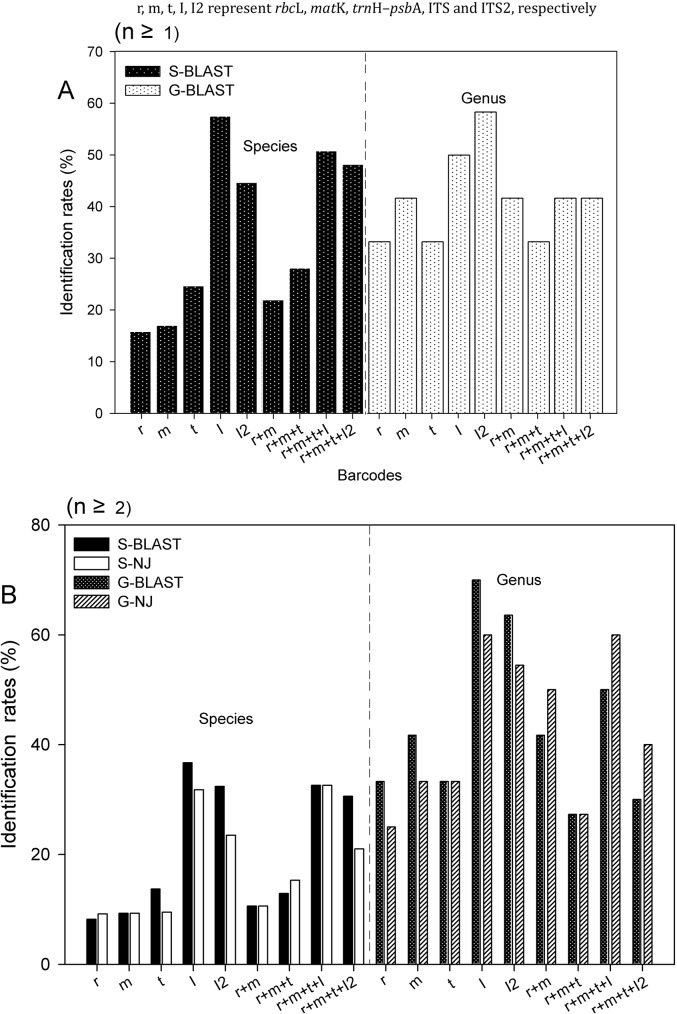
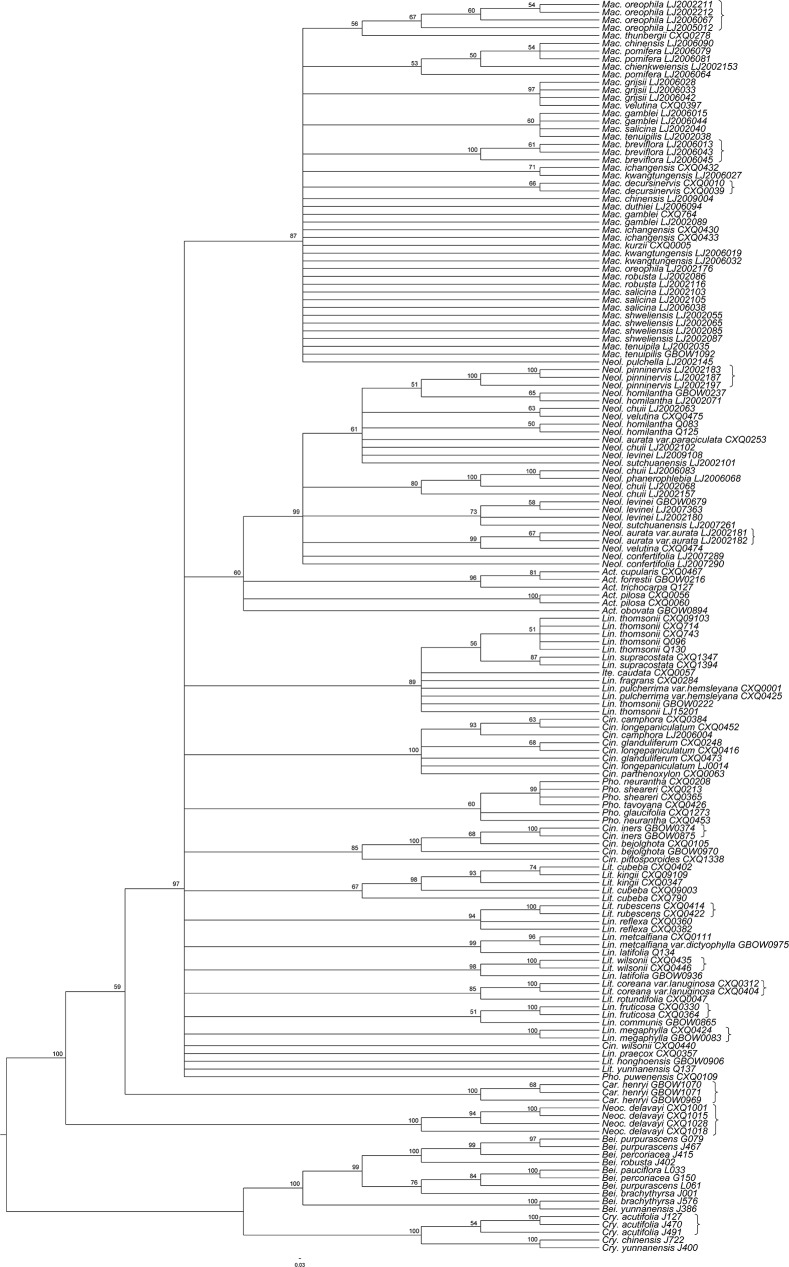
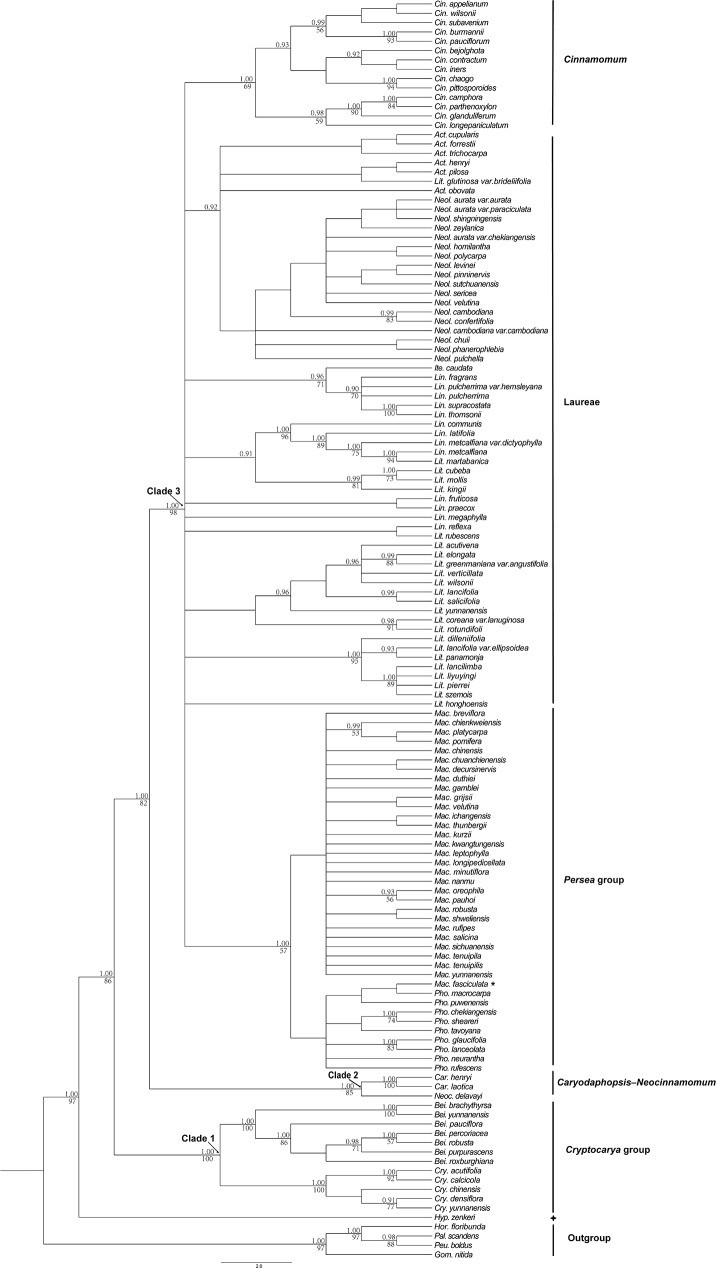
Lauraceae are an important component of tropical and subtropical forests and have major ecological and economic significance. Owing to lack of clear-cut morphological differences between genera and species, this family is an ideal case for testing the efficacy of DNA barcoding in the identification and discrimination of species and genera. In this study, we evaluated five widely recommended plant DNA barcode loci matK, rbcL, trnH-psbA, ITS2 and the entire ITS region for 409 individuals representing 133 species, 12 genera from China. We tested the ability of DNA barcoding to distinguish species and as an alternative tool for correcting species misidentification. We also used the rbcL+matK+trnH-psbA+ITS loci to investigate the phylogenetic relationships of the species examined. Among the gene regions and their combinations, ITS was the most efficient for identifying species (57.5%) and genera (70%). DNA barcoding also had a positive role for correcting species misidentification (10.8%). Furthermore, based on the results of the phylogenetic analyses, Chinese Lauraceae species formed three supported monophyletic clades, with the Cryptocarya group strongly supported (PP = 1.00, BS = 100%) and the clade including the Persea group, Laureae and Cinnamomum also receiving strong support (PP = 1.00, BS = 98%), whereas the Caryodaphnopsis-Neocinnamomum received only moderate support (PP = 1.00 and BS = 85%). This study indicates that molecular barcoding can assist in screening difficult to identify families like Lauraceae, detecting errors of species identification, as well as helping to reconstruct phylogenetic relationships. DNA barcoding can thus help with large-scale biodiversity inventories and rare species conservation by improving accuracy, as well as reducing time and costs associated with species identification.
Conflict of interest statement
Figures
References
-
- Li HW, Li J, Huang PH, Wei FN, Cui HB, van der Werff H. Lauraceae. In: Wu ZY, Raven PH editors. Flora of China, Calycanthaceae–Schisandraceae. Vol.7 Beijing, and St. Louis, Missouri: Science Press and Missouri Botanical Garden Press; 2008. pp. 102–254.
-
- Yang Y, Liu B. Species catalogue of Lauraceae in China: problems and perspectives. Biod Sci. 2015; 23(2): 232–236.
-
- van der Werff H, Richter HG. Toward an improved classification of Lauraceae. Ann Missouri Bot Gard. 1996; 83: 409–418.
-
- Van der Werff H. An annotated key to the genera of Lauraceae in the Flora Malesiana Region. Blumea. 2001; 46: 125–140.
-
- Rohwer JG. Lauraceae In: Kubitzki K, Rohwer JG, Brittrich V editors. The families and genera of vascular plants. Vol.2 Berlin: Springer-Verlag; 1993. pp. 366–391.
Publication types
MeSH terms
Substances
LinkOut - more resources
Full Text Sources
Other Literature Sources
Miscellaneous
