Cingulo-insular structural alterations associated with psychogenic symptoms, childhood abuse and PTSD in functional neurological disorders
- PMID: 28416565
- PMCID: PMC5497745
- DOI: 10.1136/jnnp-2016-314998
Cingulo-insular structural alterations associated with psychogenic symptoms, childhood abuse and PTSD in functional neurological disorders
Erratum in
-
Correction: Cingulo-insular structural alterations associated with psychogenic symptoms, childhood abuse and PTSD in functional neurological disorders.J Neurol Neurosurg Psychiatry. 2017 Dec;88(12):1098. doi: 10.1136/jnnp-2016-314998corr1. J Neurol Neurosurg Psychiatry. 2017. PMID: 29183991 No abstract available.
Abstract
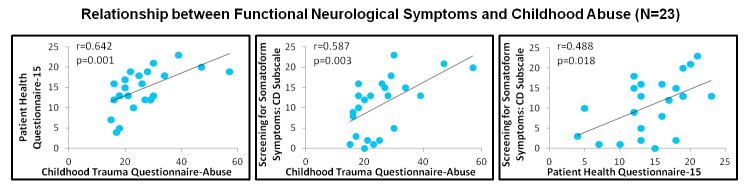
Objective: Adverse early-life events are predisposing factors for functional neurological disorder (FND) and post-traumatic stress disorder (PTSD). Cingulo-insular regions are implicated in the biology of both conditions and are sites of stress-mediated neuroplasticity. We hypothesised that functional neurological symptoms and the magnitude of childhood abuse would be associated with overlapping anterior cingulate cortex (ACC) and insular volumetric reductions, and that FND and PTSD symptoms would map onto distinct cingulo-insular areas.
Methods: This within-group voxel-based morphometry study probes volumetric associations with self-report measures of functional neurological symptoms, adverse life events and PTSD symptoms in 23 mixed-gender FND patients. Separate secondary analyses were also performed in the subset of 18 women with FND to account for gender-specific effects.
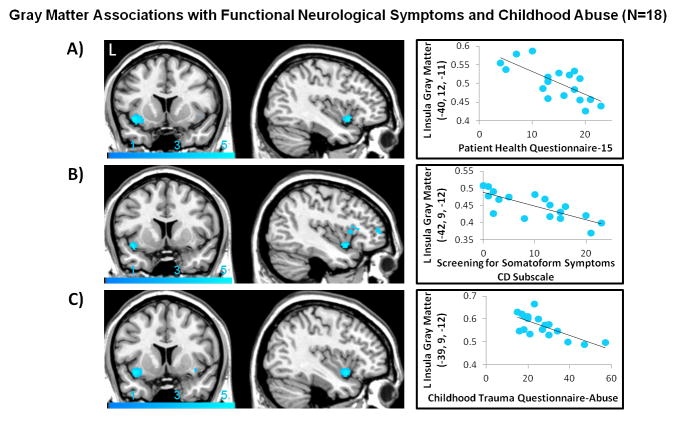
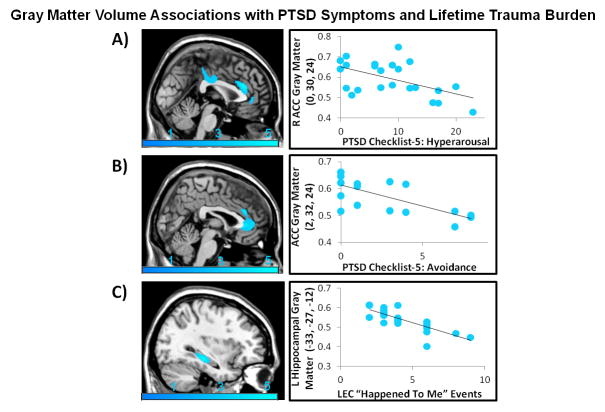
Results: Across the entire cohort, there were no statistically significant volumetric associations with self-report measures of functional neurological symptom severity or childhood abuse. In women with FND, however, parallel inverse associations were observed between left anterior insular volume and functional neurological symptoms as measured by the Patient Health Questionnaire-15 and the Screening for Somatoform Symptoms Conversion Disorder subscale. Similar inverse relationships were also appreciated between childhood abuse burden and left anterior insular volume. Across all subjects, PTSD symptom severity was inversely associated with dorsal ACC volume, and the magnitude of lifetime adverse events was inversely associated with left hippocampal volume.
Conclusions: This study reveals distinct cingulo-insular alterations for FND and PTSD symptoms and may advance our understanding of FND. Potential biological convergence between stress-related neuroplasticity, functional neurological symptoms and reduced insular volume was identified.
Keywords: Conversion Disorder; Functional Movement Disorders; Functional Weakness; Psychogenic Nonepileptic Seizures; Voxel-Based Morphometry.
© Article author(s) (or their employer(s) unless otherwise stated in the text of the article) 2017. All rights reserved. No commercial use is permitted unless otherwise expressly granted.
Conflict of interest statement
Competing interests: None declared.
Figures
References
-
- Gelauff J, Stone J, Edwards M, et al. The prognosis of functional (psychogenic) motor symptoms: a systematic review. J Neurol Neurosurg Psychiatry. 2014;85:220–26. - PubMed
-
- Merkler AE, Parikh NS, Chaudhry S, et al. Hospital revisit rate after a diagnosis of conversion disorder. J Neurol Neurosurg Psychiatry. 2016;87:363–66. - PubMed
-
- Stone J, Carson A, Duncan R, et al. Who is referred to neurology clinics? --the diagnoses made in 3781 new patients. Clin Neurol Neurosurg. 2010;112:747–51. - PubMed
-
- Barsky AJ, Orav EJ, Bates DW. Somatization increases medical utilization and costs independent of psychiatric and medical comorbidity. Arch Gen Psychiatry. 2005;62:903–10. - PubMed
Publication types
MeSH terms
Grants and funding
LinkOut - more resources
Full Text Sources
Other Literature Sources
Medical