


Successful pacemaker lead extraction involving an ossified thrombus: A case report
- PMID: 28416985
- PMCID: PMC5388058
- DOI: 10.1016/j.joa.2016.06.007
Successful pacemaker lead extraction involving an ossified thrombus: A case report
Abstract
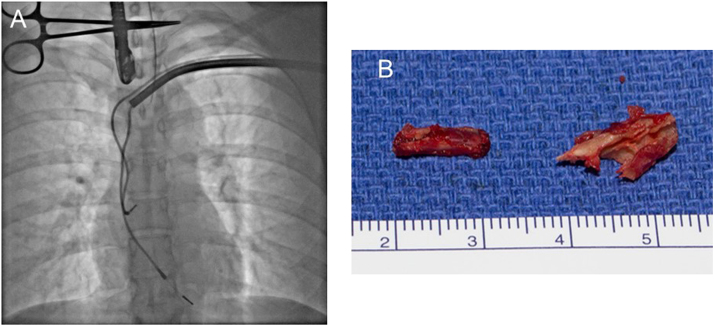
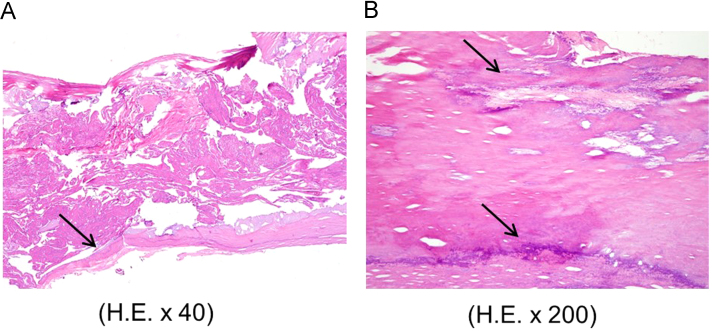
A 41-year-old woman who had been fitted with a pacemaker 18 years prior presented for lead extraction because of device infection. First, we tried laser sheath. However, it cannot cross the binding in the innominate vein. Then we switched to the rotating mechanical sheath. Although it crunched through binding tissue, the progress halted. We removed the sheath and found pieces of calcified tissue in the sheath lumen. After removing the calcified tissue, both leads were extracted using the laser sheath, without complications. The pathological examination revealed a diagnosis of ossified thrombus. Venous thromboses associated with implanted leads can ossify with time, causing difficulties in the extraction of long-standing intravascular leads.
Keywords: Calcification; Lead extraction; Rotating mechanical sheath; Thrombus.
Figures
References
-
- Roux J.F., Page P., Dubuc M. Laser lead extraction: predictors of success and complications. Pacing Clin Electrophysiol. 2007;30:214–220. - PubMed
-
- Wazni O., Epstein L.M., Carrillo R.G. Lead extraction in the contemporary setting: the LExICon study: an observational retrospective study of consecutive laser lead extractions. J Am Coll Cardiol. 2010;55:579–586. - PubMed
-
- Strokes K, Anderson J, McVenes R, et al. The encapsulation of polyurethane-insulated transvenous cardiac pacemaker leads. - PubMed
-
- Aytemir K., Yorgun H., Canpolat U. Initial experience with the TightRail Rotating Mechanical Dilator Sheath for transvenous lead extraction. Europace. 2015 - PubMed
LinkOut - more resources
Full Text Sources
Other Literature Sources
