


Follicular ADAMTS-1 and aggrecan levels in polycystic ovary syndrome
- PMID: 28417352
- PMCID: PMC5445050
- DOI: 10.1007/s10815-017-0913-7
Follicular ADAMTS-1 and aggrecan levels in polycystic ovary syndrome
Abstract
Purpose: Polycystic ovary syndrome (PCOS) is the most common cause of ovulatory dysfunction and female infertility. The etiopathogenetic mechanisms of PCOS have been studied for many years, although exact causes remain unclear. It has been demonstrated that proteoglycan degradation by a disintegrin-like metalloproteinase with thrombospondin type motifs-1 (ADAMTS-1) is essential for ovulation and fertilization. The objective of our study is to analyze the levels of ADAMTS-1 and aggrecan in the follicular fluid (FF) of PCOS patients compared with normal ovulatory women and to determine whether these markers could be a predictor of in vitro fertilization (IVF) success in PCOS patients.
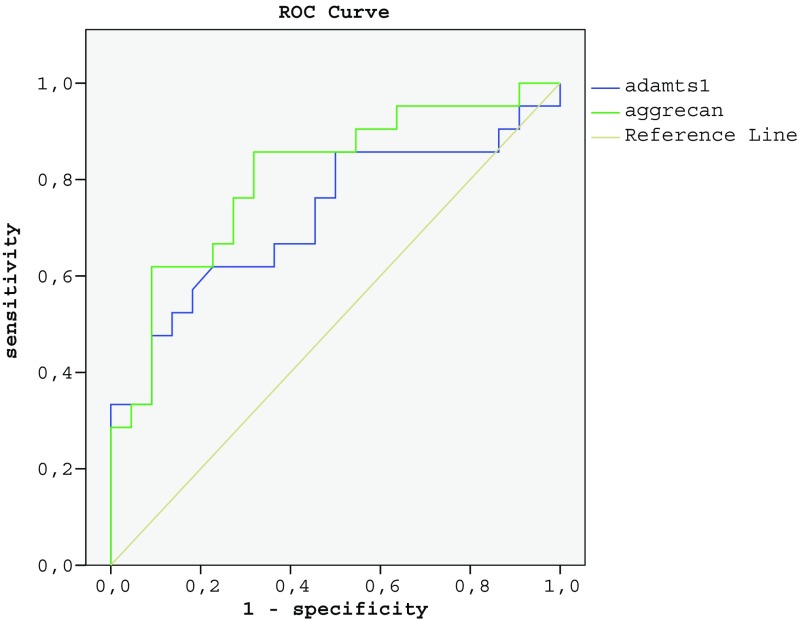
Methods: Women with PCOS (n = 21) and normal ovulatory controls (n = 22) undergoing IVF treatment were recruited. ADAMTS-1 and aggrecan levels were analyzed with enzyme-linked immunosorbent assay (ELISA) and compared between PCOS and normal ovulatory controls. The predictor effect of ADAMTS-1 and aggrecan on fertilization rate and implantation was evaluated.
Results: FF ADAMTS-1 and aggrecan levels increased in women with PCOS compared to controls. Elevated ADAMTS-1 levels but not aggrecan were related to increased implantation in PCOS.
Conclusion: Our study demonstrated that altered levels of ADAMTS-1 and aggrecan may have a partial role in the etiopathogenesis of PCOS, and ADAMTS-1 could be a predictive marker for implantation success in PCOS patients.
Keywords: ADAMTS-1; Aggrecan; Follicular fluid; In vitro fertilization success; PCOS.
Conflict of interest statement
The authors declare that they have no conflict of interest.
Figures
References
-
- Manneras-Holm L, Leonhardt H, Kullberg J, Jennische E, Odén A, Holm G, et al. Adipose tissue has aberrant morphology and function in PCOS: enlarged adipocytes and low serum adiponectin, but not circulating sex steroids, are strongly associated with insulin resistance. J Clin Endocrinol Metab. 2011;96:304–311. doi: 10.1210/jc.2010-1290. - DOI - PubMed
-
- Yanagishita M, Hascall VC. Biosynthesis of proteoglycans by rat granulosa cells cultured in vitro. J Biol Chem. 1979;254:12355–12364. - PubMed
MeSH terms
Substances
LinkOut - more resources
Full Text Sources
Other Literature Sources
Medical
Miscellaneous
