Ophthalmic Manifestations of Congenital Zika Syndrome in Colombia and Venezuela
- PMID: 28418539
- PMCID: PMC5470423
- DOI: 10.1001/jamaophthalmol.2017.0561
Ophthalmic Manifestations of Congenital Zika Syndrome in Colombia and Venezuela
Abstract
Importance: The ocular manifestations and sequelae of Zika virus infection are not well known. Recently, the World Health Organization changed the declaration of Zika as a public health emergency and designated the viral outbreak and related microcephaly clusters as a long-term program of work. This change indicates the urgent need to evaluate and document ophthalmic manifestations in patients for timely management of this disease. In addition, confirmation whether the public health problem in Brazil extends to other regions in South America is needed.
Objective: To report the ocular manifestations of congenital Zika syndrome with microcephaly in Colombia and Venezuela.
Design, setting, and participants: This prospective case series included 43 patients from 2 ophthalmic centers in Colombia and Venezuela who underwent evaluation from October 1, 2015, through June 30, 2016, and were clinically diagnosed with congenital Zika syndrome. Twenty patients were Hispanic; 13, African; 8, white; and 2, Native American.
Interventions: Ophthalmic and systemic evaluations and serologic testing were performed on all infants. Patients underwent external ocular examination and dilated ophthalmoscopy. Serologic testing ruled out toxoplasmosis, rubella, cytomegalovirus, syphilis, and human immunodeficiency virus.
Main outcomes and measures: Ophthalmic manifestations of congenital Zika syndrome.
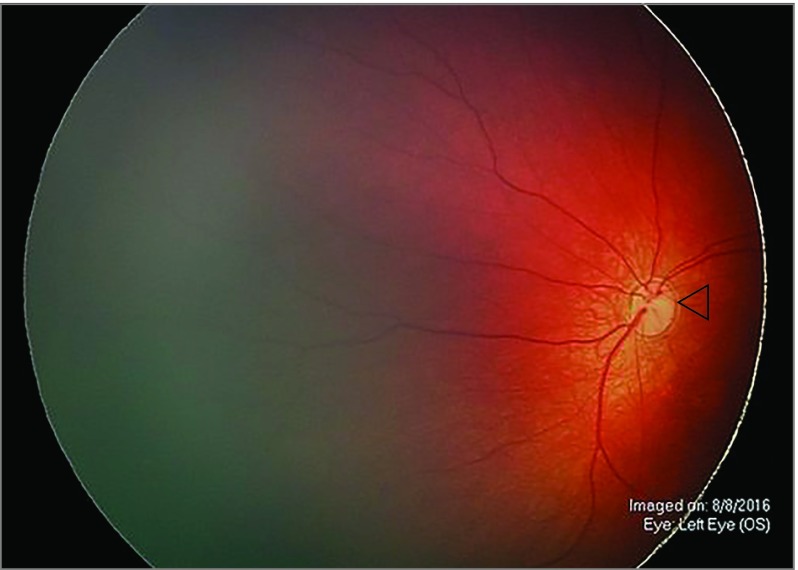
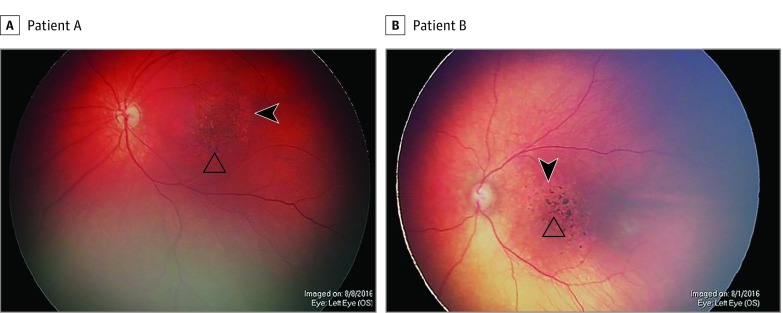
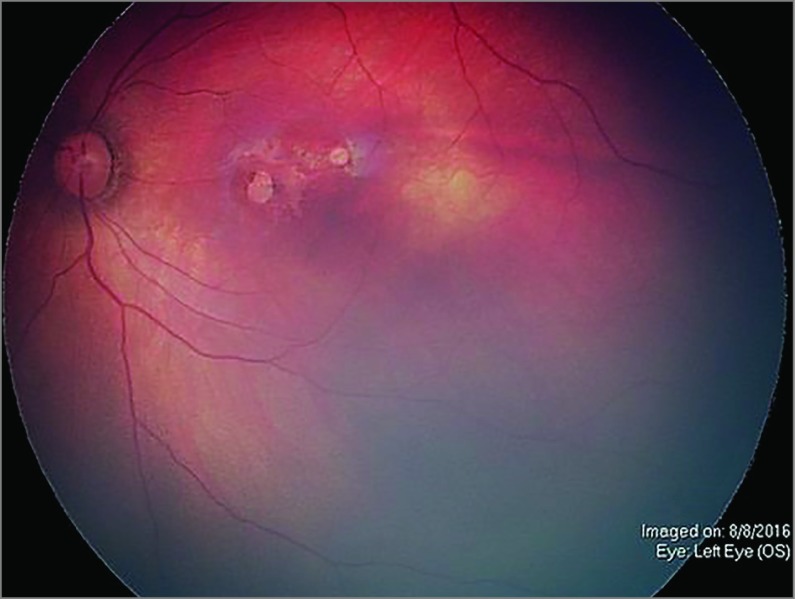
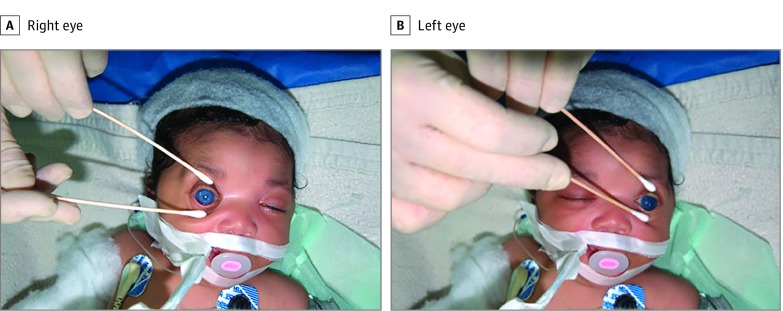
Results: Of the 43 patients included in this series (28 female and 15 male), the mean (SD) age at examination was 2.1 (1.5) months. The mothers of all the children had no ophthalmic findings and did not report ocular symptoms during pregnancy. All patients had bilateral ophthalmic manifestations. Optic nerve findings included hypoplasia with the double-ring sign, pallor, and increased cup-disc ratio in 5 patients (11.6%). Macular abnormalities included mild to severe pigment mottling in 27 patients (63%) and lacunar maculopathy in 3 (6.9%). Chorioretinal scarring was present in 3 patients (7%). Eleven patients (26%) had a combination of lesions in the posterior pole. Five patients (12%) were diagnosed with congenital glaucoma, characterized by the clinical triad of epiphora, photophobia, and blepharospasm; increased intraocular pressure; corneal clouding at birth; and buphthalmos. These data reveal that 12% (95% CI, 5%-24%) of cases of congenital Zika with microcephaly had anterior segment abnormalities and 88% (95% CI, 76%-94%) had important macular and optic nerve abnormalities. The visual sequelae of these ophthalmic manifestations remain unknown.
Conclusions and relevance: Congenital Zika syndrome in the current study had severe ocular abnormalities, and all patients had bilateral involvement. Ocular findings were focal macular pigment mottling, chorioretinal atrophy with a predilection for the macular area, congenital glaucoma and optical nerve hypoplasia, and optic disc abnormalities. Ophthalmic examination is recommended in patients with congenital Zika syndrome.
Conflict of interest statement
Figures
References
-
- Dick GW, Kitchen SF, Haddow AJ. Zika virus, I: isolations and serological specificity. Trans R Soc Trop Med Hyg. 1952;46(5):509-520. - PubMed
-
- MacNamara FN. Zika virus: a report on three cases of human infection during an epidemic of jaundice in Nigeria. Trans R Soc Trop Med Hyg. 1954;48(2):139-145. - PubMed
-
- Duffy MR, Chen TH, Hancock WT, et al. Zika virus outbreak on Yap Island, Federated States of Micronesia. N Engl J Med. 2009;360(24):2536-2543. - PubMed
-
- Oehler E, Watrin L, Larre P, et al. Zika virus infection complicated by Guillain-Barre syndrome: case report, French Polynesia, December 2013. Euro Surveill. 2014;19(9):pii:20720. - PubMed
-
- Brasil P, Sequeira PC, Freitas AD, et al. Guillain-Barré syndrome associated with Zika virus infection. Lancet. 2016;387(10026):1482. - PubMed
Publication types
MeSH terms
LinkOut - more resources
Full Text Sources
Other Literature Sources
Medical