The TERT rs2736100 polymorphism increases cancer risk: A meta-analysis
- PMID: 28418878
- PMCID: PMC5503564
- DOI: 10.18632/oncotarget.16309
The TERT rs2736100 polymorphism increases cancer risk: A meta-analysis
Abstract
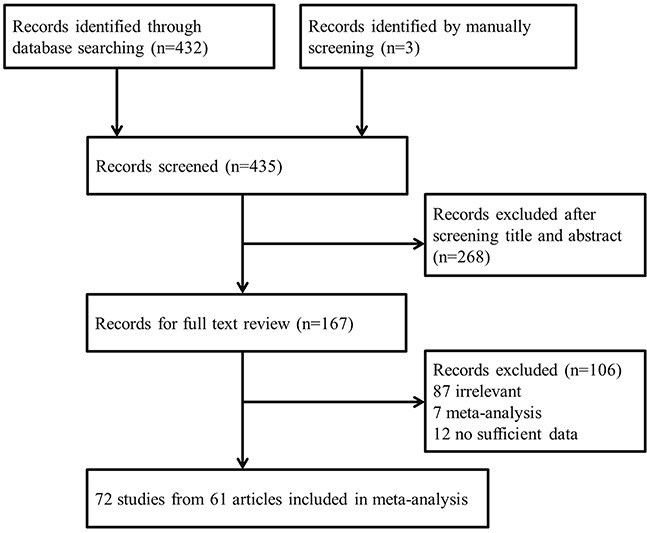
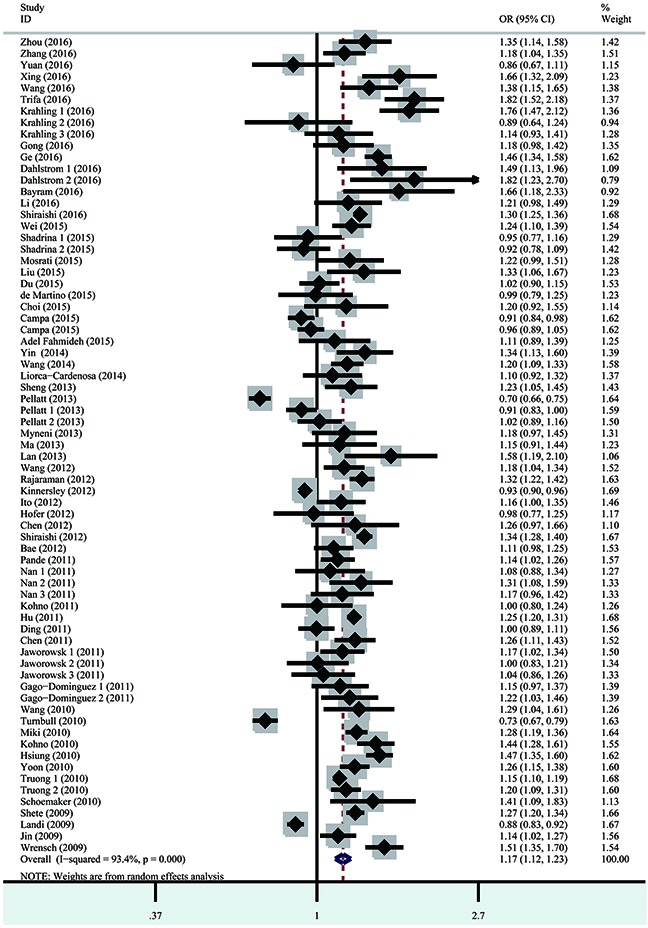
Abnormal telomerase activity is implicated in cancer initiation and development. The rs2736100 T > G polymorphism in the telomerase reverse transcriptase (TERT) gene, which encodes the telomerase catalytic subunit, has been associated with increased cancer risk. We conducted a meta-analysis to more precisely assess this association. After a comprehensive literature search of the PubMed and EMBASE databases up to November 1, 2016, 61 articles with 72 studies comprising 108,248 cases and 161,472 controls were included in our meta-analysis. Studies were conducted on various cancer types. The TERT rs2736100 polymorphism was associated with increased overall cancer risk in five genetic models [homozygous model (GG vs. TT): odds ratio (OR) = 1.39, 95% confidence interval (95% CI) = 1.26-1.54, P < 0.001; heterozygous model (TG vs. TT): OR = 1.16, 95% CI = 1.11-1.23, P < 0.001; dominant model (TG + GG vs. TT): OR = 1.23, 95% CI = 1.15-1.31, P < 0.001; recessive model (GG vs. TG + TT): OR = 1.25, 95% CI = 1.16-1.35, P < 0.001; and allele contrast model (G vs. T): OR = 1.17, 95% CI = 1.12-1.23, P < 0.001]. A stratified analysis based on cancer type associated the polymorphism with elevated risk of thyroid cancer, bladder cancer, lung cancer, glioma, myeloproliferative neoplasms, and acute myeloid leukemia. Our results confirm that the TERT rs2736100 polymorphism confers increased overall cancer risk.
Keywords: TERT; cancer; meta-analysis; risk; telomerase.
Conflict of interest statement
The authors declare no conflicts of interest.
Figures
References
-
- Blackburn EH. Switching and signaling at the telomere. Cell. 2001;106:661–73. - PubMed
Publication types
MeSH terms
Substances
LinkOut - more resources
Full Text Sources
Other Literature Sources
Molecular Biology Databases
Miscellaneous