


The Effect of Salt Intake and Potassium Supplementation on Serum Gastrin Levels in Chinese Adults: A Randomized Trial
- PMID: 28420122
- PMCID: PMC5409728
- DOI: 10.3390/nu9040389
The Effect of Salt Intake and Potassium Supplementation on Serum Gastrin Levels in Chinese Adults: A Randomized Trial
Abstract
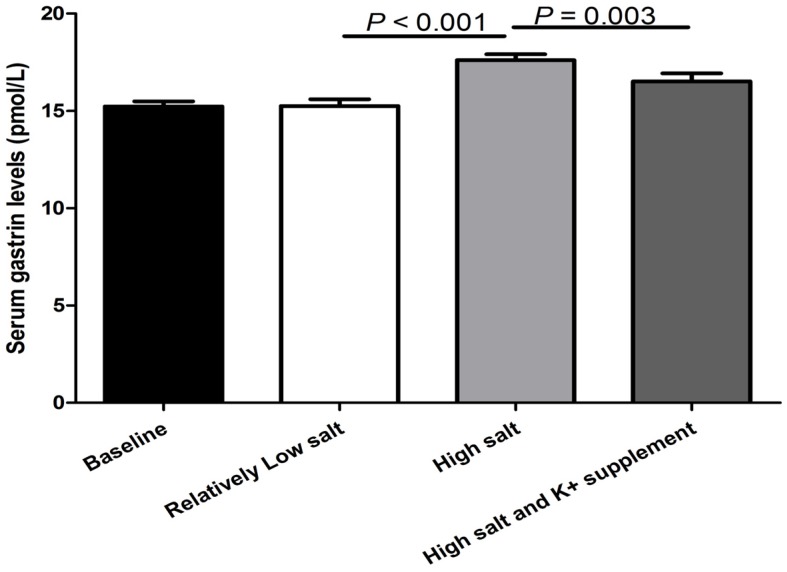
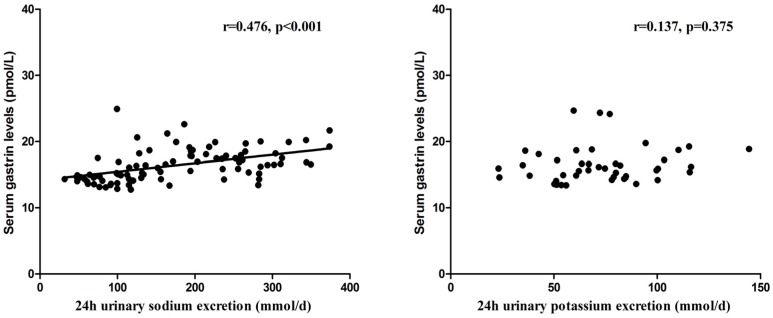
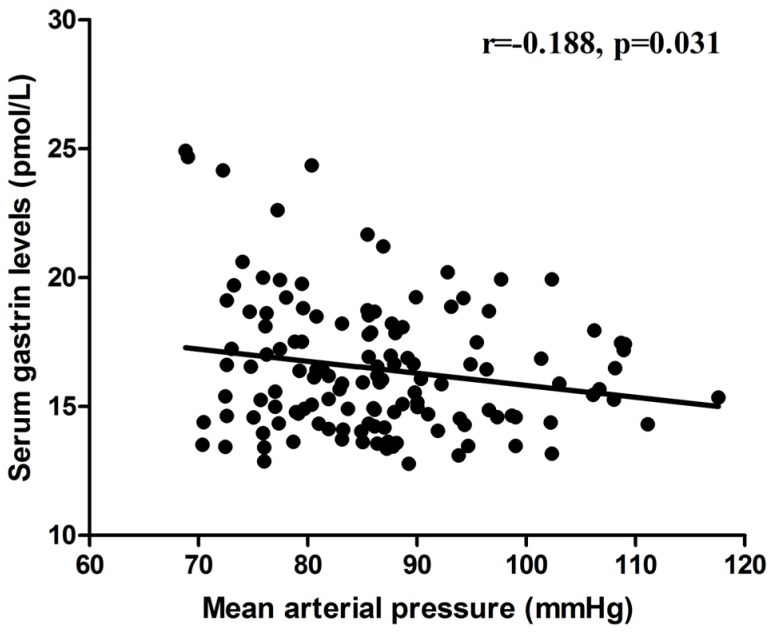
Excess dietary salt is strongly correlated with cardiovascular disease, morbidity, and mortality. Conversely, potassium likely elicits favorable effects against cardiovascular disorders. Gastrin, which is produced by the G-cells of the stomach and duodenum, can increase renal sodium excretion and regulate blood pressure by acting on the cholecystokinin B receptor. The aim of our study was to assess the effects of altered salt and potassium supplementation on serum gastrin levels in humans. A total of 44 subjects (38-65 years old) were selected from a rural community in northern China. All subjects were sequentially maintained on a relatively low-salt diet for 7 days (3.0 g/day of NaCl), a high-salt diet for 7 days (18.0 g/day of NaCl), and then a high-salt diet supplemented with potassium for another 7 days (18.0 g/day of NaCl + 4.5 g/day of KCl). The high-salt intake significantly increased serum gastrin levels (15.3 ± 0.3 vs. 17.6 ± 0.3 pmol/L). This phenomenon was alleviated through potassium supplementation (17.6 ± 0.3 vs. 16.5 ± 0.4 pmol/L). Further analyses revealed that serum gastrin was positively correlated with 24 h urinary sodium excretion (r = 0.476, p < 0.001). By contrast, gastrin level was negatively correlated with blood pressure in all dietary interventions (r = -0.188, p = 0.031). The present study indicated that variations in dietary salt and potassium supplementation affected the serum gastrin concentrations in the Chinese subjects.
Keywords: blood pressure; gastrin; potassium; salt; sodium excretion.
Conflict of interest statement
The authors declare no conflict of interest.
Figures
References
-
- Appel L.J., Frohlich E.D., Hall J.E., Pearson T.A., Sacco R.L., Seals D.R., Sacks F.M., Smith S.C., Jr., Vafiadis D.K., van Horn L.V. The importance of population-wide sodium reduction as a means to prevent cardiovascular disease and stroke: A call to action from the American Heart Association. Circulation. 2011;123:1138–1143. doi: 10.1161/CIR.0b013e31820d0793. - DOI - PubMed
Publication types
MeSH terms
Substances
LinkOut - more resources
Full Text Sources
Other Literature Sources
Medical
