


Chemopreventive Strategies for Inflammation-Related Carcinogenesis: Current Status and Future Direction
- PMID: 28422073
- PMCID: PMC5412448
- DOI: 10.3390/ijms18040867
Chemopreventive Strategies for Inflammation-Related Carcinogenesis: Current Status and Future Direction
Abstract
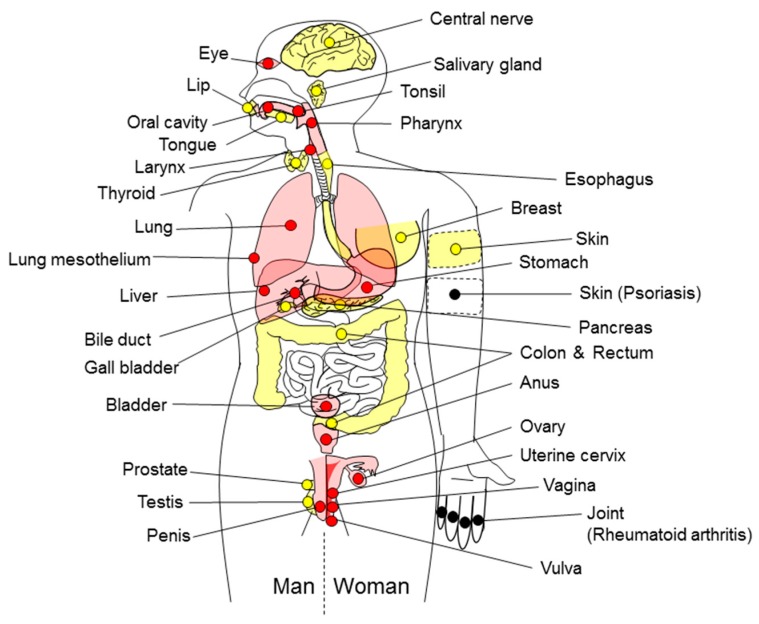
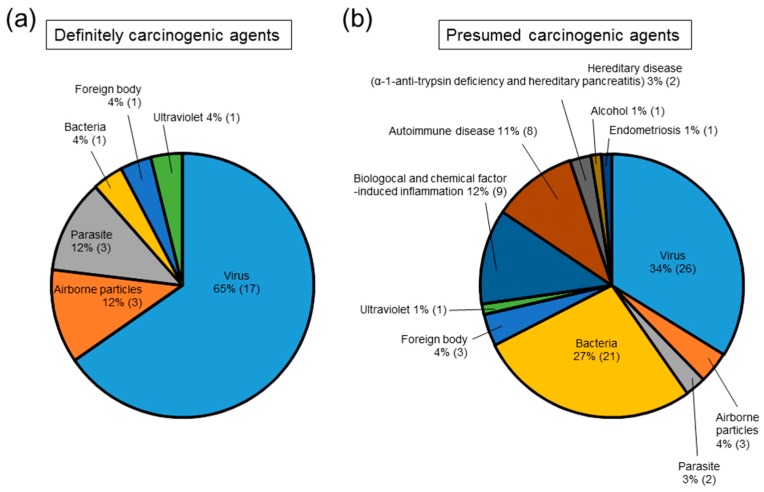
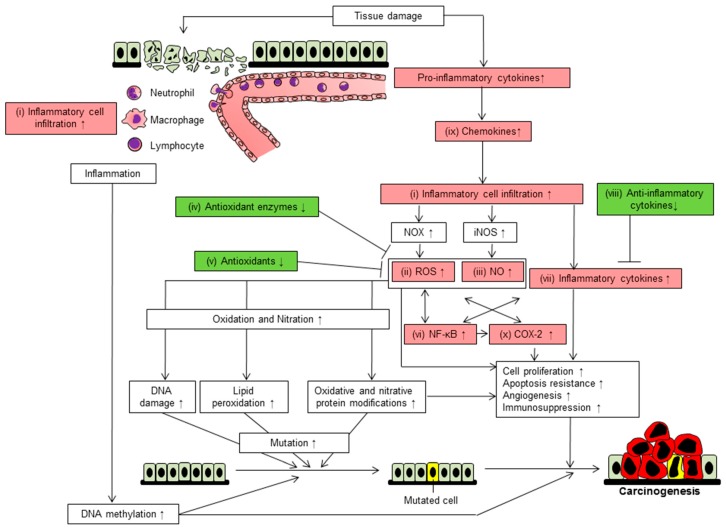
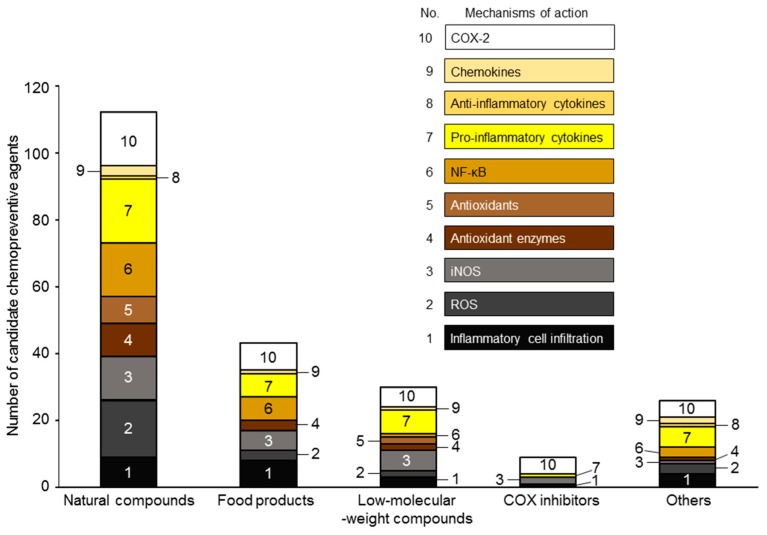
A sustained and chronically-inflamed environment is characterized by the presence of heterogeneous inflammatory cellular components, including neutrophils, macrophages, lymphocytes and fibroblasts. These infiltrated cells produce growth stimulating mediators (inflammatory cytokines and growth factors), chemotactic factors (chemokines) and genotoxic substances (reactive oxygen species and nitrogen oxide) and induce DNA damage and methylation. Therefore, chronic inflammation serves as an intrinsic niche for carcinogenesis and tumor progression. In this article, we summarize the up-to-date findings regarding definitive/possible causes and mechanisms of inflammation-related carcinogenesis derived from experimental and clinical studies. We also propose 10 strategies, as well as candidate agents for the prevention of inflammation-related carcinogenesis.
Keywords: chemoprevention; chronic inflammation; inflammation-related carcinogenesis.
Conflict of interest statement
The authors declare no conflict of interest.
Figures
References
Publication types
MeSH terms
Substances
LinkOut - more resources
Full Text Sources
Other Literature Sources
