


Characterization of rotavirus infection in children with acute gastroenteritis in Bengo province, Northwestern Angola, prior to vaccine introduction
- PMID: 28422995
- PMCID: PMC5397047
- DOI: 10.1371/journal.pone.0176046
Characterization of rotavirus infection in children with acute gastroenteritis in Bengo province, Northwestern Angola, prior to vaccine introduction
Abstract
Background: Rotavirus group A (RVA) is considered the leading cause of pediatric diarrhea, responsible for the high burden of diarrheal diseases in sub-Saharan Africa. Despite recent studies, the existent data are scarce for some African countries like Angola, a country with one of the highest RVA-related death estimates. The aim of this study was to determine the RVA detection rate and circulating genotypes in children less than five years of age with acute gastroenteritis attended at the Bengo General Hospital in Caxito, Bengo province, Angola, before vaccine introduction.
Methods: Between September 2012 and December 2013, 342 fecal specimens were collected from children enrolled. Positive samples for RVA by immunochromatographic rapid test were G and P-typed by hemi-nested type-specific multiplex PCR, and subgrouped for the VP6 gene. VP4 and VP7 genes from a subset of samples were sequenced for phylogenetic analysis.
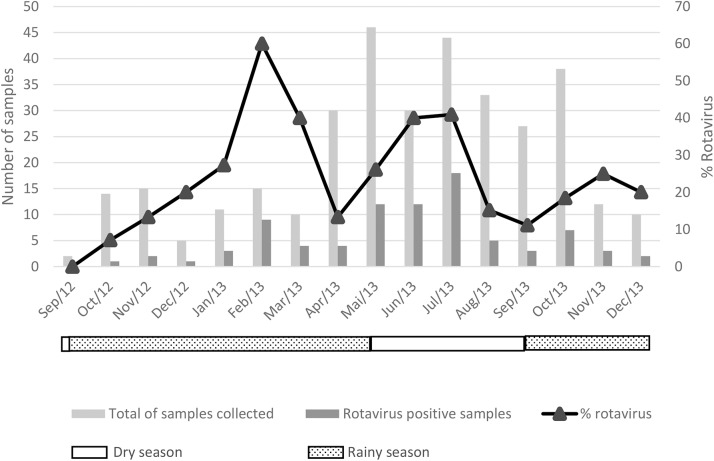
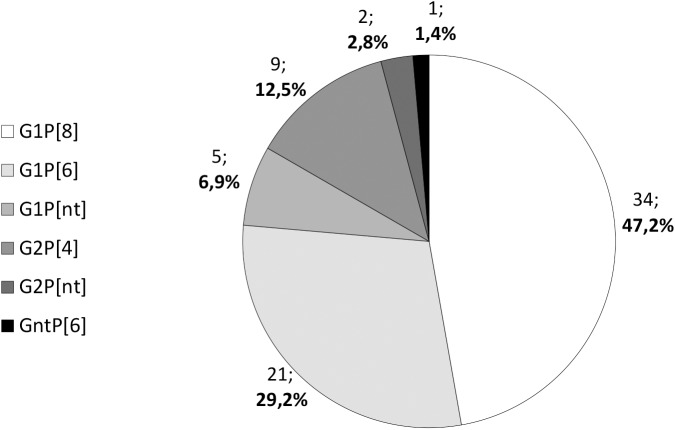
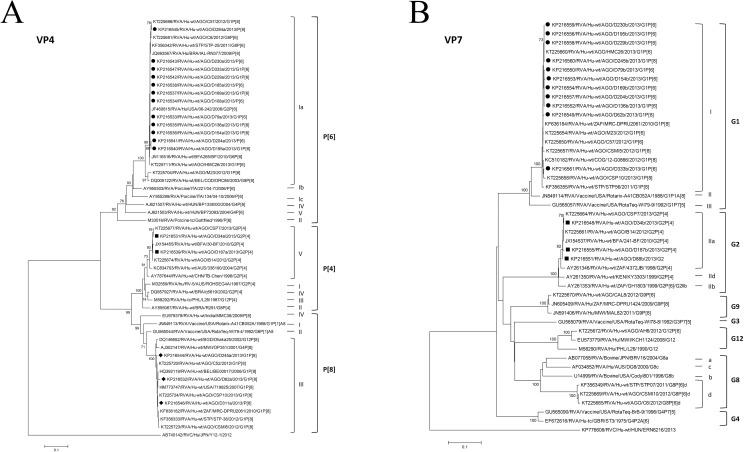
Results: During the study period, a high RVA detection rate was registered (25.1%, 86/342). The age group most affected by RVA infection includes children under 6 months of age (p<0.01). Vomiting was highly associated with RVA infection (72.1%; p<0.001). From the 86 RVA-positive samples, 72 (83.7%) were genotyped. The most prevalent genotype was G1P[8] (34/72; 47.2%), followed by the uncommon G1P[6] (21/72; 29.2%), and G2P[4] (9/72; 12.5%). Only two G-types were found: G1 (60/72; 83.3%) and G2 (11/72; 15.3%). Among the P-genotypes, P[8] was the most prevalent (34/72; 47.2%), followed by P[6] (22/72; 30.6%) and P[4] (9/72; 12.5%). In the phylogenetic trees, the identified G and P-types clustered tightly together and with reference sequences in specific monophyletic groups, with highly significant bootstrap values (≥92%).
Conclusion: This pre-vaccination study revealed, for the first time for Bengo province (Angola), the RVA genotype profile, including phylogenetic relationships, and a high RVA detection rate, supporting the immediate introduction of a RVA vaccine in the national immunization programme.
Conflict of interest statement
Figures
References
-
- Parashar UD, Hummelman EG, Bresee JS, Miller MA, Glass RI. Global illness and deaths caused by rotavirus disease in children. Emerg Infect Dis. 2003;9(5):565–72. doi: 10.3201/eid0905.020562 - DOI - PMC - PubMed
-
- Sanderson C, Clark A, Taylor D, Bolanos B. Global review of rotavirus morbidity and mortality data by age and region. Report to WHO/IVB. 2011.
-
- Tate JE, Burton AH, Boschi-Pinto C, Steele AD, Duque J, Parashar UD. 2008 estimate of worldwide rotavirus-associated mortality in children younger than 5 years before the introduction of universal rotavirus vaccination programmes: a systematic review and meta-analysis. Lancet Infect Dis. 2012;12(2):136–41. Epub 2011/10/28. doi: 10.1016/S1473-3099(11)70253-5 - DOI - PubMed
MeSH terms
Substances
LinkOut - more resources
Full Text Sources
Other Literature Sources
Medical
