. 2017 Apr 19;12(4):e0175886.
doi: 10.1371/journal.pone.0175886. eCollection 2017.

Comprehensive analysis of phospholipids and glycolipids in the opportunistic pathogen Enterococcus faecalis

Affiliations

Comprehensive analysis of phospholipids and glycolipids in the opportunistic pathogen Enterococcus faecalis

Rafi Rashid et al. PLoS One. .

Abstract

Enterococcus faecalis is a Gram-positive, opportunistic, pathogenic bacterium that causes a significant number of antibiotic-resistant infections in hospitalized patients. The development of antibiotic resistance in hospital-associated pathogens is a formidable public health threat. In E. faecalis and other Gram-positive pathogens, correlations exist between lipid composition and antibiotic resistance. Resistance to the last-resort antibiotic daptomycin is accompanied by a decrease in phosphatidylglycerol (PG) levels, whereas multiple peptide resistance factor (MprF) converts anionic PG into cationic lysyl-PG via a trans-esterification reaction, providing resistance to cationic antimicrobial peptides. Unlike previous studies that relied on thin layer chromatography and spectrophotometry, we have performed liquid chromatography-tandem mass spectrometry (LC-MS/MS) directly on lipids extracted from E. faecalis, and quantified the phospholipids through multiple reaction monitoring (MRM). In the daptomycin-sensitive E. faecalis strain OG1RF, we have identified 17 PGs, 8 lysyl-PGs (LPGs), 23 cardiolipins (CL), 3 glycerophospho-diglucosyl-diacylglycerols (GPDGDAG), 5 diglucosyl-diacylglycerols (DGDAG), 3 diacylglycerols (DAGs), and 4 triacylglycerols (TAGs). We have quantified PG and shown that PG levels vary during growth of E. faecalis in vitro. We also show that two daptomycin-resistant (DapR) strains of E. faecalis have substantially lower levels of PG and LPG levels. Since LPG levels in these strains are lower, daptomycin resistance is likely due to the reduction in PG. This lipidome map is the first comprehensive analysis of membrane phospholipids and glycolipids in the important human pathogen E. faecalis, for which antimicrobial resistance and altered lipid homeostasis have been intimately linked.


Conflict of interest statement

Competing Interests: The authors have declared that no competing interests exist.

Figures

Fig 1
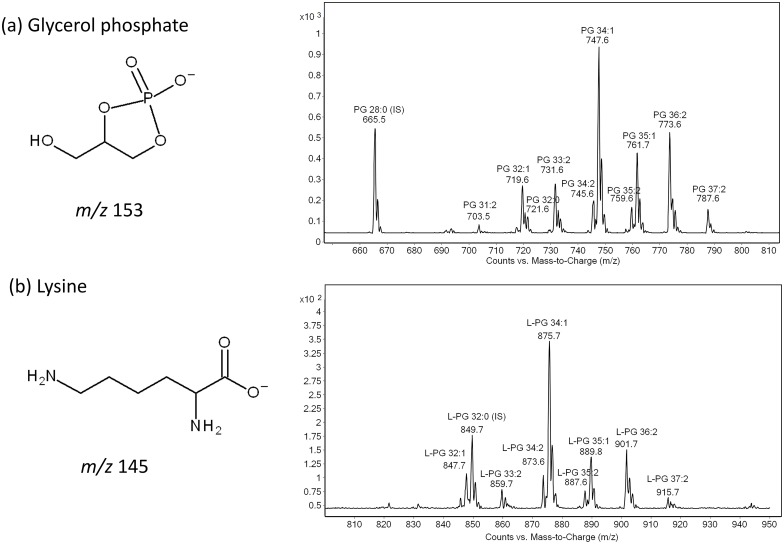
Fig 1. Precursor ion scans for Enterococcus faecalis phospholipids.
Precursor ion scans for (A) 153 fragment ion (phosphatidylglycerol (PG))) and (B) 145 fragment ion (lysyl-phosphatidylglycerol (LPG)) reveal several species of PG (A) and of LPG (B). Each peak is labelled with the class (PG or LPG), fatty acid composition (e.g. 34:1), and the mass-to-charge (m/z) ratio (e.g. 747.6 for PG 34:1).
Fig 2
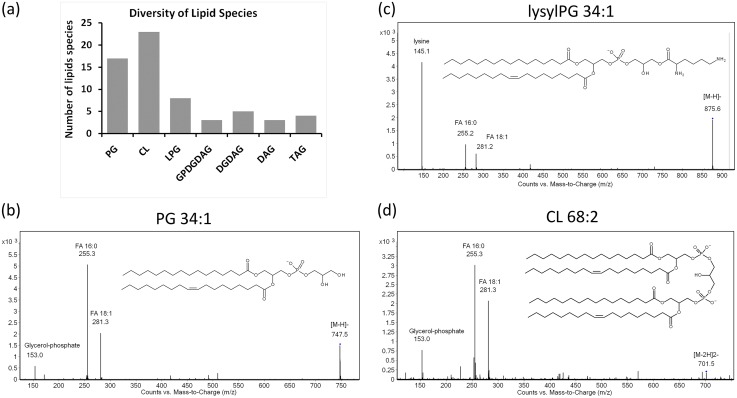
Fig 2. The diversity of lipid species in E. faecalis strain OG1RF.
(a) The total number of lipid species identified is 63 across 7 classes. Representative MSMS spectra for the phospholipids (PG, lysyl-PG, and cardiolipin (CL)) are shown for (b) PG 34:1, (c) lysyl-PG 34:1, and (d) CL 68:2. Each species is identified based upon its characteristic fragmentation pattern: MSMS of (b) PG 34:1 gives rise the glycerol-phosphate headgroup (m/z = 153) and fatty acids 16:0 (m/z = 255.3) and 18:1 (m/z = 281.3); (c) lysyl-PG 34:1 gives rise to lysine (m/z = 145) and fatty acids 16:0 and 18:1; and CL (68:2) gives rise to the glycerol-phosphate headgroup and fatty acids 16:0 and 18:1.
Fig 3
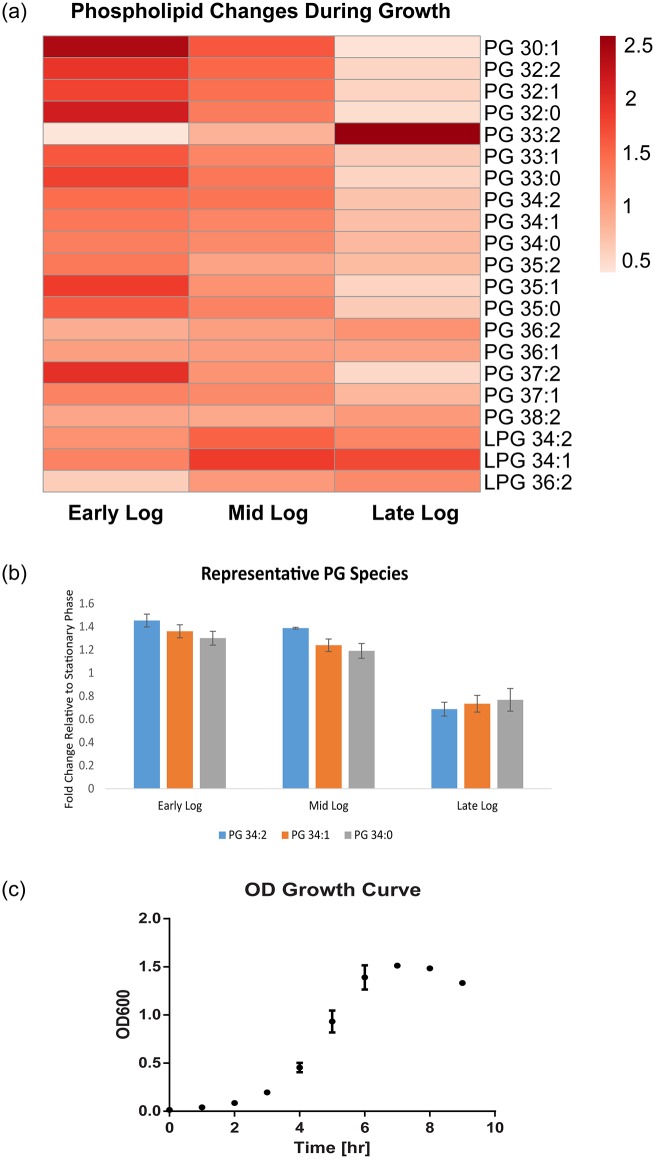
Fig 3. The levels of E. faecalis strain OG1RF PG and LPG can be tracked throughout the growth curve.
(A) Heat map depicting phosphatidylglycerol (PG) and lysyl-PG levels in the early-, middle- and late-logarithmic growth phases relative to the late stationary phase. The colour scale (top right) indicates fold change of phospholipids (PG and lysyl-PG) in early-, mid-, and late-logarithmic phase cells with respect to late stationary phase cells. (B) Bar chart showing representative fold change values for PG 34:0, 34:1 and 34:2. (C) The three logarithmic phases corresponded to optical density (OD) values of 0.3, 0.5 and 0.8 on an OD growth curve.
Fig 4
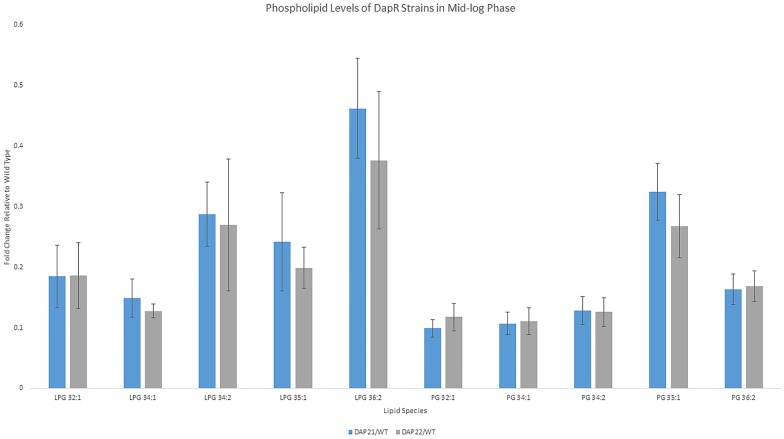
Fig 4. The levels of PG and LPG in two daptomycin-resistant strains, Dap21 to Dap22, compared to non-resistant OG1RF.
The bar chart shows the fold change of 5 LPGs and their corresponding PGs from Dap21 and Dap22 grown to mid-logarithmic phase, with respect to the non-resistant OG1RF parental strain. Data are expressed as mean ± standard deviation (SD) (calculated from 5 replicates) with the SDs represented as error bars.

References

    1. Wilson B, Salyers A, Whitt D, Winkler M. Bacterial pathogenesis: A molecular approach. Washington, DC, USA: ASM Press; 2011.
    1. Römling U, Balsalobre C. Biofilm infections, their resilience to therapy and innovative treatment strategies. J Intern Med. 2012;272(6):541–61. 10.1111/joim.12004 - DOI - PubMed
    1. Mishra N, Bayer A, Tran T, Shamoo Y, Mileykovskaya E, Dowhan W, et al. Daptomycin resistance in enterococci is associated with distinct alterations of cell membrane phospholipid content. PLoS One. 2012;7(8). - PMC - PubMed
    1. Diaz L, Tran T, Munita J, Miller W, Rincon S, Carvajal L, et al. Whole-genome analyses of Enterococcus faecium isolates with diverse daptomycin MICs. Antimicrob Agents Chemother. 2014;58(8):4527–34. 10.1128/AAC.02686-14 - DOI - PMC - PubMed
    1. Arias C, Panesso D, McGrath D, Qin X, Mojica M, Miller C, et al. Genetic basis for in vivo daptomycin resistance in enterococci. N Engl J Med. 2011;365(10):892–900. 10.1056/NEJMoa1011138 - DOI - PMC - PubMed

MeSH terms