Upregulation of minichromosome maintenance complex component 3 during epithelial-to-mesenchymal transition in human prostate cancer
- PMID: 28424404
- PMCID: PMC5503607
- DOI: 10.18632/oncotarget.16835
Upregulation of minichromosome maintenance complex component 3 during epithelial-to-mesenchymal transition in human prostate cancer
Abstract
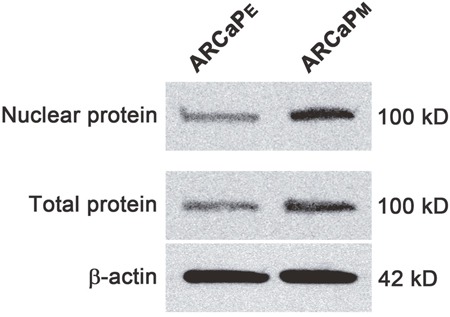
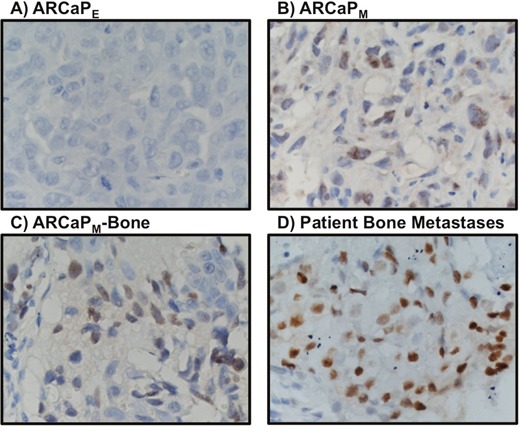
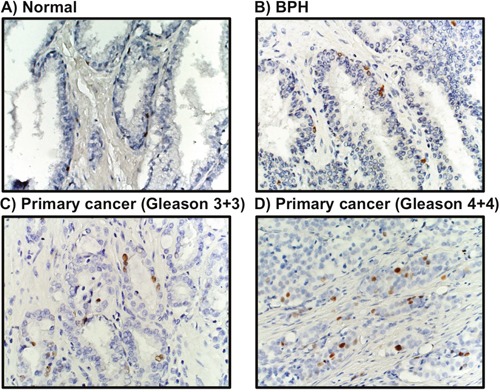
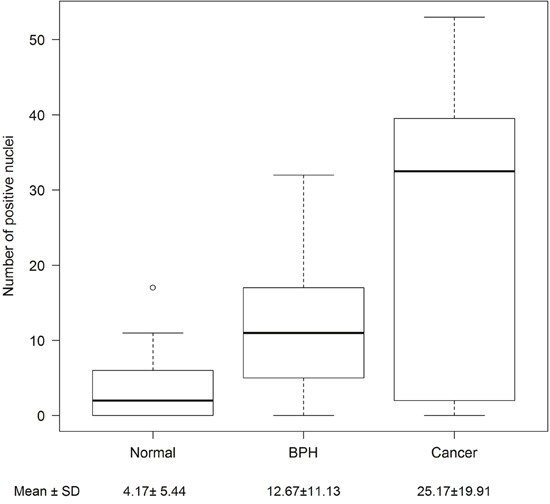
Metastasis is often associated with epithelial-to-mesenchymal transition (EMT). To understand the molecular mechanisms of this process, we conducted proteomic analysis of androgen-repressed cancer of the prostate (ARCaP), an experimental model of metastatic human prostate cancer. The protein signatures of epithelial (ARCaPE) and mesenchymal (ARCaPM) cells were consistent with their phenotypes. Importantly, the expression of mini-chromosome maintenance 3 (MCM3) protein, a crucial subunit of DNA helicase, was significantly higher in ARCaPM cells than that of ARCaPE cells. This increased MCM3 protein expression level was verified using Western blot analysis of the ARCaP cell lineages. Furthermore, immunohistochemical analysis of MCM3 protein levels in human prostate tissue specimens showed elevated expression in bone metastasis and advanced human prostate cancer tissue samples. Subcutaneous injection experiments using ARCaPE and ARCaPM cells in a mouse model also revealed increased MCM3 protein levels in mesenchymal-derived tumors. This study identifies MCM3 as an upregulated molecule in mesenchymal phenotype of human prostate cancer cells and advanced human prostate cancer specimens, suggesting MCM3 may be a new potential drug target for prostate cancer treatment.
Keywords: androgen receptor; epithelial-to-mesenchymal transition; metastasis; minichromosome maintenance complex proteins; proteomics.
Conflict of interest statement
The authors declare no conflicts of interest.
Figures
References
-
- Siegel RL, Miller KD, Jemal A. Cancer statistics, 2016. CA Cancer J Clin. 2016;66:7–30. - PubMed
-
- Yang J, Weinberg RA. Epithelial-mesenchymal transition: at the crossroads of development and tumor metastasis. Dev Cell. 2008;14:818–829. - PubMed
-
- Wang X, Stewart PA, Cao Q, Sang QX, Chung LW, Emmett MR, Marshall AG. Characterization of the phosphoproteome in androgen-repressed human prostate cancer cells by Fourier transform ion cyclotron resonance mass spectrometry. J Proteome Res. 2011;10:3920–3928. - PubMed
MeSH terms
Substances
Grants and funding
LinkOut - more resources
Full Text Sources
Other Literature Sources
Medical