


Osteoblast role in osteoarthritis pathogenesis
- PMID: 28425564
- PMCID: PMC5575507
- DOI: 10.1002/jcp.25969
Osteoblast role in osteoarthritis pathogenesis
Abstract
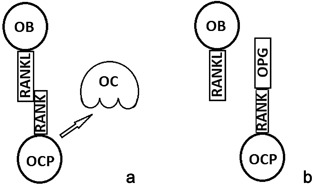
Even if osteoarthritis pathogenesis is still poorly understood, numerous evidences suggest that osteoblasts dysregulation plays a key role in osteoarthritis pathogenesis. An abnormal expression of OPG and RANKL has been described in osteoarthritis osteoblasts, which is responsible for abnormal bone remodeling and decreased mineralization. Alterations in genes expression are involved in dysregulation of osteoblast function, bone remodeling, and mineralization, leading to osteoarthritis development. Moreover, osteoblasts produce numerous transcription factors, growth factors, and other proteic molecules which are involved in osteoarthritis pathogenesis.
Keywords: bone; osteoarthritis; osteoblast.
© 2017 The Authors. Journal of Cellular Physiology Published by Wiley Periodicals, Inc.
Figures
References
-
- Abed, É , Chan, T. F. , Delalandre, A. , Martel‐Pelletier, J. , Pelletier, J. P. , & Lajeunesse, D. (2011). R‐spondins are newly recognized players in osteoarthritis that regulate Wnt signaling in osteoblasts. Arthritis & Rheumatism, 63, 3865–3875. - PubMed
-
- Abed, É , Couchourel, D. , Delalandre, A. , Duval, N. , Pelletier, J. P. , Martel‐Pelletier, J. , & Lajeunesse, D. (2014). Low sirtuin 1 levels in human osteoarthritis subchondral osteoblasts lead to abnormal sclerostin expression which decreases Wnt/β‐catenin activity. Bone, 59, 28–36. - PubMed
-
- Abed, É , Bouvard, B. , Martineau, X. , Jouzeau, J. Y. , Reboul, P. , & Lajeunesse, D. (2015). Elevated hepatocyte growth factor levels in osteoarthritis osteoblasts contribute to their altered response to bone morphogenetic protein‐2 and reduced mineralization capacity. Bone, 75, 111–119. - PubMed
Publication types
MeSH terms
LinkOut - more resources
Full Text Sources
Other Literature Sources
Medical
