


Using Persuasive Technology to Increase Physical Activity in People With Chronic Obstructive Pulmonary Disease by Encouraging Regular Walking: A Mixed-Methods Study Exploring Opinions and Preferences
- PMID: 28428155
- PMCID: PMC5418523
- DOI: 10.2196/jmir.6616
Using Persuasive Technology to Increase Physical Activity in People With Chronic Obstructive Pulmonary Disease by Encouraging Regular Walking: A Mixed-Methods Study Exploring Opinions and Preferences
Abstract
Background: People with chronic obstructive pulmonary disease (PwCOPD) often experience breathlessness and fatigue, making physical activity challenging. Although many persuasive technologies (such as mobile phone apps) have been designed to support physical activity among members of the general population, current technologies aimed at PwCOPD are underdeveloped and only use a limited range of persuasive technology design principles.
Objective: The aim of this study was to explore how acceptable different persuasive technology design principles were considered to be in supporting and encouraging physical activity among PwCOPD.
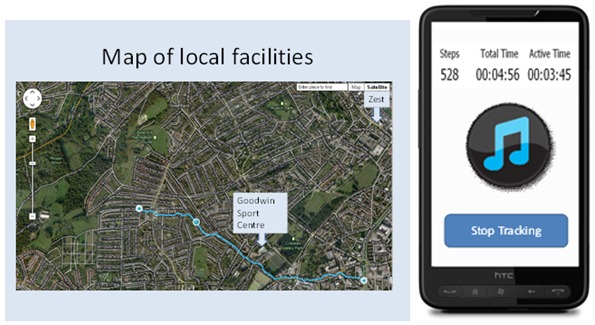
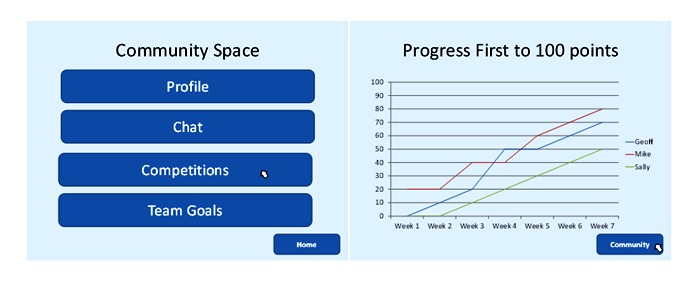
Methods: Three prototypes for mobile apps using different persuasive technology design principles as defined by the persuasive systems design (PSD) model-namely, dialogue support, primary task support, and social support-were developed. Opinions of these prototypes were explored through 28 interviews with PwCOPD, carers, and the health care professionals (HCPs) involved in their care and questionnaires completed by 87 PwCOPD. Participants also ranked how likely individual techniques (eg, competition) would be to convince them to use a technology designed to support physical activity. Data were analyzed using framework analysis, Friedman tests, and Wilcoxon signed rank tests and a convergent mixed methods design was used to integrate findings.
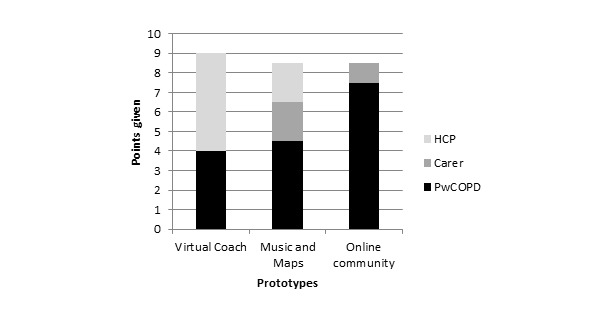
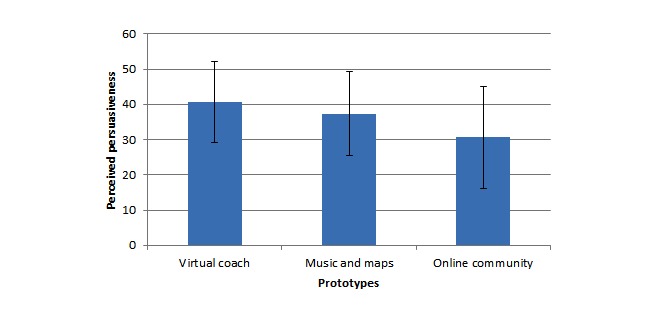
Results: The prototypes for mobile apps were received positively by participants. The prototype that used a dialogue support approach was identified as the most likely to be used or recommended by those interviewed, and was perceived as more persuasive than both of the other prototypes (Z=-3.06, P=.002; Z=-5.50, P<.001) by those who completed the questionnaire. PwCOPD identified dialogue support and primary task support techniques as more likely to convince them to use a technology than social support techniques (Z=-5.00, P<.001; Z=-4.92, P<.001, respectively). Opinions of social support techniques such as competition and collaboration were divided.
Conclusions: Dialogue support and primary task support approaches are considered to be both acceptable and likely to be persuasive by PwCOPD, carers, and HCPs. In the future, these approaches should be considered when designing apps to encourage physical activity by PwCOPD.
Keywords: chronic obstructive pulmonary disease; mHealth; mobile apps; persuasive technology; physical activity; walking.
©Yvonne Kiera Bartlett, Thomas L Webb, Mark S Hawley. Originally published in the Journal of Medical Internet Research (http://www.jmir.org), 20.04.2017.
Conflict of interest statement
Conflicts of Interest: None declared.
Figures


References
-
- Fogg BJ. Persuasive Technology: Using Computers to Change What We Think and Do. San Fransisco: Morgan Kaufmann; 2003.
-
- Boulos MNK, Brewer AC, Karimkhani C, Buller DB, Dellavalle RP. Mobile medical and health apps: state of the art, concerns, regulatory control and certification. Online J Public Health Inform. 2014;5(3):229. doi: 10.5210/ojphi.v5i3.4814. http://europepmc.org/abstract/MED/24683442 ojphi-05-e229 - DOI - PMC - PubMed
-
- Hamari J, Koivisto J, Pakkanen T. Do persuasive technologies persuade? a review of empirical studies. Proceedings of the 9th International conference; PERSUASIVE 2014; 2014; Padua, Italy. 2014. - DOI
-
- Cowan LT, Van Wagenen SA, Brown BA, Hedin RJ, Seino-Stephan Y, Hall PC, West JH. Apps of steel: are exercise apps providing consumers with realistic expectations?: a content analysis of exercise apps for presence of behavior change theory. Health Educ Behav. 2013 Apr;40(2):133–9. doi: 10.1177/1090198112452126.1090198112452126 - DOI - PubMed
-
- West JH, Hall PC, Hanson CL, Barnes MD, Giraud-Carrier C, Barrett J. There's an app for that: content analysis of paid health and fitness apps. J Med Internet Res. 2012;14(3):e72. doi: 10.2196/jmir.1977. http://www.jmir.org/2012/3/e72/ v14i3e72 - DOI - PMC - PubMed
MeSH terms
LinkOut - more resources
Full Text Sources
Other Literature Sources
Medical
