


Strain softening of nano-scale fuzzy interfaces causes Mullins effect in thermoplastic polyurethane
- PMID: 28428544
- PMCID: PMC5430512
- DOI: 10.1038/s41598-017-00904-3
Strain softening of nano-scale fuzzy interfaces causes Mullins effect in thermoplastic polyurethane
Abstract
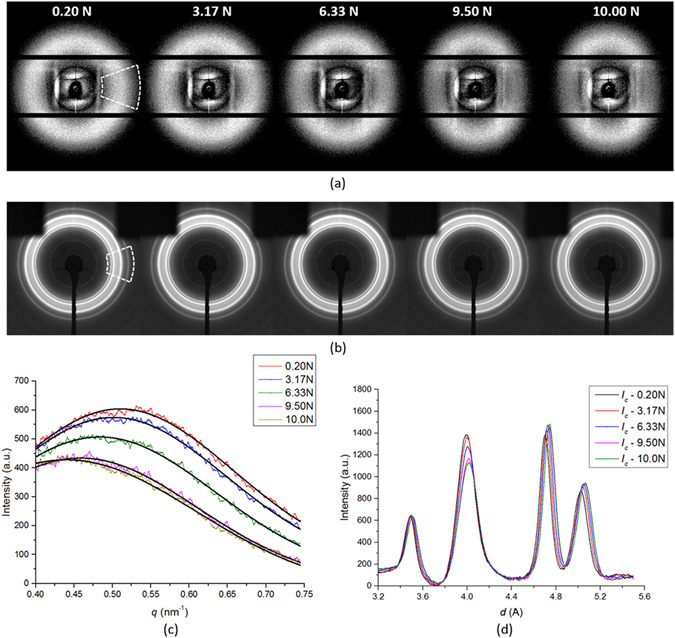
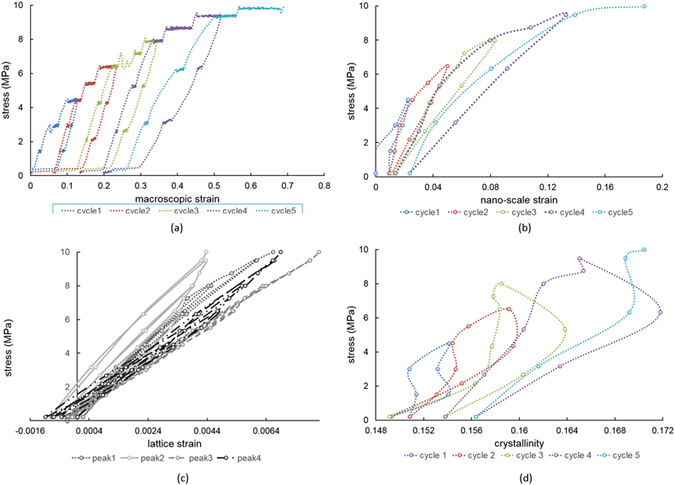
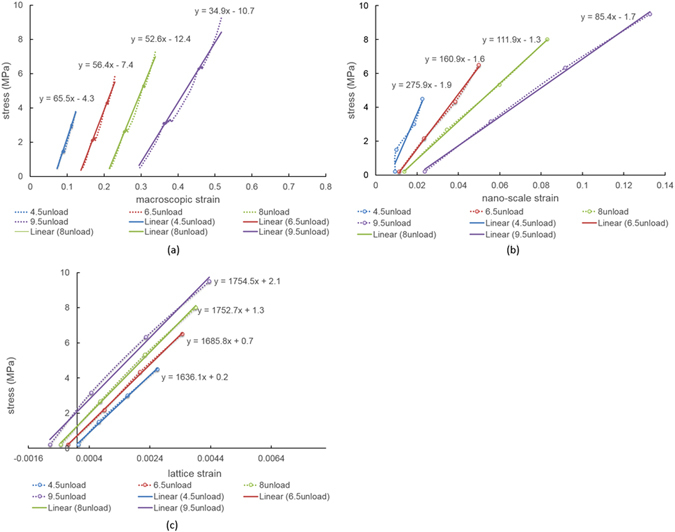
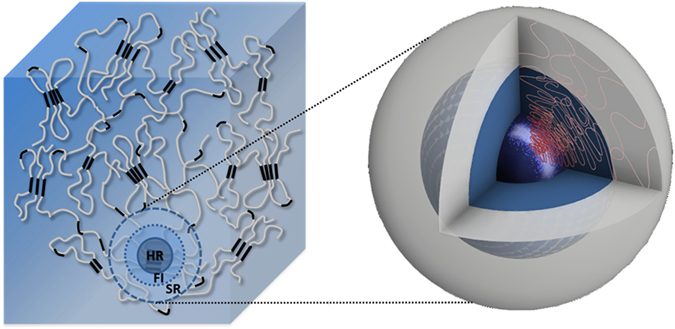
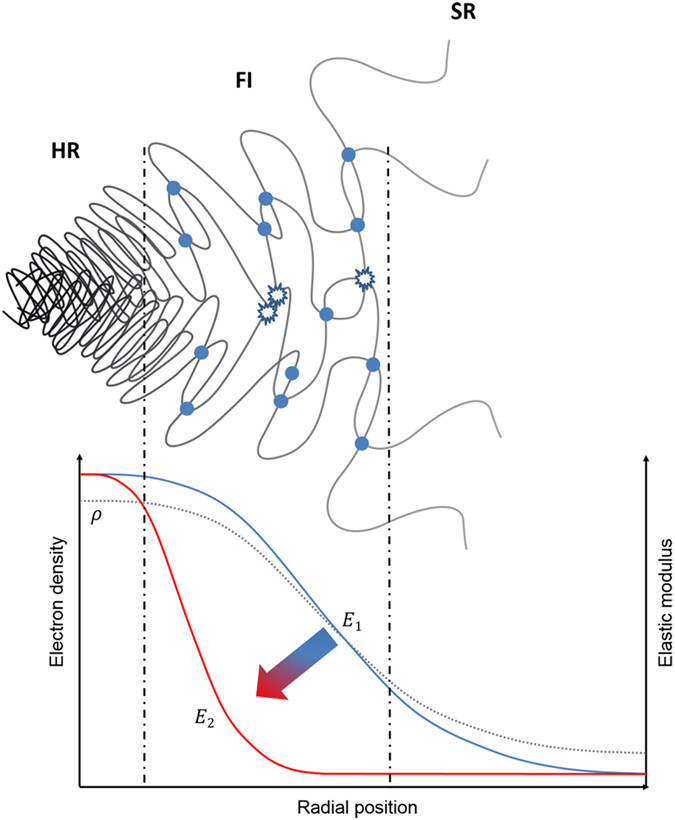
The strain-induced softening of thermoplastic polyurethane elastomers (TPUs), known as the Mullins effect, arises from their multi-phase structure. We used the combination of small- and wide- angle X-ray scattering (SAXS/WAXS) during in situ repeated tensile loading to elucidate the relationship between molecular architecture, nano-strain, and macro-scale mechanical properties. Insights obtained from our analysis highlight the importance of the 'fuzzy interface' between the hard and soft regions that governs the structure evolution at nanometre length scales and leads to macroscopic stiffness reduction. We propose a hierarchical Eshelby inclusion model of phase interaction mediated by the 'fuzzy interface' that accommodates the nano-strain gradient between hard and soft regions and undergoes tension-induced softening, causing the Mullins effect that becomes apparent in TPUs even at moderate tensile strains.
Conflict of interest statement
The authors declare that they have no competing interests.
Figures
References
-
- Wang CB, et al. Morphology and properties of segmented polyether polyurethaneureas. Macromolecules. 1983;16:775–786. doi: 10.1021/ma00239a014. - DOI
-
- Fu BX, et al. Structural development during deformation of polyurethane containing polyhedral oligomeric silsesquioxanes (POSS) molecules. Polymer. 2001;42:599–611. doi: 10.1016/S0032-3861(00)00389-X. - DOI
-
- Mullins L. Effect of stretching on the properties of rubber. J Rubber Res. 1948;16:275–282.
-
- Mullins L, et al. Theoretical model for the elastic behavior of filler reinforced vulcanized rubbers. Rubber Chem Technol. 1957;30:555–571. doi: 10.5254/1.3542705. - DOI
Publication types
LinkOut - more resources
Full Text Sources
Other Literature Sources
