


Nighttime is the worst time: Parental fear of hypoglycemia in young children with type 1 diabetes
- PMID: 28429581
- PMCID: PMC5650950
- DOI: 10.1111/pedi.12525
Nighttime is the worst time: Parental fear of hypoglycemia in young children with type 1 diabetes
Abstract
Background: Fear of hypoglycemia is common in parents of young children with type 1 diabetes (T1D), but little is known about the specific fears that parents most often experience. Hypoglycemia fear has been associated with poorer glycemic control in older children, though not yet studied in a large cohort of very young children.
Materials and methods: Parents of 549 children <7 years (mean 5.2 ± 1.2 years [19% <3 years]) with a mean diabetes duration of 2.4 ± 1.0 years (range 1-6 years) and mean HbA1c 8.2% ± 1.1% (66 ± 12 mmol/mol) registered in the T1D Exchange completed the worry scale of the Hypoglycemia Fear Survey modified for parents (HFS-P).
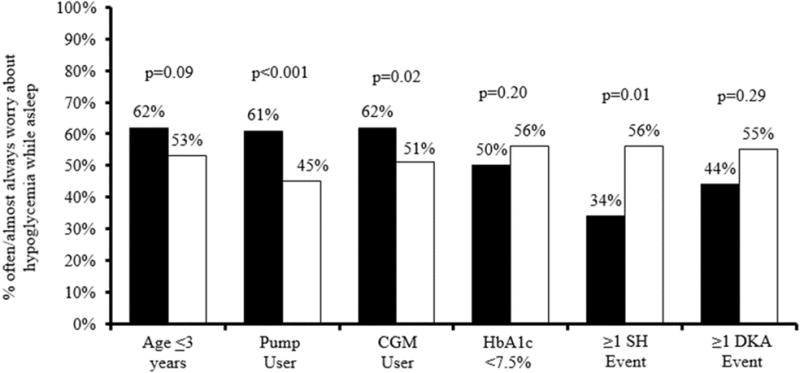
Results: Mean parental fear of hypoglycemia worry score was 36.1 ± 23.1 (possible range 0-100), with most frequent worries related to the child having a low while asleep and the child not recognizing a low. The mean worry score was not associated with the child's age, glycemic control, or recent severe hypoglycemic event. Parental worries about lows while sleeping were significantly higher in pump users than non-users (61% vs. 45%; P < .001), and tended to be higher in CGM users than non-users (62% vs 51%; P = .02).
Conclusions: The greatest worries of parents of young children with T1D were related to hypoglycemia during sleep and other times/circumstances during which it would be difficult to detect hypoglycemia. Using advanced diabetes technologies may be an effort to temper fears about hypoglycemia during sleep, though the directionality of this relationship is undetermined. Additional studies can clarify this association and leverage use of diabetes technologies to improve glycemic control.
Keywords: T1D Exchange clinic registry; fear of hypoglycemia; type 1 diabetes; young children.
© 2017 John Wiley & Sons A/S. Published by John Wiley & Sons Ltd.
Conflict of interest statement
Financial Disclosures
The authors do not have any financial disclosures to report.
Figures
References
-
- Graveling AJ, Noyes KJ, Allerhand MH, Wright RJ, Bath LE, Deary IJ, et al. Prevalence of impaired awareness of hypoglycemia and identification of predictive symptoms in children and adolescents with type 1 diabetes. Pediatr Diabetes. 2014;15(3):206–13. - PubMed
-
- Ly TT, Maahs DM, Rewers A, Dunger D, Oduwole A, Jones TW, et al. ISPAD Clinical Practice Consensus Guidelines 2014. Assessment and management of hypoglycemia in children and adolescents with diabetes. Pediatr Diabetes. 2014;15(Suppl 20):180–92. - PubMed
-
- Freckleton E, Sharpe L, Mullan B. The relationship between maternal fear of hypoglycaemia and adherence in children with type-1 diabetes. Int J Behav Med. 2014;21(5):804–10. - PubMed
Publication types
MeSH terms
Substances
Grants and funding
LinkOut - more resources
Full Text Sources
Other Literature Sources
Medical
Research Materials
