


A Randomized Controlled Trial of a Mindfulness and Acceptance Group Therapy for Residential Substance Use Patients
- PMID: 28430015
- PMCID: PMC6080615
- DOI: 10.1080/10826084.2017.1284232
A Randomized Controlled Trial of a Mindfulness and Acceptance Group Therapy for Residential Substance Use Patients
Abstract
Background: Substance use disorders are understood as a chronically relapsing condition that is difficult to treat. However, in recent years there have been promising developments in the treatment of substance use disorders, specifically with interventions based on mindfulness and acceptance and commitment therapy. Little research has examined whether these types of interventions may positively impact residential substance use treatment outcomes.
Objectives: Thus, in the current study we developed and examined, in a randomized controlled trial, a 4-week, eight-session, adjunctive mindfulness and acceptance group therapy for patients in residential substance use treatment. Our primary outcomes were substance use cravings, psychological flexibility, and dispositional mindfulness at treatment discharge.
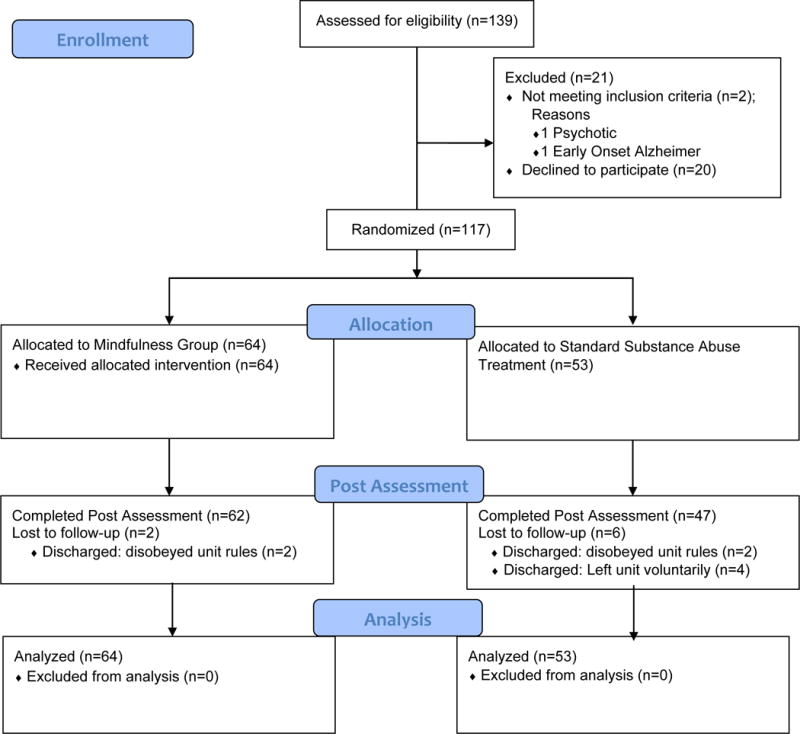
Methods: Patients (N = 117) from a private residential substance use facility were randomized to receive the adjunctive mindfulness and acceptance group or treatment-as-usual. Patients were assessed at treatment intake and at discharge from a 28-30-day residential program.
Results: Although treatment groups did not statistically differ at discharge on any primary outcome, small effect sizes favored the mindfulness and acceptance group on cravings and psychological flexibility. Conclusions/Importance: Continued research is needed to determine whether the addition of mindfulness and acceptance-based interventions improve outcomes long term following residential substance use treatment.
Keywords: Mindfulness; acceptance; randomized controlled trial; substance use.
Conflict of interest statement
References
-
- American Psychiatric Association. Diagnostic and statistical manual-text revision (DSM-IV-TR, 2000) Washington, DC: Author; 2000.
-
- Baer RA. Mindfulness training as a clinical intervention: A conceptual and empirical review. Clinical psychology: Science and practice. 2003;10:125–143.
-
- Baer RA, Carmody J, Hunsinger M. Weekly change in mindfulness and perceived stress in a mindfulness‐based stress reduction program. Journal of Clinical Psychology. 2012;68:755–765. - PubMed
-
- Baer RA, Smith GT, Hopkins J, Krietemeyer J, Toney L. Using self-report assessment methods to explore facets of mindfulness. Assessment. 2006;13:27–45. - PubMed
-
- Bowen S, Chawla N, Marlatt GA. Mindfulness-based relapse prevention for addictive behaviors: A clinician’s guide. New York, NY: Guilford Press; 2011.
Publication types
MeSH terms
Grants and funding
LinkOut - more resources
Full Text Sources
Other Literature Sources
Medical
