


A comprehensive analysis of rare genetic variation in amyotrophic lateral sclerosis in the UK
- PMID: 28430856
- PMCID: PMC5445258
- DOI: 10.1093/brain/awx082
A comprehensive analysis of rare genetic variation in amyotrophic lateral sclerosis in the UK
Abstract
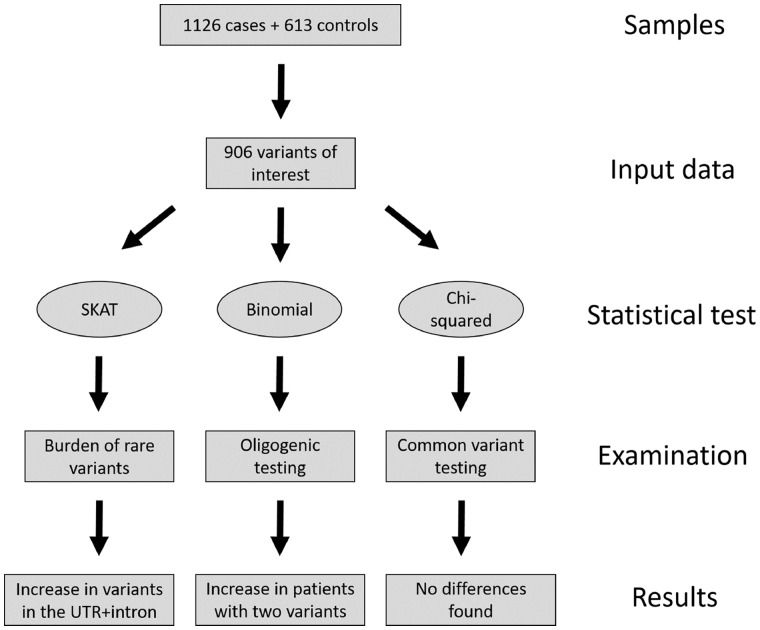
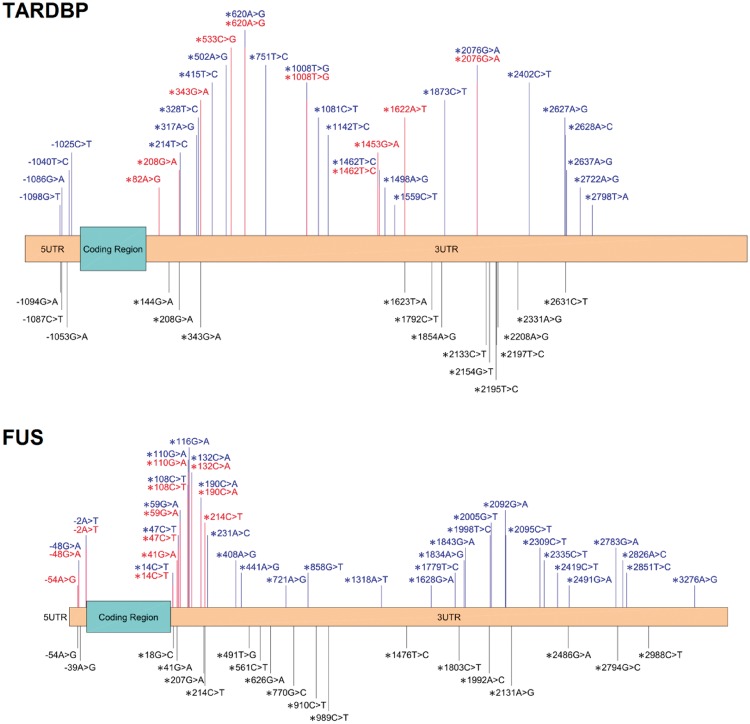
Amyotrophic lateral sclerosis is a progressive neurodegenerative disease of motor neurons. About 25 genes have been verified as relevant to the disease process, with rare and common variation implicated. We used next generation sequencing and repeat sizing to comprehensively assay genetic variation in a panel of known amyotrophic lateral sclerosis genes in 1126 patient samples and 613 controls. About 10% of patients were predicted to carry a pathological expansion of the C9orf72 gene. We found an increased burden of rare variants in patients within the untranslated regions of known disease-causing genes, driven by SOD1, TARDBP, FUS, VCP, OPTN and UBQLN2. We found 11 patients (1%) carried more than one pathogenic variant (P = 0.001) consistent with an oligogenic basis of amyotrophic lateral sclerosis. These findings show that the genetic architecture of amyotrophic lateral sclerosis is complex and that variation in the regulatory regions of associated genes may be important in disease pathogenesis.
Keywords: amyotrophic lateral sclerosis; association study; complex trait; neurodegeneration; polygenic inheritance.
© The Author (2017). Published by Oxford University Press on behalf of the Guarantors of Brain.
Figures
References
-
- Abel O, Powell JF, Andersen PM, Al-Chalabi A. ALSoD: a user-friendly online bioinformatics tool for amyotrophic lateral sclerosis genetics. Hum Mutat 2012; 33: 1345–51. - PubMed
-
- Abrahams S, Newton J, Niven E, Foley J, Bak TH. Screening for cognition and behaviour changes in ALS. Amyotroph Lateral Scler Front Degener 2014; 15: 9–14. - PubMed
-
- Al-Chalabi A, Hardiman O. The epidemiology of ALS: a conspiracy of genes, environment and time. Nat Rev Neurol 2013; 9: 617–28. - PubMed
-
- Al-Chalabi A, Lewis CM. Modelling the effects of penetrance and family size on rates of sporadic and familial disease. Hum Hered 2011; 71: 281–8. - PubMed
MeSH terms
Grants and funding
- MR/L501542/1/MRC_/Medical Research Council/United Kingdom
- MR/L501529/1/MRC_/Medical Research Council/United Kingdom
- G0701075/MRC_/Medical Research Council/United Kingdom
- G-1307/PUK_/Parkinson's UK/United Kingdom
- MR/M008606/1/MRC_/Medical Research Council/United Kingdom
- MALASPINA/APR13/817-791/MNDA_/Motor Neurone Disease Association/United Kingdom
- G0900688/MRC_/Medical Research Council/United Kingdom
- MR/J004758/1/MRC_/Medical Research Council/United Kingdom
- WT_/Wellcome Trust/United Kingdom
- SHAW/NOV14/985-797/MNDA_/Motor Neurone Disease Association/United Kingdom
- G0901254/MRC_/Medical Research Council/United Kingdom
- JONES/OCT15/958-799/MNDA_/Motor Neurone Disease Association/United Kingdom
- G0300329/MRC_/Medical Research Council/United Kingdom
- G0900635/MRC_/Medical Research Council/United Kingdom
- ALCHALABI-DOBSON/APR14/829-791/MNDA_/Motor Neurone Disease Association/United Kingdom
- MC_G1000733/MRC_/Medical Research Council/United Kingdom
- MR/K01417X/1/MRC_/Medical Research Council/United Kingdom
- G0600974/MRC_/Medical Research Council/United Kingdom
- G1001253/MRC_/Medical Research Council/United Kingdom
- MR/L021803/1/MRC_/Medical Research Council/United Kingdom
- G1100695/MRC_/Medical Research Council/United Kingdom
- FRATTA/JAN15/946-795/MNDA_/Motor Neurone Disease Association/United Kingdom
- G0501573/MRC_/Medical Research Council/United Kingdom
- G0500289/MRC_/Medical Research Council/United Kingdom
LinkOut - more resources
Full Text Sources
Other Literature Sources
Medical
Miscellaneous
