. 2017 Apr 20;169(3):547-558.e15.
doi: 10.1016/j.cell.2017.03.045.

Engineered Regulatory Systems Modulate Gene Expression of Human Commensals in the Gut

Affiliations

Engineered Regulatory Systems Modulate Gene Expression of Human Commensals in the Gut

Bentley Lim et al. Cell. .

Abstract

The gut microbiota is implicated in numerous aspects of health and disease, but dissecting these connections is challenging because genetic tools for gut anaerobes are limited. Inducible promoters are particularly valuable tools because these platforms allow real-time analysis of the contribution of microbiome gene products to community assembly, host physiology, and disease. We developed a panel of tunable expression platforms for the prominent genus Bacteroides in which gene expression is controlled by a synthetic inducer. In the absence of inducer, promoter activity is fully repressed; addition of inducer rapidly increases gene expression by four to five orders of magnitude. Because the inducer is absent in mice and their diets, Bacteroides gene expression inside the gut can be modulated by providing the inducer in drinking water. We use this system to measure the dynamic relationship between commensal sialidase activity and liberation of mucosal sialic acid, a receptor and nutrient for pathogens. VIDEO ABSTRACT.

Keywords: Bacteroides; anhydrotetracycline; gene regulation; gut; inducible promoter; microbiome; sialic acid; synthetic biology.


Figures

Figure 1
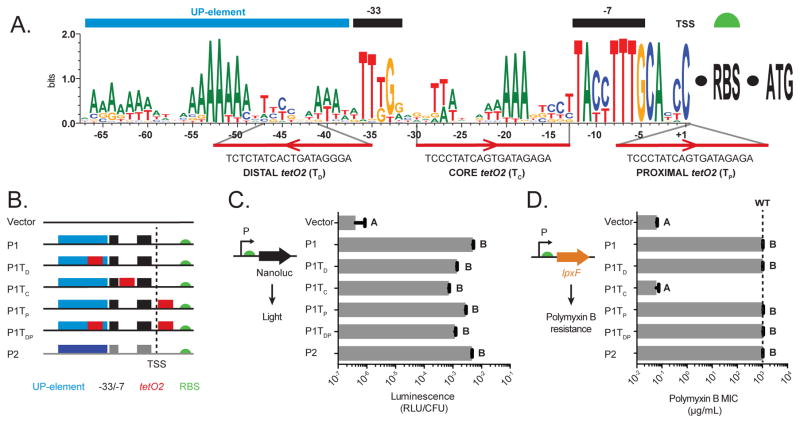
Figure 1. Genetic architecture and construction of regulatable expression platforms in Bacteroides
(A) Sequence conservation across 182 RNAP binding sites from 16S rRNA promoter regions from 19 Bacteroides genomes. Areas of conservation reflecting -33 and -7 RNAP binding sites (black bars) and the transcription-activating UP-element (blue bar) are indicated above the sequence logo. TetO2 sequences were placed and oriented as shown below the sequence logo. (B) Schematic of the P1 and P2 constitutive promoters and engineered P1 promoters containing tetO2 elements. The predicted UP-element, -33/-7 sites, and tetO2 operator sequences are designated as blue, black, and red boxes, respectively. The dashed line designates the transcription start site (+1), and the green semicircle indicates the GH023 RBS. (C) Activity of native P1, native P2, and tetO2-containing P1 promoters in B. thetaiotaomicron measured using the NanoLuc luciferase reporter and expressed as relative light units/colony forming unit (RLU/CFU). Luminescence from B. thetaiotaomicron carrying NanoLuc with no promoter is marked as “Vector”. (D) Polymyxin B (PMB) minimal inhibitory concentrations (MIC) for B. thetaiotaomicron lpxF strains expressing lpxF from each promoter. The dashed line indicates the MIC for PMB in wildtype B. thetaiotaomicron. In C and D, values represent three biological replicates performed on separate days; letters indicate significantly different groups (p < 1x10⁻⁶).
Figure 2
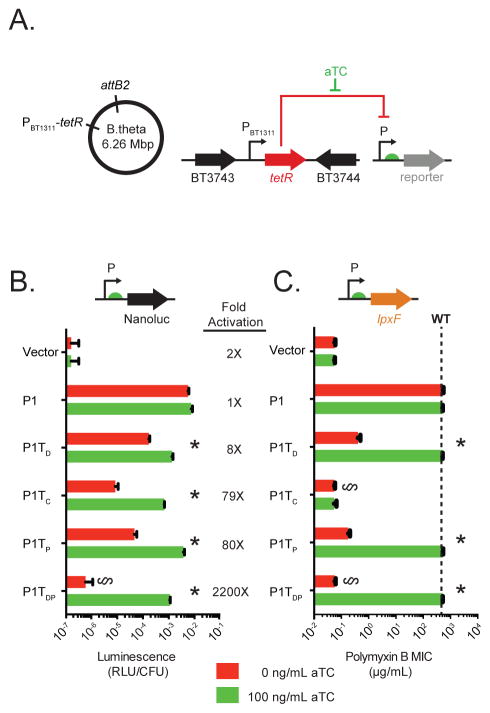
Figure 2. Regulation of Bacteroides gene expression via a synthetic inducer
(A) Strain design. (B) Activity of engineered, tetO2-containing promoters measured by luminescence (RLU/CFU) of NanoLuc-promoter fusions. (C) Addition of aTC restores lpxF-dependent PMB resistance to Bt::tetR lpxF carrying lpxF-promoter fusions. The dashed line indicates the PMB MIC for wildtype B. thetaiotaomicron (> 1024 μg/mL). In B and C, asterisks indicate significant differences in gene expression in response to aTC (p < 0.0001). § indicates no significant difference as compared to vector control (p > 0.1).
Figure 3
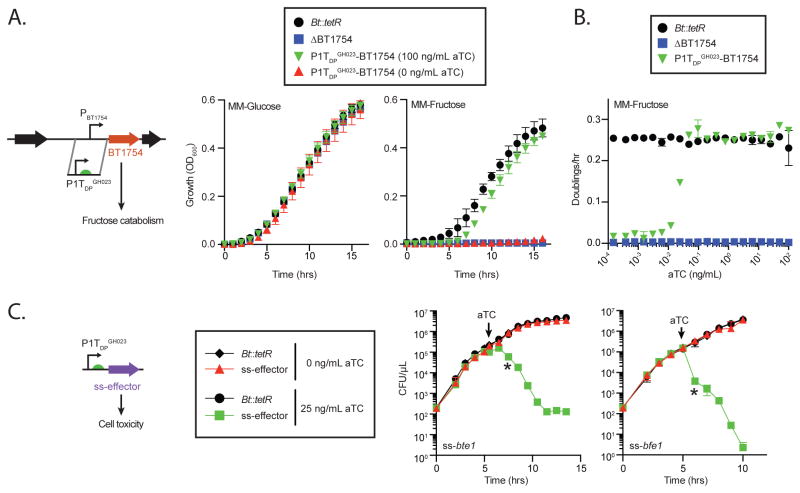
Figure 3. Attaining regulatory control of endogenous loci and highly toxic gene products
(A and B) Promoter design and aTC-dependent growth of Bt::tetR P1TDPGH023-BT1754 in fructose and glucose. Error bars (for A and B) represent the standard deviation of three biological replicates on separate days. (C) Bt::tetR encoding either of two highly toxic antibacterial effectors from B. fragilis under the control of P1TDPGH023 grow at wildtype rates unless expression is induced with aTC. Error bars represent the standard deviation of two biological replicates on separate days; asterisks indicate the earliest timepoint with significant (p < 0.001) differences compared to uninduced controls.
Figure 4
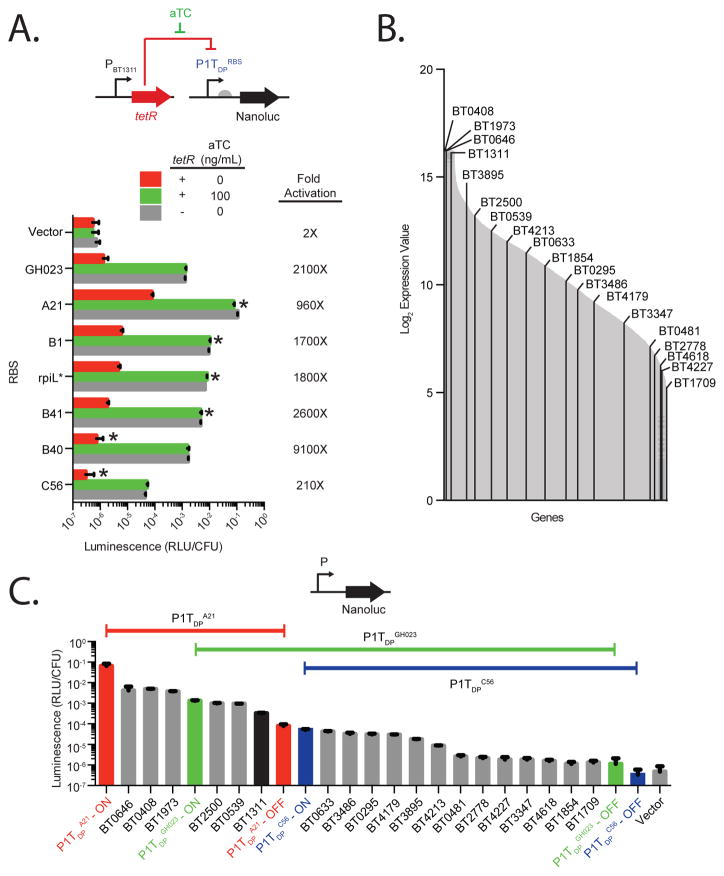
Figure 4. A panel of ribosome binding sites extends the dynamic range of P1TDP to over 105-fold, spanning the complete range of native gene expression in B. thetaiotaomicron
(A) Promoter activity of the P1TDP promoter fused to various RBSs (Mimee et al., 2015) was measured using the NanoLuc reporter in wildtype B. thetaiotaomicron (grey) and Bt::tetR in the absence (red) or presence (green) of aTC. Luminescence from B. thetaiotaomicron carrying NanoLuc with no promoter is marked as “Vector”. Error bars represent the standard deviation of three biological replicates on separate days. Asterisks above red bars indicate significant (p < 0.02) reduction in activity compared to P1TDPGH023 in the OFF state; asterisks above green bars indicate significant (p < 1x10⁻⁵) increase in activity compared to P1TDPGH023 in the ON state. (B) B. thetaiotaomicron gene expression levels as previously measured by genome-wide transcriptional profiling (Sonnenburg et al., 2005) are marked with grey lines. Promoters tested were selected from the designated genes labeled as black lines. (C) Luminescence from NanoLuc fusions to three engineered promoters can be modulated by aTC to span the entire expression range of the 18 native promoters selected to span the B. thetaiotaomicron transcriptome.
Figure 5
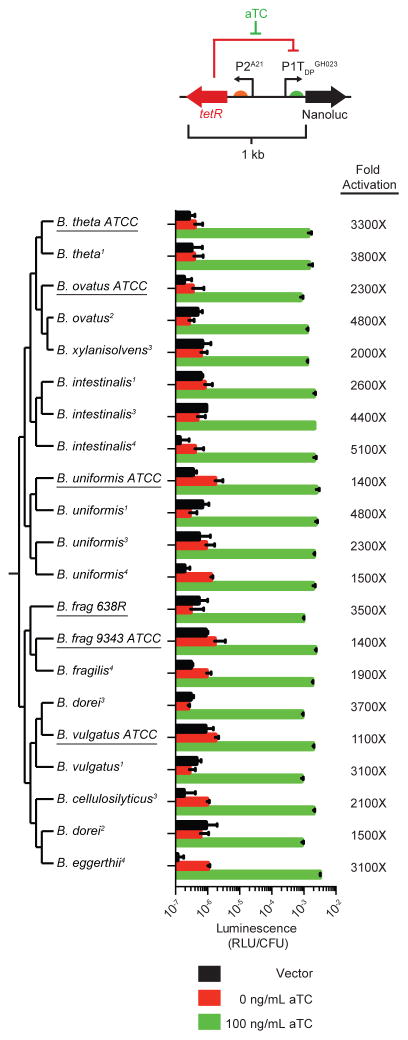
Figure 5. A self-contained, inducible expression cassette functions across diverse Bacteroides species
Strains are sorted by 16S rDNA phylogeny, with type strains (Table S3) underlined and novel isolates (isolated directly from human donors) noted with superscript indicating donor number. Activity of TetR-P1TDPGH023-NanoLuc in each strain is shown. Error bars represent the standard deviation of three biological replicates on separate days.
Figure 6
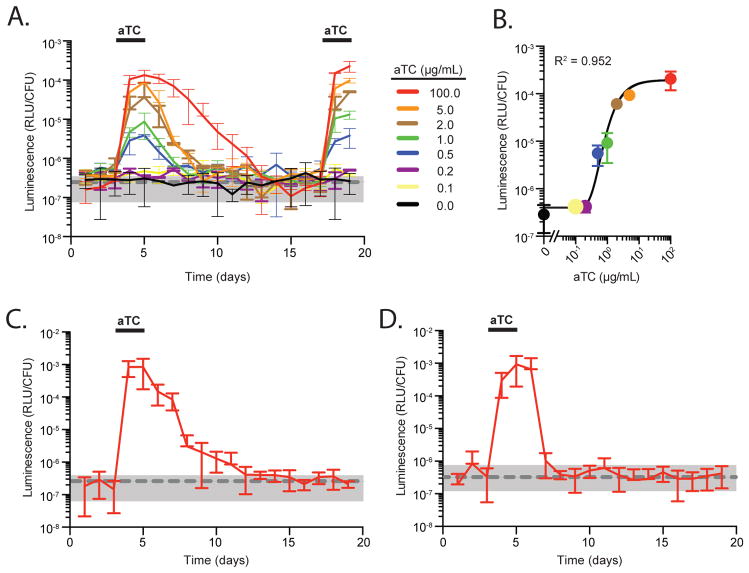
Figure 6. Exogenous control of Bacteroides gene expression in mice via a synthetic inducer
(A) Groups of germfree mice were colonized with Bt::tetR carrying the P1TDPGH023-NanoLuc, and promoter activity measured in feces over time. Mice were provided aTC as indicated. The grey dashed line and shading represent the average and standard deviation of fecal luminescence measured over time from mice colonized with wildtype B. thetaiotaomicron under the same regime of aTC exposure (n = 6 mice for groups treated with 100 μg/mL aTC; n = 2 mice for groups administered lower aTC concentrations). (B) Dose response of the P1TDPGH023 promoter to varying aTC concentrations in mice. (C) Luminescence production from Bt::tetR P1TDPGH023-NanoLuc in mice co-colonized with 13 other prominent human gut microbes (Figure S5D). Mice (n = 6) were given aTC as indicated. The grey dashed line and shading represents the average and standard deviation of fecal luminescence measured over time from mice colonized with wildtype B. thetaiotaomicron from Figure 6A. (D) Inducer-dependent fecal luminescence production by Bt::tetR P1TDPGH023-NanoLuc in specific pathogen-free Rag−/− mice carrying a complete microbiota. The grey dashed line and shading represents the average and standard deviation of fecal luminescence on day −1; n = 7 mice.
Figure 7
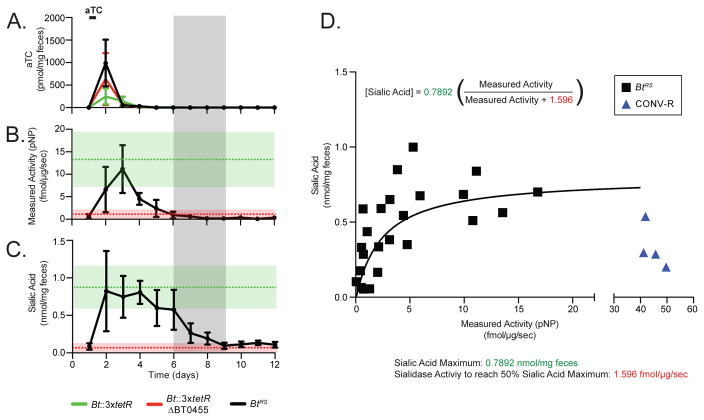
Figure 7. Modulating commensal sialidase expression in mice reveals that sialic acid persists in the gut after microbial enzyme activity is repressed and uncovers a non-linear relationship between enzyme activity and luminal sialic acid
(A) aTC concentrations, (B) sialidase activity, and (C) free sialic acid levels in fecal samples collected over time from gnotobiotic mice monocolonized with Bt::3xtetR (green line), Bt::3xtetR BT0455 (red line), or BtRS (black line). Mice were given aTC as indicated (n = 6 mice per group in panels A and C; n = 4 per group in panel B). In B and C, green and red dashed lines and shadings represent the average and standard deviation of sialidase activity (from the first 4 days; shown in Figure S6D) and free sialic acid (from the full experiment; shown in Figure S6E) in mice carrying Bt::3xtetR and Bt::3xtetR BT0455, respectively. The grey shading represents the time window when sialidase activity is no longer detected in mice carrying BtRS yet free sialic acid remains. (D) Sialic acid levels are positively correlated with sialidase activity at low levels of enzyme activity but remain constant at higher levels of enzyme activity, suggesting that the reaction is substrate-limited. A best fit line based on Michaelis-Menten kinetics is shown in black. Conventional mice are shown in blue (n = 4 mice).

Comment in

References

    1. Accetto T, Avguštin G. Inability of Prevotella bryantii to form a functional Shine-Dalgarno interaction reflects unique evolution of ribosome binding sites in Bacteroidetes. PLoS ONE. 2011;6:e22914–e22919. - PMC - PubMed
    1. Altschul SF, Gish W, Miller W, Myers EW. Basic local alignment search tool. Journal of Molecular Biology. 1990;215:403–410. - PubMed
    1. Bayley DP, Rocha ER, Smith CJ. Analysis of cepA and other Bacteroides fragilis genes reveals a unique promoter structure. FEMS Microbiol Lett. 2000;193:149–154. - PubMed
    1. Bertram R, Hillen W. The application of Tet repressor in prokaryotic gene regulation and expression. Microb Biotechnol. 2008;1:2–16. - PMC - PubMed
    1. Bohl D, Salvetti A, Moullier P, Heard JM. Control of erythropoietin delivery by doxycycline in mice after intramuscular injection of adeno-associated vector. Blood. 1998;92:1512–1517. - PubMed

Publication types