


The role of pharmacologic modulation of autophagy on anal cancer development in an HPV mouse model of carcinogenesis
- PMID: 28431282
- PMCID: PMC5584602
- DOI: 10.1016/j.virol.2017.04.007
The role of pharmacologic modulation of autophagy on anal cancer development in an HPV mouse model of carcinogenesis
Abstract
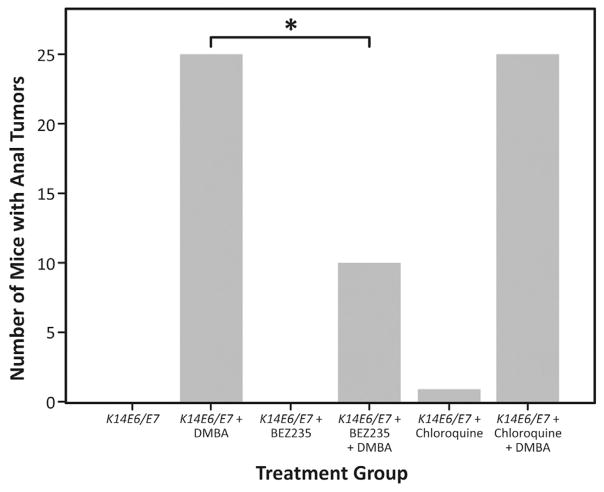
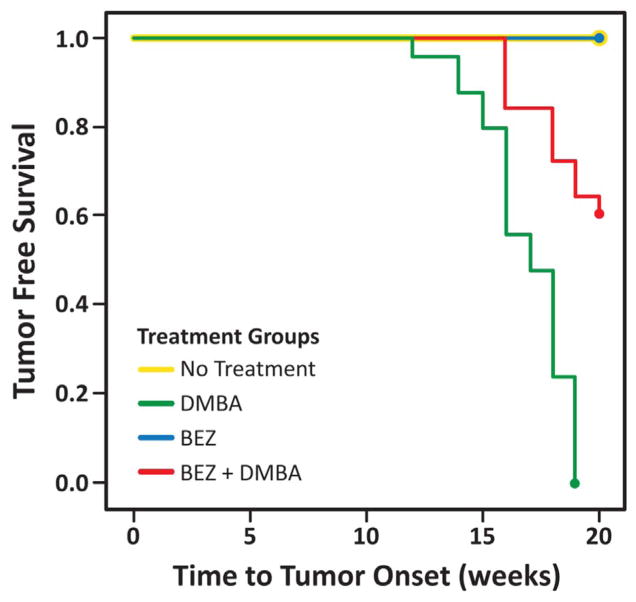
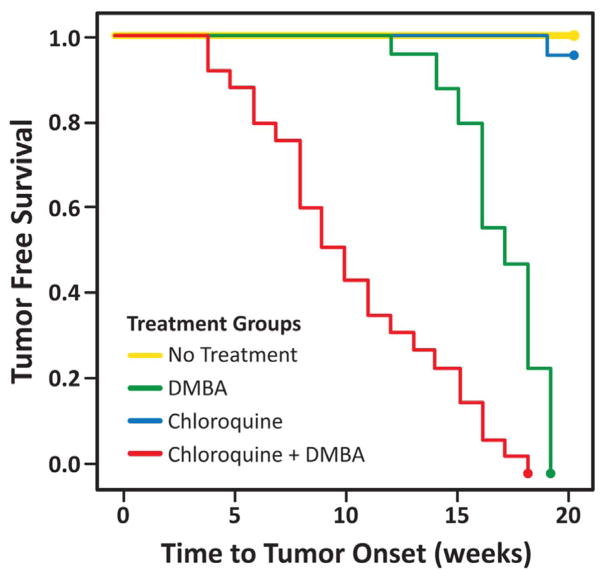
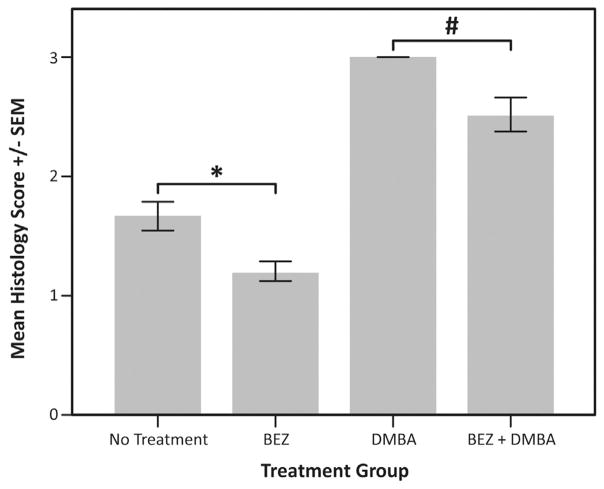
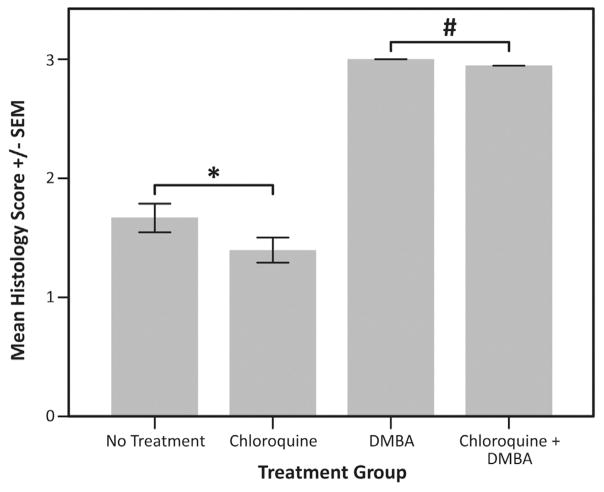
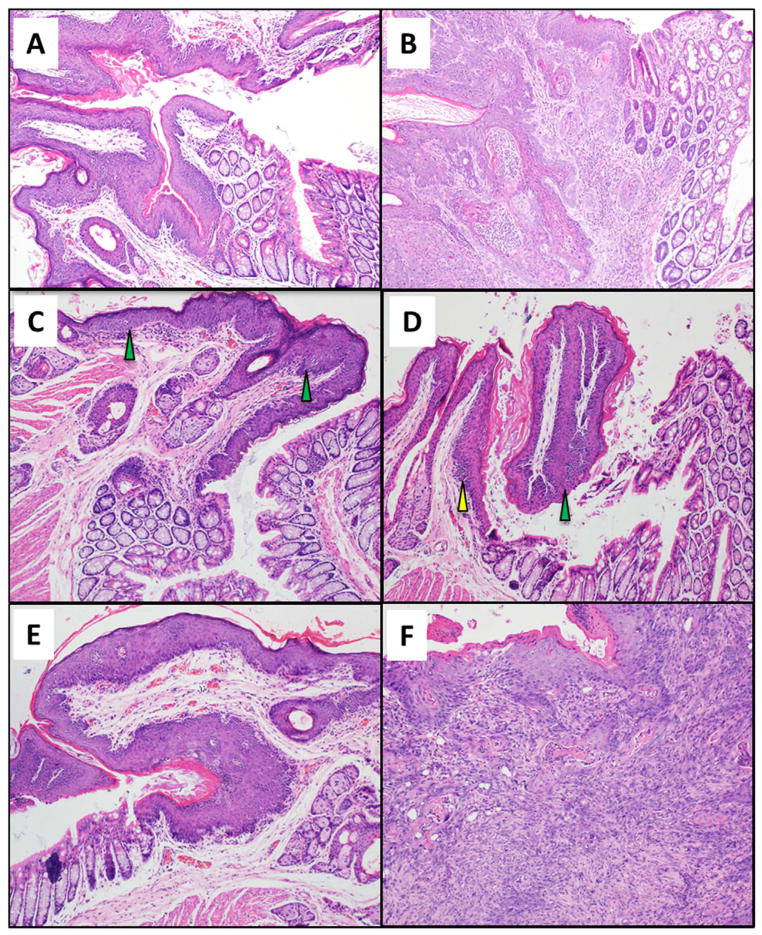
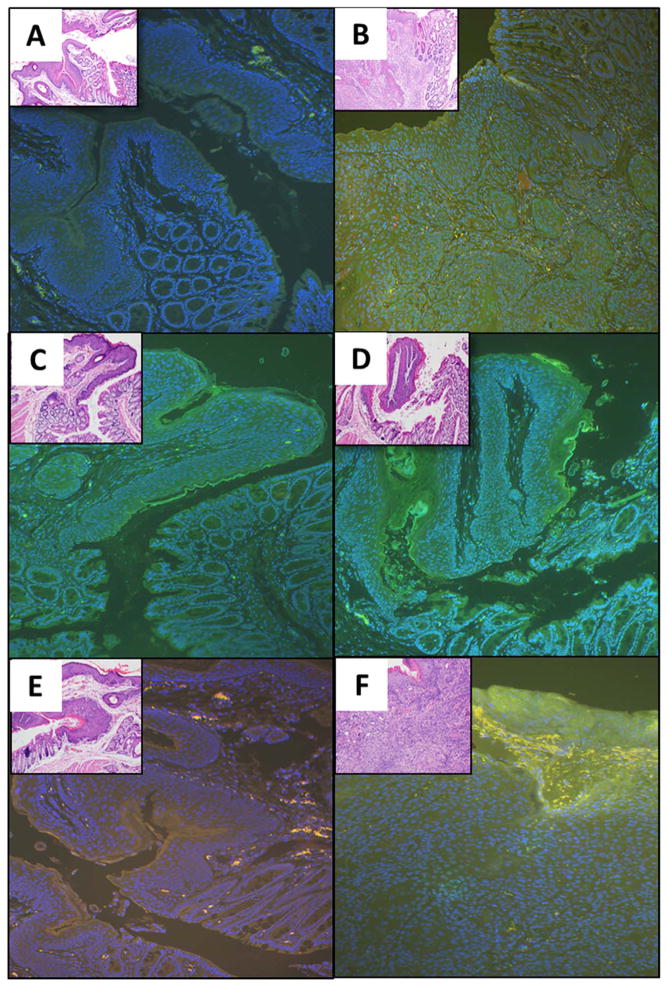
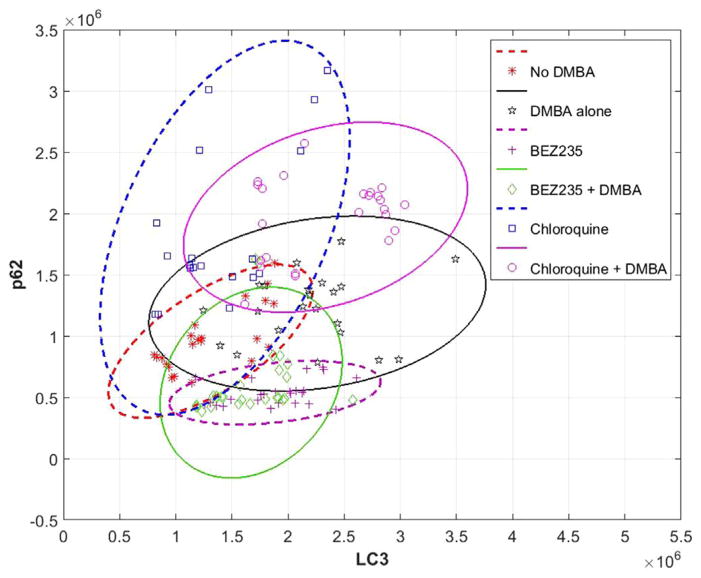
Autophagy is an intracellular, catabolic process that maintains cellular health. We examined the response of pharmacologic modulation of autophagy in an HPV mouse model of anal carcinogenesis. K14E6/E7 mice were treated with the topical carcinogen DMBA weekly and assessed for tumors over 20 weeks. Concurrently, they were given either chloroquine or BEZ235, to inhibit or induce autophagy, respectively. Time to tumor onset was examined. Immunofluorescence (IF) was performed for LC3β and p62 to examine autophagy. All DMBA treated K14E6/E7 mice developed anal cancer, contrary to zero of the no DMBA treated mice. Chloroquine plus DMBA resulted in a significant decrease in the time to tumor onset compared to K14E6/E7 treated with DMBA. Only 40% BEZ235 plus DMBA treated mice developed anal cancer. Autophagic induction with DMBA and BEZ235, and autophagic inhibition with chloroquine were confirmed via IF. Anal carcinogenesis can be inhibited or induced via pharmacologic modulation of autophagy.
Keywords: Anal cancer; Anal dysplasia; Autophagy; BEZ235; Chemoprevention; HPV.
Copyright © 2017 Elsevier Inc. All rights reserved.
Figures
References
Publication types
MeSH terms
Substances
Grants and funding
LinkOut - more resources
Full Text Sources
Other Literature Sources
Medical
Miscellaneous
