


Mitochondria and ageing: role in heart, skeletal muscle and adipose tissue
- PMID: 28432755
- PMCID: PMC5476857
- DOI: 10.1002/jcsm.12178
Mitochondria and ageing: role in heart, skeletal muscle and adipose tissue
Abstract
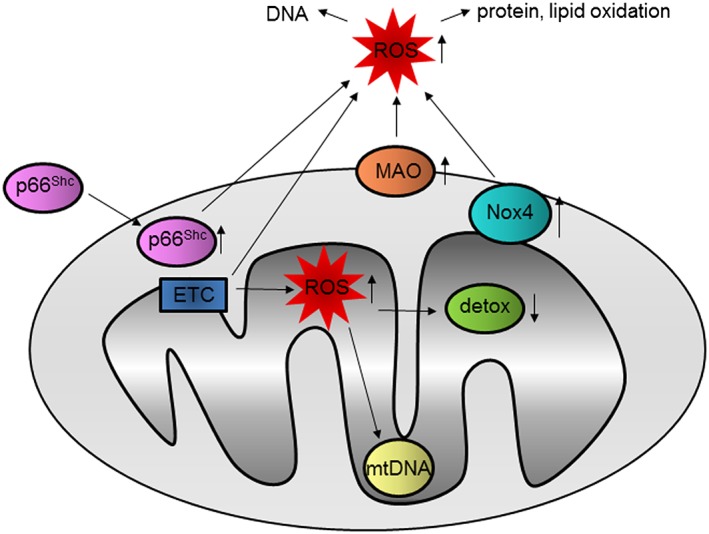
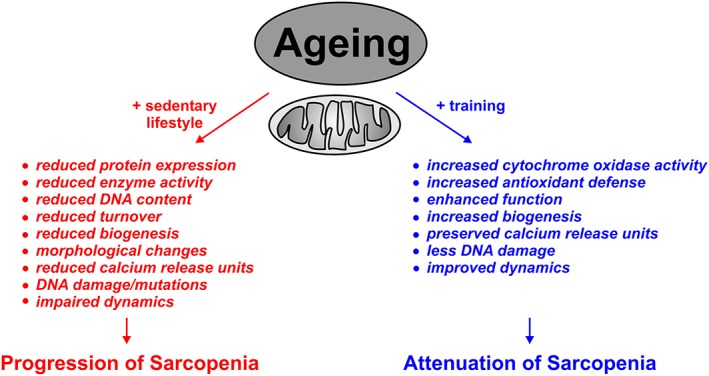
Age is the most important risk factor for most diseases. Mitochondria play a central role in bioenergetics and metabolism. In addition, several lines of evidence indicate the impact of mitochondria in lifespan determination and ageing. The best-known hypothesis to explain ageing is the free radical theory, which proposes that cells, organs, and organisms age because they accumulate reactive oxygen species (ROS) damage over time. Mitochondria play a central role as the principle source of intracellular ROS, which are mainly formed at the level of complex I and III of the respiratory chain. Dysfunctional mitochondria generating less ATP have been observed in various aged organs. Mitochondrial dysfunction comprises different features including reduced mitochondrial content, altered mitochondrial morphology, reduced activity of the complexes of the electron transport chain, opening of the mitochondrial permeability transition pore, and increased ROS formation. Furthermore, abnormalities in mitochondrial quality control or defects in mitochondrial dynamics have also been linked to senescence. Among the tissues affected by mitochondrial dysfunction are those with a high-energy demand and thus high mitochondrial content. Therefore, the present review focuses on the impact of mitochondria in the ageing process of heart and skeletal muscle. In this article, we review different aspects of mitochondrial dysfunction and discuss potential therapeutic strategies to improve mitochondrial function. Finally, novel aspects of adipose tissue biology and their involvement in the ageing process are discussed.
Keywords: Ageing; Caloric restriction; Heart; Mitochondria; Reactive oxygen species; Skeletal muscle.
© 2017 The Authors. Journal of Cachexia, Sarcopenia and Muscle published by John Wiley & Sons Ltd on behalf of the Society on Sarcopenia, Cachexia and Wasting Disorders.
Figures
References
-
- Rosenberg IH. Sarcopenia: origins and clinical relevance. J Nutr 1997;127:990S–991S. - PubMed
-
- Corsetti G, Pasini E, D'Antona G, Nisoli E, Flati V, Assanelli D, et al. Morphometric changes induced by amino acid supplementation in skeletal and cardiac muscles of old mice. Am J Cardiol 2008;101:26E–34E. - PubMed
-
- Tate EL, Herbener GH. A morphometric study of the density of mitochondrial cristae in heart and liver of aging mice. J Gerontol 1976;31:129–134. - PubMed
Publication types
MeSH terms
Substances
Grants and funding
LinkOut - more resources
Full Text Sources
Other Literature Sources
Medical
