


Diabetes, bone and glucose-lowering agents: basic biology
- PMID: 28434032
- PMCID: PMC5487688
- DOI: 10.1007/s00125-017-4269-4
Diabetes, bone and glucose-lowering agents: basic biology
Abstract
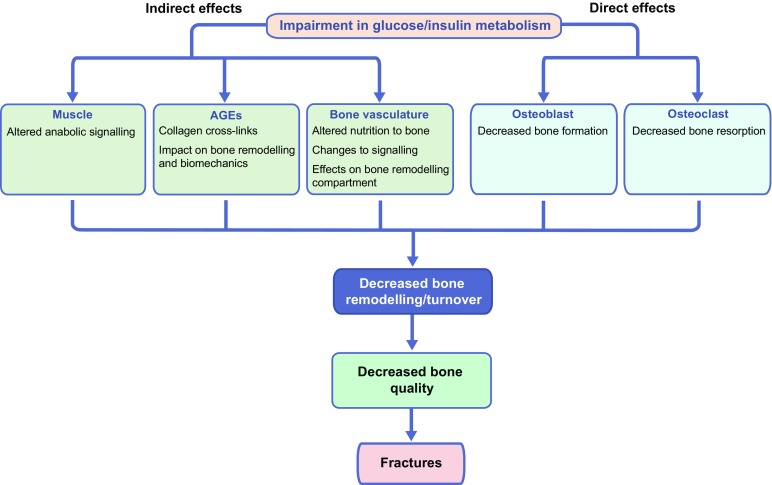
Skeletal fragility often accompanies diabetes and does not appear to correlate with low bone mass or trauma severity in individuals with diabetes. Instead (and in contrast to those with osteoporotic bone disease), bone remodelling and bone turnover are compromised in both type 1 and type 2 diabetes, contributing to defective bone material quality. This review is one of a pair discussing the relationship between diabetes, bone and glucose-lowering agents; an accompanying review is provided in this issue of Diabetologia by Ann Schwartz (DOI: 10.1007/s00125-017-4283-6 ). This review presents basic science evidence that, alongside other organs, bone is affected in diabetes via impairments in glucose metabolism, toxic effects of glucose oxidative derivatives (advance glycation end-products [AGEs]), and via impairments in bone microvascular function and muscle endocrine function. The cellular and molecular basis for the effects of diabetes on bone are discussed, as is the impact of diabetes on the stem cell niche and fracture healing. Furthermore, the safety of clinically approved glucose-lowering therapies and the possibility of developing a single therapy that would be beneficial for both insulin sensitisation and diabetes bone syndrome are outlined.
Keywords: AGEs; Bone quality; Bone remodelling; Bone vasculature; Glucose; Glucose-lowering therapies; Muscle; Osteoblast; Osteoclast; Review; Stem cells.
Conflict of interest statement
Funding
This work was supported by grants from NIH DK105825 and the American Diabetes Association ADA 7-13-BS-089.
Duality of interest
The author declares that there is no duality of interest associated with this manuscript.
Contribution statement
BLC was the sole contributor to this paper.
Figures
References
-
- Schwartz AV (2017) Diabetes, bone and glucose-lowering agents: clinical outcomes. Diabetologia. doi: 10.1007/s00125-017-4283-6 - PubMed
Publication types
MeSH terms
Substances
Grants and funding
LinkOut - more resources
Full Text Sources
Other Literature Sources
Medical
