


Maternal socioeconomic disadvantage is associated with transcriptional indications of greater immune activation and slower tissue maturation in placental biopsies and newborn cord blood
- PMID: 28434870
- PMCID: PMC5493326
- DOI: 10.1016/j.bbi.2017.04.014
Maternal socioeconomic disadvantage is associated with transcriptional indications of greater immune activation and slower tissue maturation in placental biopsies and newborn cord blood
Abstract
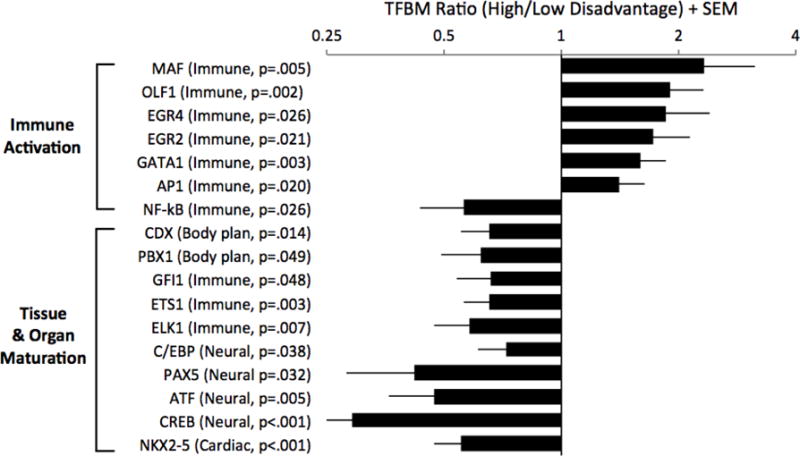
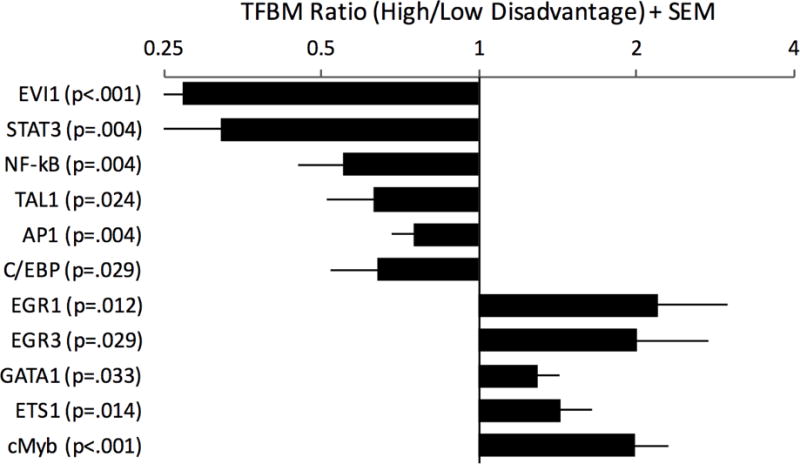
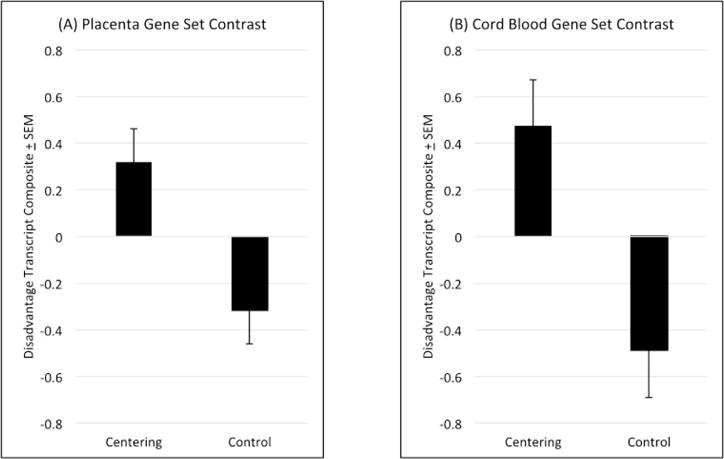
Children from economically disadvantaged families experience worse cognitive, psychiatric, and medical outcomes compared to more affluent youth. Preclinical models suggest some of the adverse influence of disadvantage could be transmitted during gestation via maternal immune activation, but this hypothesis has not been tested in humans. It also remains unclear whether prenatal interventions can mitigate such effects. To fill these gaps, we conducted two studies. Study 1 characterized the socioeconomic conditions of 79 women during pregnancy. At delivery, placenta biopsies and umbilical blood were collected for transcriptional profiling. Maternal disadvantage was associated with a transcriptional profile indicative of higher immune activation and slower fetal maturation, particularly in pathways related to brain, heart, and immune development. Cord blood cells of disadvantaged newborns also showed indications of immaturity, as reflected in down-regulation of pathways that coordinate myeloid cell development. These associations were independent of fetal sex, and characteristics of mothers (age, race, adiposity, diabetes, pre-eclampsia) and babies (delivery method, gestational age). Study 2 performed the same transcriptional analyses in specimens from 20 women participating in CenteringPregnancy, a group-based psychosocial intervention, and 20 women in traditional prenatal care. In both placenta biopsies and cord blood, women in CenteringPregnancy showed up-regulation of transcripts found in Study 1 to be most down-regulated in conjunction with disadvantage. Collectively, these results suggest socioeconomic disparities in placental biology are evident at birth, and provide clues about the mechanistic origins of health disparities. They also suggest the possibility that psychosocial interventions could have mitigating influences.
Keywords: Early life stress; Inflammation; Neurodevelopment; Placenta; Poverty.
Copyright © 2017 Elsevier Inc. All rights reserved.
Conflict of interest statement
None of the authors reports a (1) biomedical financial interest or (2) potential conflict of interest related to this study.
Figures
References
-
- Arck PC, Hecher K. Fetomaternal immune cross-talk and its consequences for maternal and offspring’s health. Nat Med. 2013;19:548–556. - PubMed
-
- Bansal AS, Bora SA, Saso S, Smith JR, Johnson MR, Thum MY. Mechanism of human chorionic gonadotrophin-mediated immunomodulation in pregnancy. Expert Rev Clin Immunol. 2012;8:747–753. - PubMed
-
- Blake JA, Ziman MR. Pax genes: regulators of lineage specification and progenitor cell maintenance. Development. 2014;141:737–751. - PubMed
MeSH terms
Grants and funding
LinkOut - more resources
Full Text Sources
Other Literature Sources
Medical
