. 2017 Apr 5;3(4):e1601964.
doi: 10.1126/sciadv.1601964. eCollection 2017 Apr.

Evolutionary dynamics of CRISPR gene drives

Affiliations

Evolutionary dynamics of CRISPR gene drives

Charleston Noble et al. Sci Adv. .

Abstract

The alteration of wild populations has been discussed as a solution to a number of humanity's most pressing ecological and public health concerns. Enabled by the recent revolution in genome editing, clustered regularly interspaced short palindromic repeats (CRISPR) gene drives-selfish genetic elements that can spread through populations even if they confer no advantage to their host organism-are rapidly emerging as the most promising approach. However, before real-world applications are considered, it is imperative to develop a clear understanding of the outcomes of drive release in nature. Toward this aim, we mathematically study the evolutionary dynamics of CRISPR gene drives. We demonstrate that the emergence of drive-resistant alleles presents a major challenge to previously reported constructs, and we show that an alternative design that selects against resistant alleles could greatly improve evolutionary stability. We discuss all results in the context of CRISPR technology and provide insights that inform the engineering of practical gene drive systems.

Keywords: CRISPR; Resistance; evolutionary dynamics; gene drive.


Figures
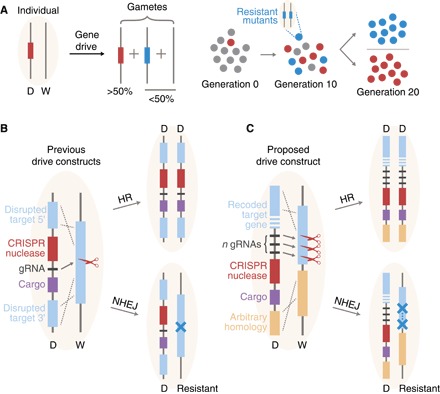
Fig. 1
Fig. 1. CRISPR gene drive inheritance and spread in wild populations.
(A) Inheritance and spread of a gene drive construct, D, in a population of individuals homozygous for the wild type, W. In the late germ line, the drive construct induces a DSB at its own position on the homologous chromosome, which is repaired either by HR, converting the individual to a DD homozygote, or by NHEJ, producing a small insertion/deletion/substitution mutation at the cut site, which results in a drive-resistant allele. There is also the possibility of no modification, in which case the W allele remains unchanged. This mechanism can lead to rapid spread of the gene drive in a population or spread of resistant alleles, depending on their relative fitness effects. (B) To achieve this mechanism, previously demonstrated drive constructs are inserted at some target sequence (blue) and carry a CRISPR nuclease (for example, Cas9) with a gRNA, as well as a “cargo gene,” which can be chosen arbitrarily for the desired application. Disruption of the target sequence must be nearly neutral for the drive to spread. (C) The construct modeled here, which was proposed by Esvelt et al. (2), reconstitutes the target gene after cutting—so an essential gene can be chosen as the target to select against resistant alleles—and uses multiple (n) gRNAs.
Fig. 2
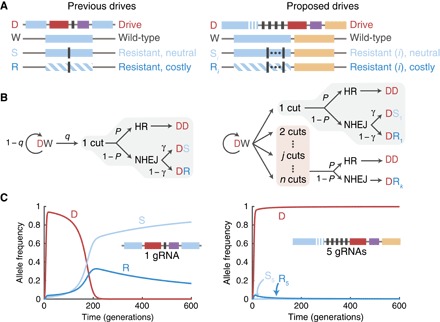
Fig. 2. Modeling framework and representative simulations.
(A) We consider 2n + 2 alleles, where n is the number of drive target sites (prescribed by CRISPR gRNAs): the drive construct (D), the wild type (W), n “neutral” resistant alleles (Si), and n “costly” resistant alleles (Ri). Previous drives (left) used one target site, whereas our proposed drives use multiple target sites (right). (B) Conversion dynamics within DW germline cells during early gametogenesis. Cutting occurs at each susceptible target independently with probability q. Then, repair occurs by HR with probability P or by NHEJ with probability 1 − P. In the case of a single cut (light gray), if there is NHEJ repair, then repair produces a functional target gene with probability γ or a nonfunctional target with probability 1 − γ. Two or more cuts (light red) certainly produce nonfunctional targets after NHEJ repair. (C) Representative simulations using high cutting and HR probabilities (q = P = 0.95), for an initial drive release of 1% in a wild-type population, with γ = 1/3. Fitness parameters are (left) fSS = fSR = 1, fSD = 95%, fRR = 99%, fDD = fDR = (99 × 95%) = 94.1%, where S refers to neutral alleles (either S or W), and (right) fSS = fSR = 1, fSD = fDD = fDR = 95%, fRR = 1%, where S and R refer to alleles W, S1, …, S5 and R1, …, R5, respectively. See section S7.3.2 for details regarding our assignments of the inheritance probabilities.
Fig. 3
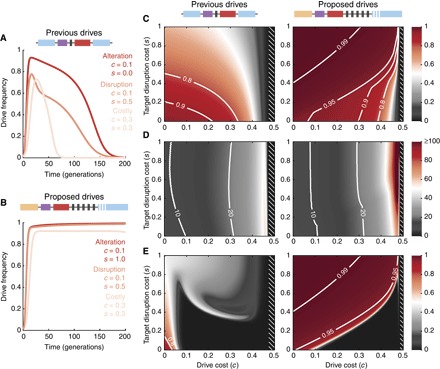
Fig. 3. Quantitative comparison of previously demonstrated and recently proposed drive constructs.
(A and B) Drive frequency over time for three particular scenarios: a low-cost alteration drive carrying a cargo gene and targeting a neutral site (previous drives) or an essential gene (proposed drives) (red), a low-cost drive whose aim is to disrupt an important target gene (orange), and a high-cost drive (tan). (C) Maximum drive allele frequency (heat) observed in simulations across 200 generations, following an initial release of drive-homozygous organisms comprising 1% of the total population. In white hatched regions, Eq. 1 is not satisfied, so no invasion occurs. (D) Generations to 90% of the maximum frequency. (E) Frequency of the drive constructs after 200 generations, a measure of stability in the population. Parameters used are as follows: (throughout) q = P = 0.95, γ = 1/3; (previous drives) n = 1, fSS = fSR = 1, fSD = 1 − c, fDD = fDR = (1 − c) (1 − s), fRR = 1 − s; (proposed drives) n = 5, fSS = fSR = 1, fSD = fDD = fDR = 1 − c, fRR = 1 − s, where S and R refer to any alleles S0, …, Sn and R1, …, Rn, respectively. Inheritance probabilities are assigned as illustrated in Fig. 2B and described in section S7.3.2.

References

    1. Burt A., Site-specific selfish genes as tools for the control and genetic engineering of natural populations. Proc. Biol. Sci. 270, 921–928 (2003). - PMC - PubMed
    1. Esvelt K. M., Smidler A. L., Catteruccia F., Church G. M., Concerning RNA-guided gene drives for the alteration of wild populations. Elife 3, e03401 (2014). - PMC - PubMed
    1. Akbari O. S., Bellen H. J., Bier E., Bullock S. L., Burt A., Church G. M., Cook K. R., Duchek P., Edwards O. R., Esvelt K. M., Gantz V. M., Golic K. G., Gratz S. J., Harrison M. M., Hayes K. R., James A. A., Kaufman T. C., Knoblich J., Malik H. S., Matthews K. A., O’Connor-Giles K. M., Parks A. L., Perrimon N., Port F., Russell S., Ueda R., Wildonger J., Safeguarding gene drive experiments in the laboratory. Science 349, 927–929 (2015). - PMC - PubMed
    1. Oye K. A., Esvelt K., Appleton E., Catteruccia F., Church G., Kuiken T., Lightfoot S. B.-Y., McNamara J., Smidler A., Collins J. P., Regulating gene drives. Science 345, 626–628 (2014). - PubMed
    1. Gantz V. M., Jasinskiene N., Tatarenkova O., Fazekas A., Macias V. M., Bier E., James A. A., Highly efficient Cas9-mediated gene drive for population modification of the malaria vector mosquito Anopheles stephensi. Proc. Natl. Acad. Sci. U.S.A. 112, E6736–E6743 (2015). - PMC - PubMed

MeSH terms