


Effects of Chinese Medicine as Adjunct Medication for Adjuvant Chemotherapy Treatments of Non-Small Cell Lung Cancer Patients
- PMID: 28436479
- PMCID: PMC5402288
- DOI: 10.1038/srep46524
Effects of Chinese Medicine as Adjunct Medication for Adjuvant Chemotherapy Treatments of Non-Small Cell Lung Cancer Patients
Abstract
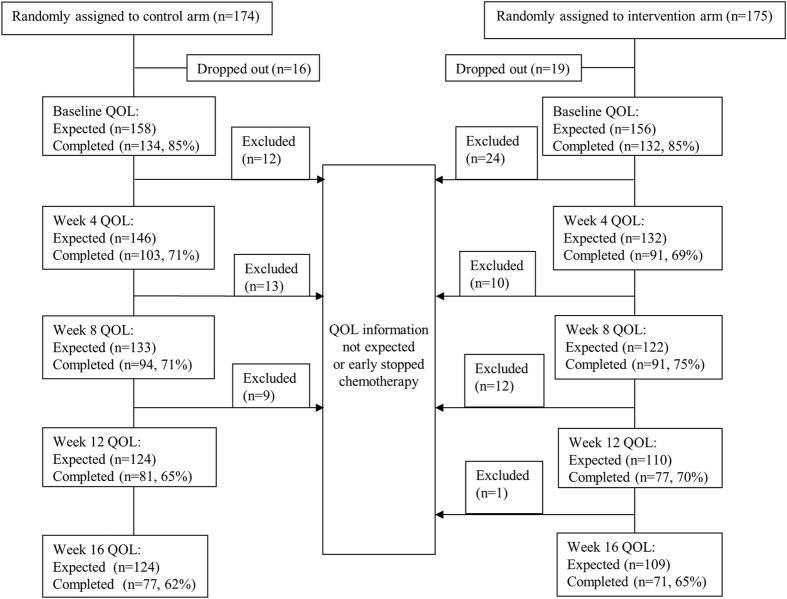
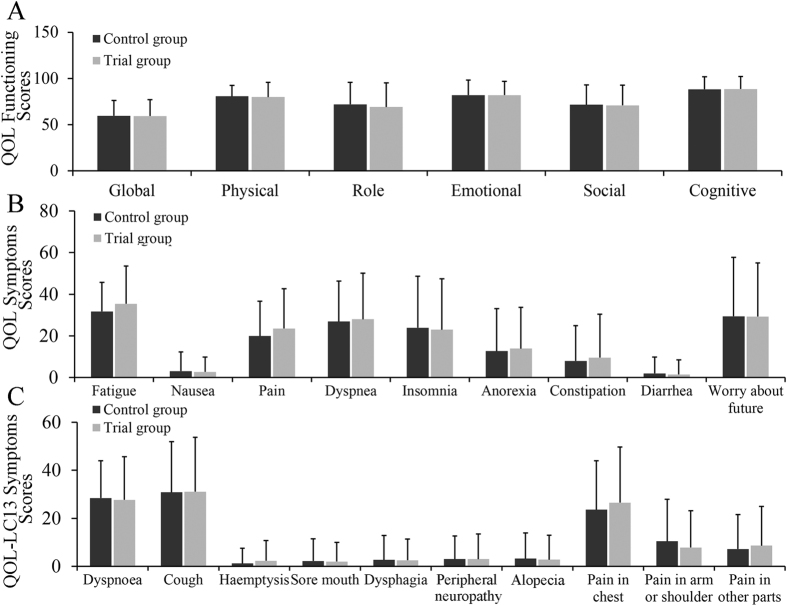
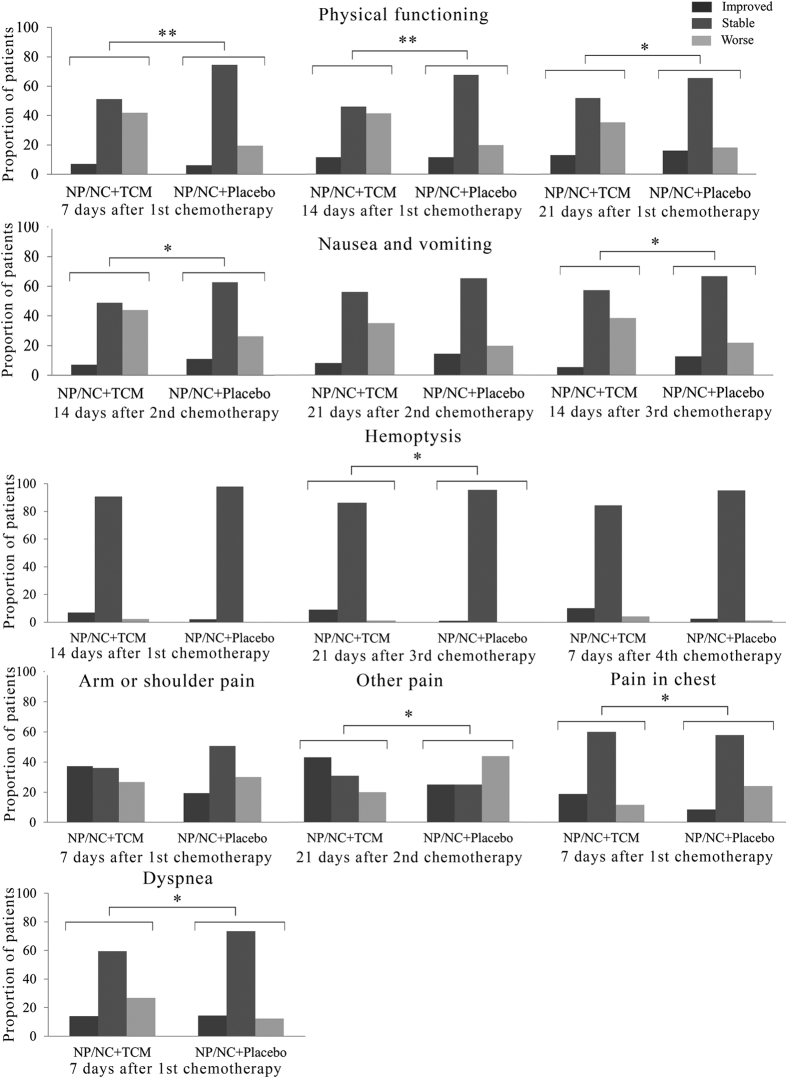
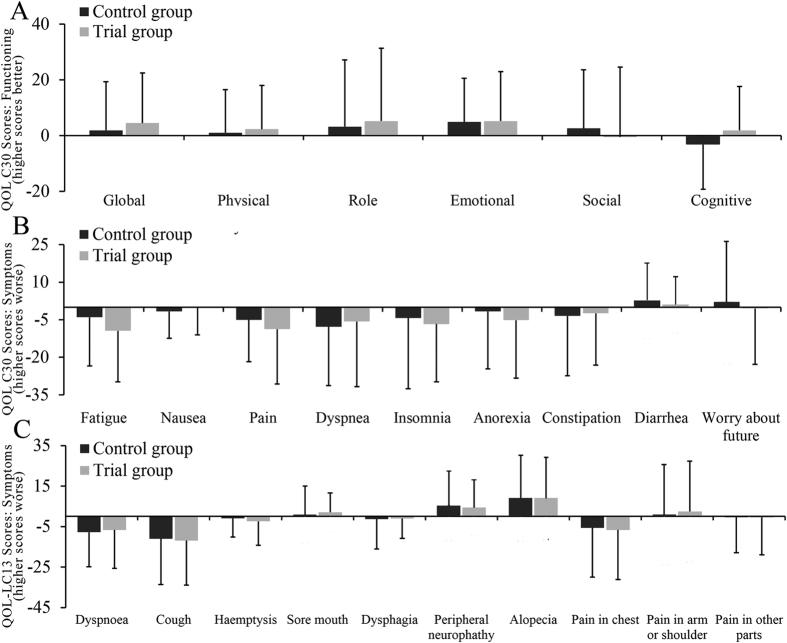
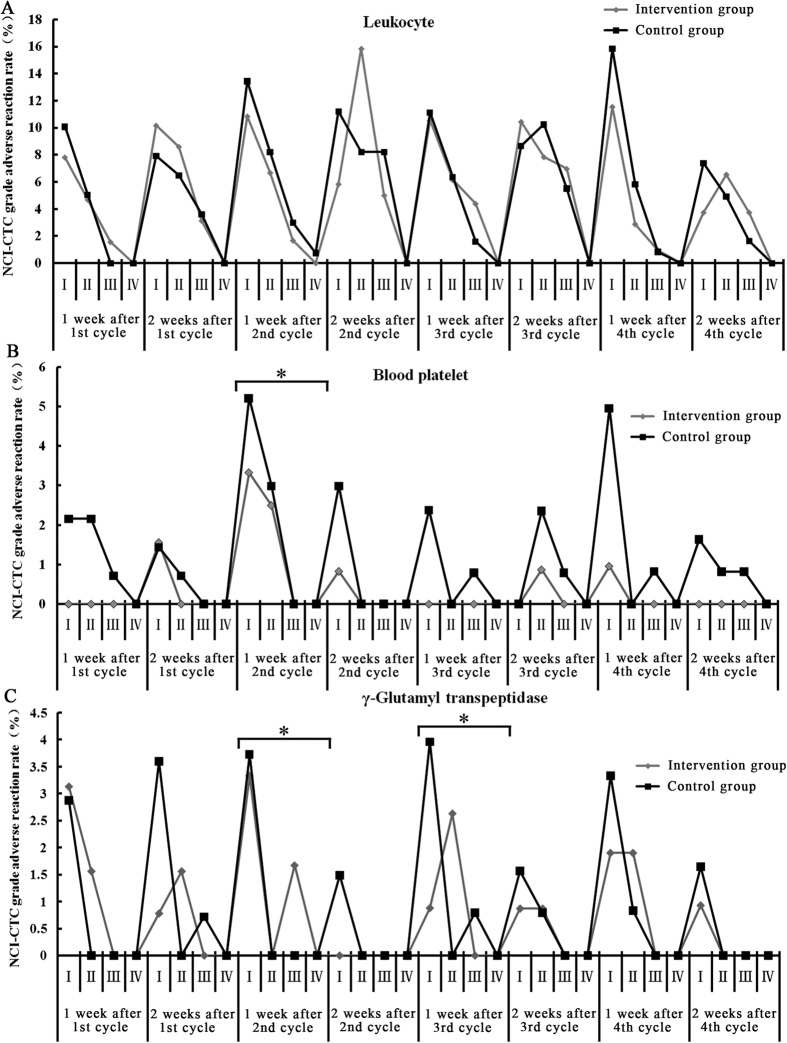
The aim was to evaluate the effects of traditional Chinese medicine (TCM) as a combination medication with adjuvant chemotherapy on postoperative early stage non-small cell lung cancer (NSCLC) patients. The 314 patients with completely resected stage IB, II or IIIA cancers were assigned into vinorelbine plus cisplatin/carboplatin (NP/NC) (control, n = 158) and NP/NC with additional TCM (intervention, n = 156) groups. The primary endpoint was QOL scores; secondary endpoints were the toxicity and safety of the regimens. The NP/NC regimen caused mild (grade 1 or 2) non-hematologic toxic effects in the patients comprising vomiting (43.6%), fatigue (36.9%), pain (23%), dry mouth (27.6%) and diarrhea (7.9%). The incidence of adverse events was significantly lower in the intervention group than in the control group (0.57% vs 4.02%, P = 0.037). Transient severe (grade 3 or 4) hematological toxic effects occurred less often (hemoglobin reduction (11.9 vs 22.5 percent) and total bilirubin increased (to 42.1 vs 46.2%) in the intervention compared to the control group during the 2nd chemotherapy cycle. When combined with adjuvant chemotherapy, TCM led to partial relief of symptoms in addition to a reduction of side-effects and adverse events caused by the NP/NC regimens.
Conflict of interest statement
The authors declare no competing financial interests.
Figures
References
-
- Alam N. et al. Compliance with post-operative adjuvant chemotherapy in non-small cell lung cancer. An analysis of National Cancer Institute of Canada and intergroup trial JBR.10 and a review of the literature. Lung Cancer 47, 385–394 (2005). - PubMed
-
- Lin F., Guo L. L. & Wang J. [Expounding the functions of qi in TCM based on the effect mitochondria]. Zhongguo Zhong Xi Yi Jie He Za Zhi 34, 903–906 (2014). - PubMed
-
- Zhou Y., Gao W. & Li K. Chinese herbal medicine in the treatment of lung cancer. Asian Journal of Traditional Medicines 3, 1–11 (2008).
Publication types
MeSH terms
Substances
LinkOut - more resources
Full Text Sources
Other Literature Sources
Medical
Miscellaneous
