


The BAF (BRG1/BRM-Associated Factor) chromatin-remodeling complex exhibits ethanol sensitivity in fetal neural progenitor cells and regulates transcription at the miR-9-2 encoding gene locus
- PMID: 28438527
- PMCID: PMC5514786
- DOI: 10.1016/j.alcohol.2017.01.003
The BAF (BRG1/BRM-Associated Factor) chromatin-remodeling complex exhibits ethanol sensitivity in fetal neural progenitor cells and regulates transcription at the miR-9-2 encoding gene locus
Abstract
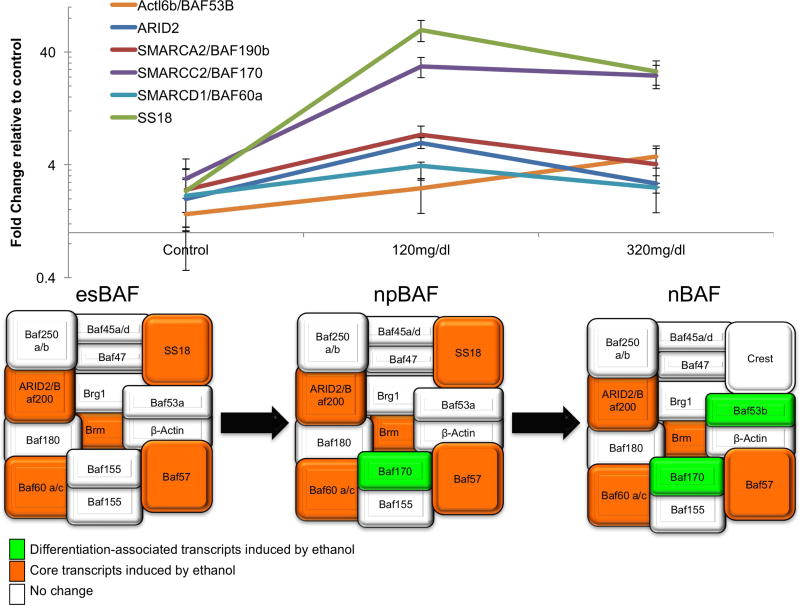
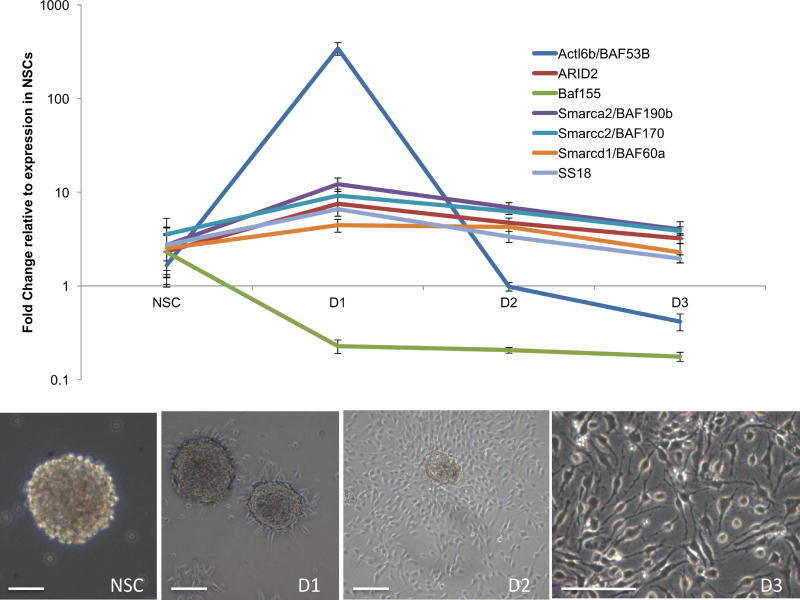
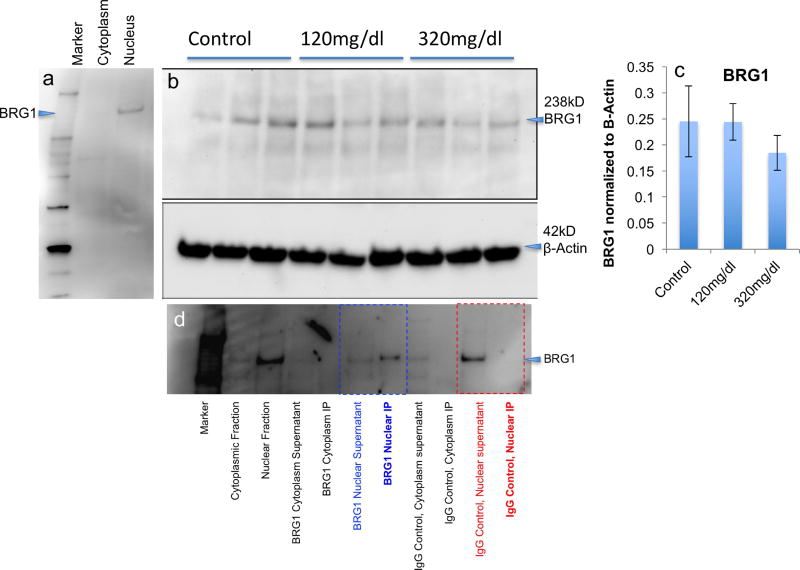
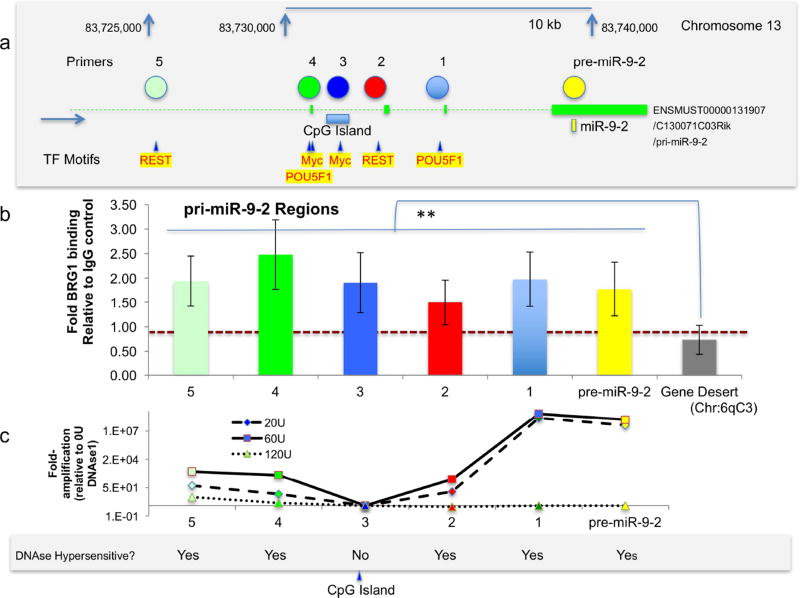
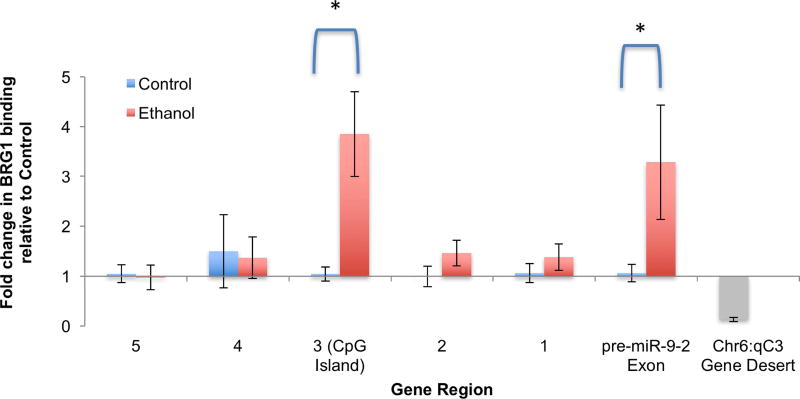
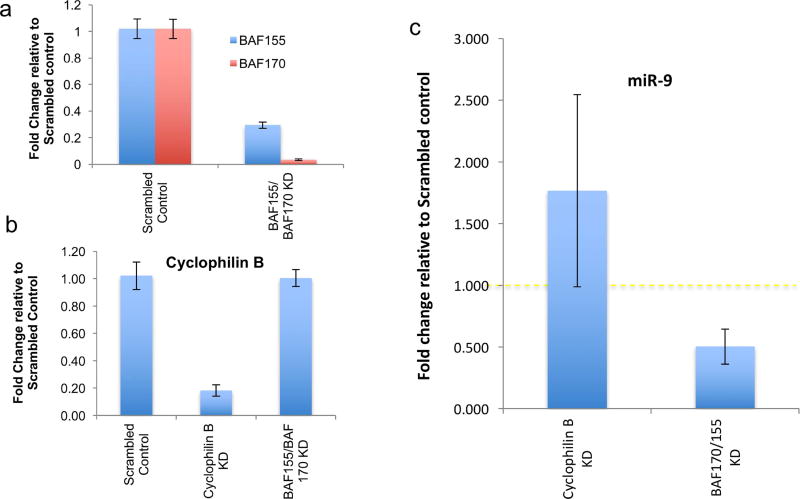
Fetal alcohol spectrum disorders are a leading cause of intellectual disability worldwide. Previous studies have shown that developmental ethanol exposure results in loss of microRNAs (miRNAs), including miR-9, and loss of these miRNAs, in turn, mediates some of ethanol's teratogenic effects in the developing brain. We previously found that ethanol increased methylation at the miR-9-2 encoding gene locus in mouse fetal neural stem cells (NSC), advancing a mechanism for epigenetic silencing of this locus and consequently, miR-9 loss in NSCs. Therefore, we assessed the role of the BAF (BRG1/BRM-Associated Factor) complex, which disassembles nucleosomes to facilitate access to chromatin, as an epigenetic mediator of ethanol's effects on miR-9. Chromatin immunoprecipitation and DNAse I-hypersensitivity analyses showed that the BAF complex was associated with both transcriptionally accessible and heterochromatic regions of the miR-9-2 locus, and that disintegration of the BAF complex by combined knockdown of BAF170 and BAF155 resulted in a significant decrease in miR-9. We hypothesized that ethanol exposure would result in loss of BAF-complex function at the miR-9-2 locus. However, ethanol exposure significantly increased mRNA transcripts for maturation-associated BAF-complex members BAF170, SS18, ARID2, BAF60a, BRM/BAF190b, and BAF53b. Ethanol also significantly increased BAF-complex binding within an intron containing a CpG island and in the terminal exon encoding precursor (pre)-miR-9-2. These data suggest that the BAF complex may adaptively respond to ethanol exposure to protect against a complete loss of miR-9-2 in fetal NSCs. Chromatin remodeling factors may adapt to the presence of a teratogen, to maintain transcription of critical miRNA regulatory pathways.
Keywords: BRG1; DNAse hypersensitivity; Fetal alcohol spectrum disorders; MiR-9.
Copyright © 2017 Elsevier Inc. All rights reserved.
Conflict of interest statement
Conflicts of interest: None
Figures
References
-
- Adachi J, Mizoi Y, Fukunaga T, Ogawa Y, Ueno Y, Imamichi H. Degrees of alcohol intoxication in 117 hospitalized cases. J Stud Alcohol. 1991;52(5):448–453. - PubMed
-
- Bultman S, Gebuhr T, Yee D, La Mantia C, Nicholson J, Gilliam A, Randazzo F, Metzger D, Chambon P, Crabtree G, Magnuson T. A Brg1 null mutation in the mouse reveals functional differences among mammalian SWI/SNF complexes. Mol Cell. 2000;6(6):1287–95. - PubMed
-
- Bystron I, Blakemore C, Rakic P. Development of the human cerebral cortex: Boulder Committee revisited. Nat Rev Neurosci. 2008;9(2):110–22. - PubMed
Publication types
MeSH terms
Substances
Grants and funding
LinkOut - more resources
Full Text Sources
Other Literature Sources
Miscellaneous
