


Hysteroscopic Management of Uterine Arteriovenous Malformation
- PMID: 28439193
- PMCID: PMC5385144
- DOI: 10.4293/JSLS.2016.00109
Hysteroscopic Management of Uterine Arteriovenous Malformation
Abstract
Background and objectives: Uterine arteriovenous malformation (AVM) is characterized by shunts between the myometrial arteries and veins. Treatment is based on the severity of uterine bleeding and ranges from conservative medical approaches to embolization of affected arteries. The aim of study was to evaluate the feasibility and safety of hysteroscopy for management of uterine AVM.
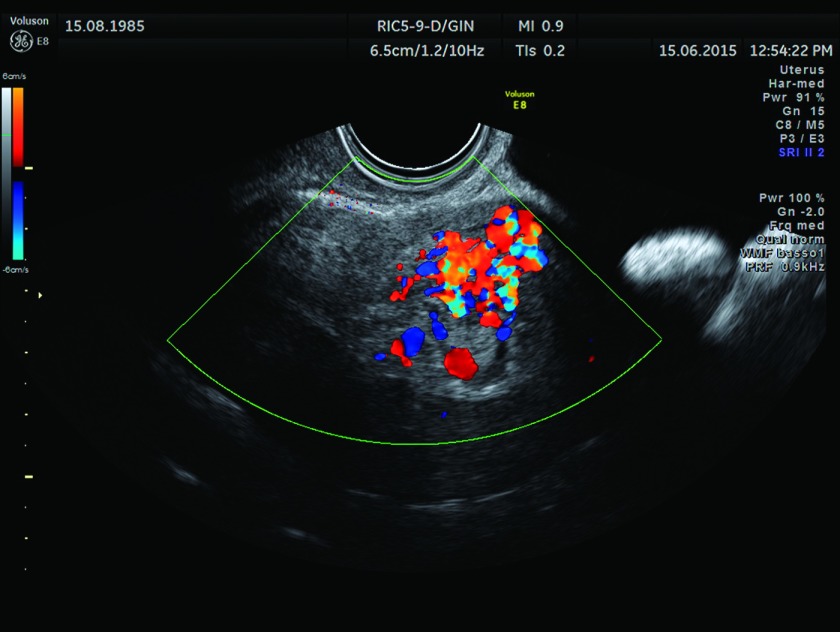
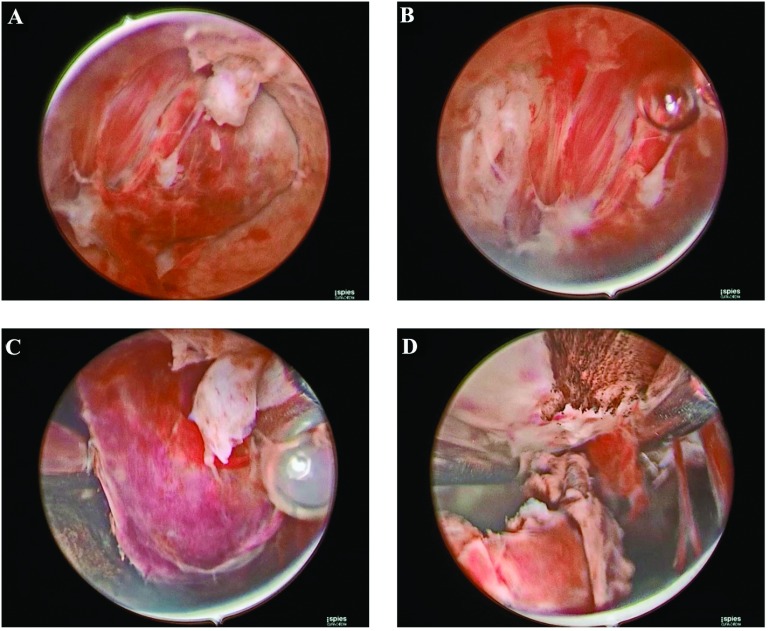
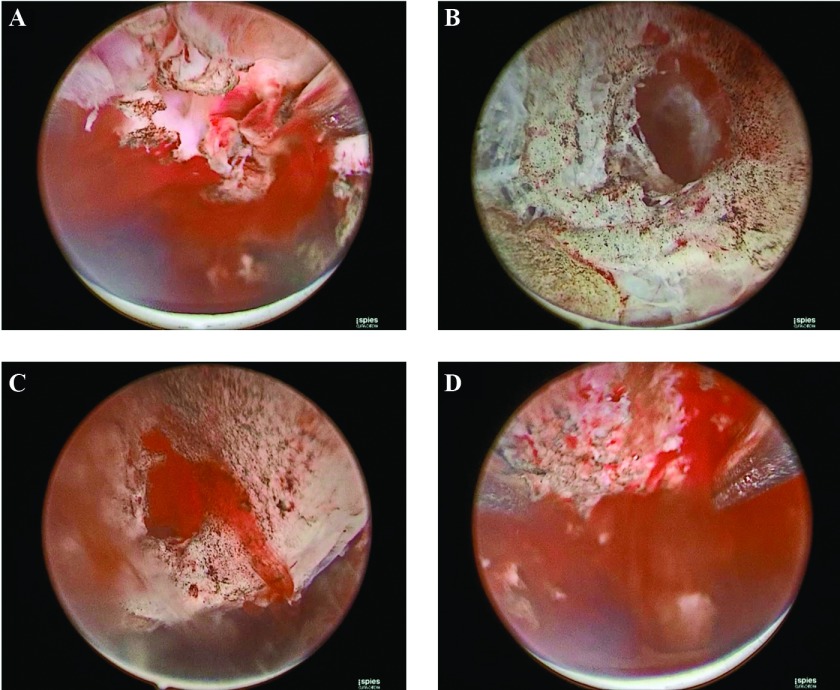
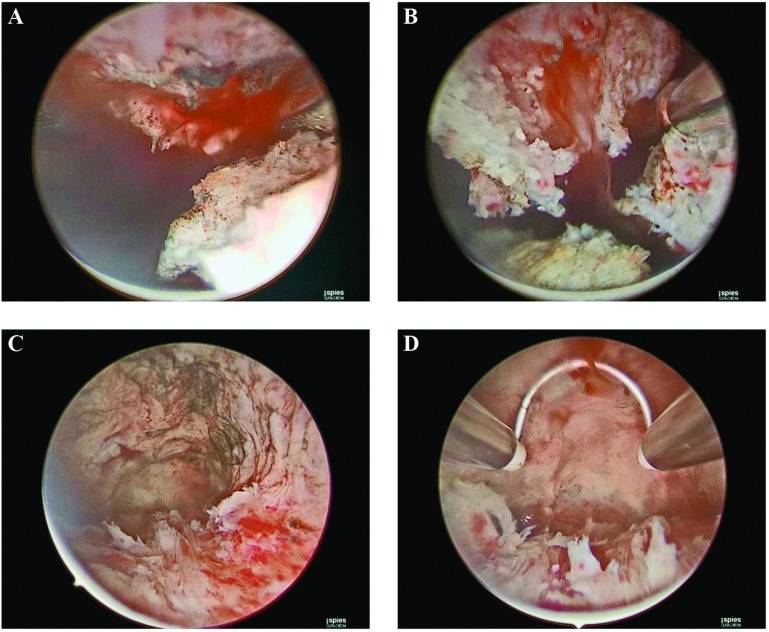
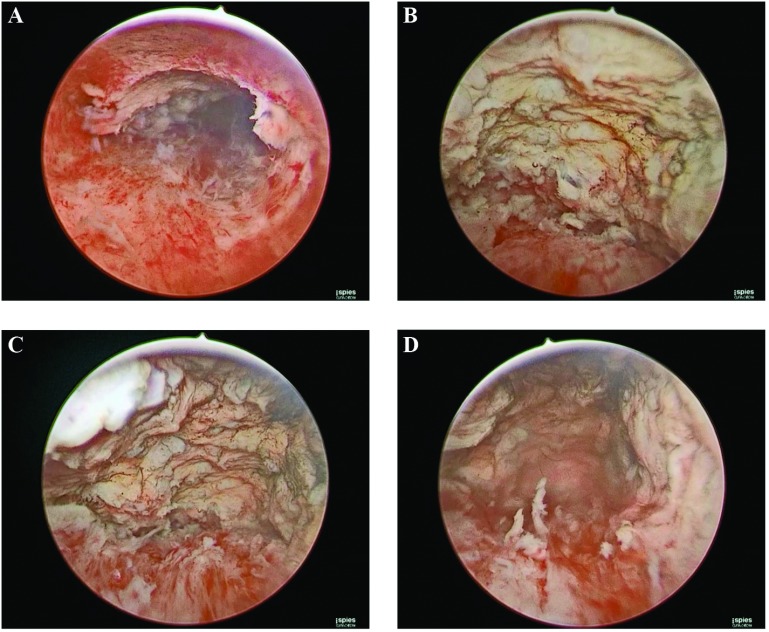
Methods: This was a retrospective study of a cohort of 11 cases occurring between March 2012 and December 2015 in our Regional Center of Excellence in Hysteroscopy, University of Florence. The diagnosis of AVM was made by transvaginal ultrasonography with high-definition flow in patients with mild to moderate symptoms. In all cases, we used the hysteroscopic platform Gynecare VersaPoint II (Ethicon, Somerville, New Jersey, USA), equipped with a 4-mm electrosurgical loop and associated with the SPIES (Storz Professional Image Enhancement System) system (Karl Storz, Tuttlingen, Germany).
Results: All patients were successfully treated with operative hysteroscopy with no reported complications. No patient had residual disease detected by ultrasonography performed after a month. At this writing, of the 11 patients treated with operative hysteroscopy, 4 had achieved a pregnancy that carried to term, 1 was pregnant at 20 wk, and 1 had a miscarriage in the first trimester.
Conclusions: Hysteroscopy is a feasible and safe alternative treatment modality for AVM. Patients treated with surgical hysteroscopy have high fertility outcomes, a 100% success rate after the first treatment, no complications related to the surgical procedure, and a short hospital stay.
Keywords: Fertility; Hysteroscopic technique; Hysteroscopy; Uterine arteriovenous malformation.
Figures
References
-
- Diwan RV, Brennan JN, Selim MA, et al. Sonographic diagnosis of arteriovenous malformation of the uterus and pelvis. J Clin Ultrasound. 1983;11:295–298. - PubMed
-
- Fleming H, Ostor A, Pickel H, Fortune D. Arteriovenous malformations of the uterus. Obstet Gynaecol. 1989;73:209–213. - PubMed
-
- Huang MW, Muradali D, Thurston WA, Burns PN, Wilson SR. Uterine arteriovenous malformations: gray-scale and Doppler US features with MR imaging correlation. Radiology. 1998;206:115–123. - PubMed
-
- Stillo F, Baraldini V, Dalmonte P, for the Italian Society for the study of Vascular Anomalies (SISAV). Vascular Anomalies Guidelines by the Italian Society for the Study of Vascular Anomalies (SISAV). Int Angiol. 2015;34(suppl 1):1–45. - PubMed
MeSH terms
LinkOut - more resources
Full Text Sources
Other Literature Sources
Medical