


Contact sensitizers trigger human CD1-autoreactive T-cell responses
- PMID: 28440548
- PMCID: PMC5570453
- DOI: 10.1002/eji.201746939
Contact sensitizers trigger human CD1-autoreactive T-cell responses
Abstract
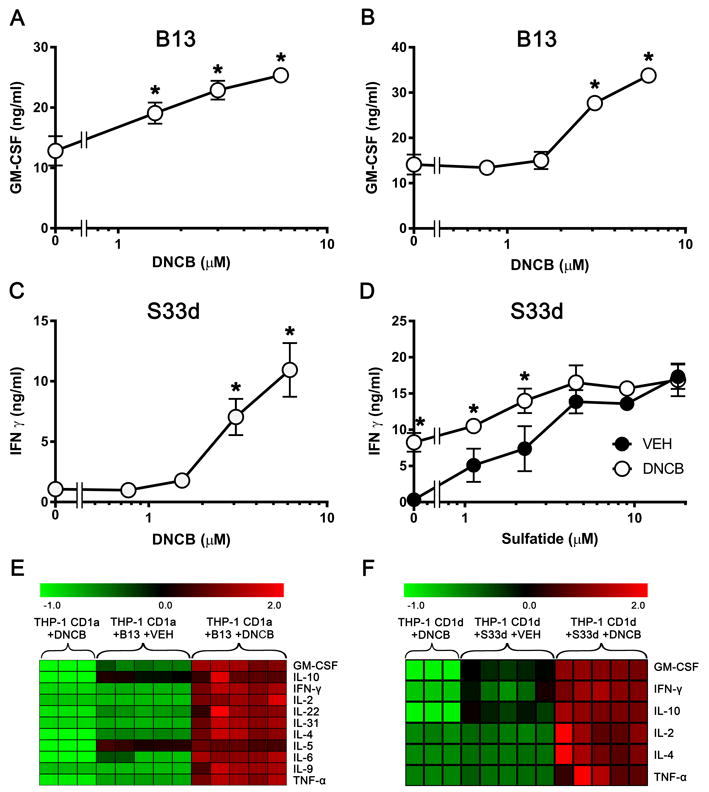
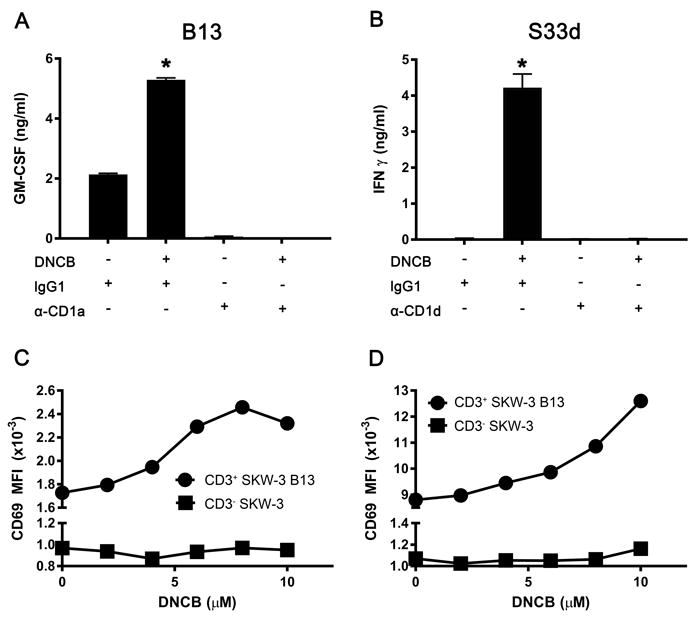
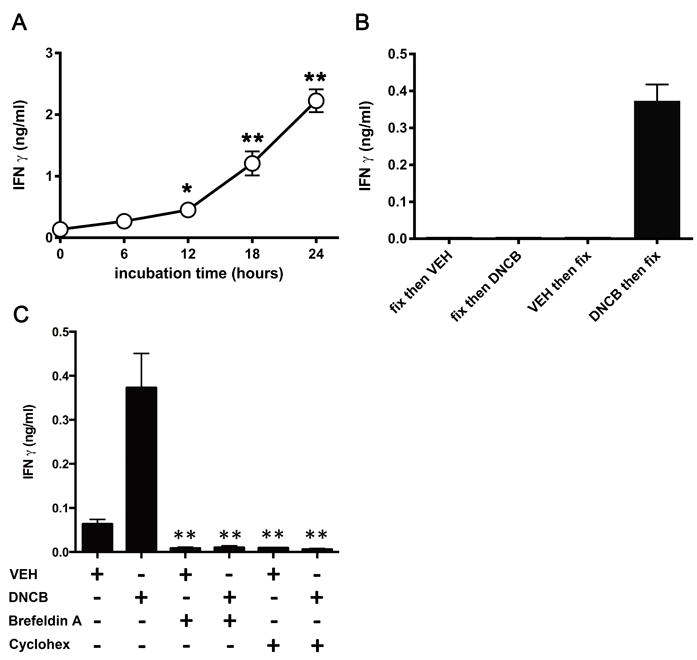
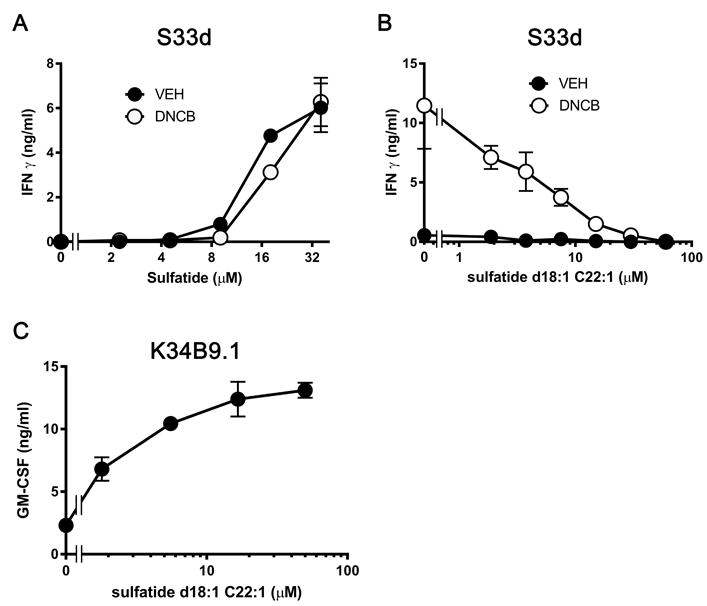
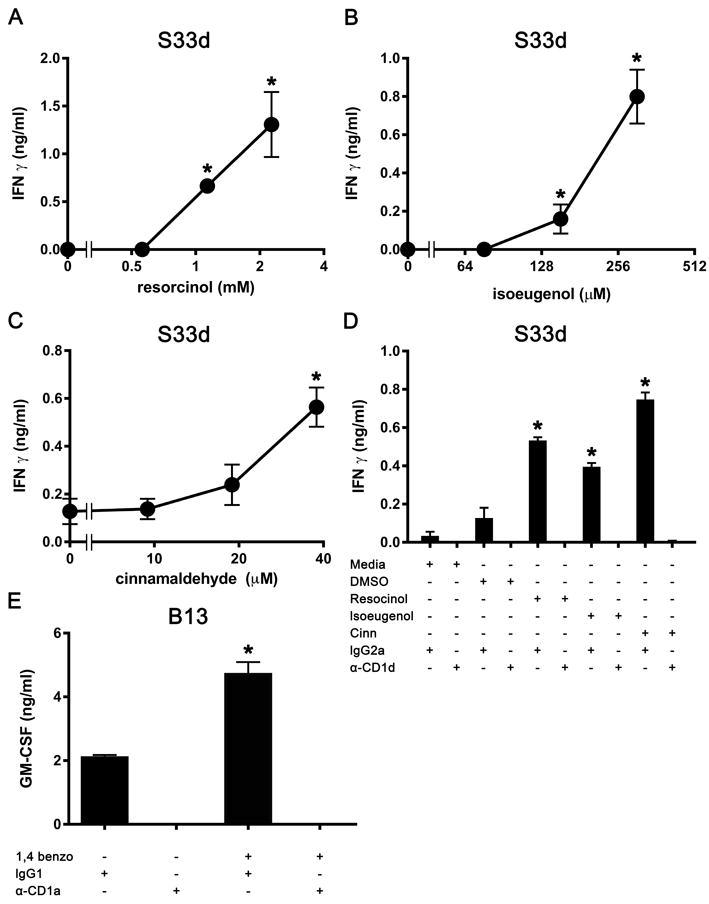
Allergic contact dermatitis is a primarily T-cell-mediated inflammatory skin disease induced by exposure to small molecular-weight haptens, which covalently bind to proteins. The abundance of cutaneous T cells that recognize CD1a antigen-presenting molecules raises the possibility that MHC-independent antigen presentation may be relevant in some hapten-driven immune responses. Here we examine the ability of contact sensitizers to influence CD1-restricted immunity. Exposure of human antigen-presenting cells such as monocyte-derived dendritic cells and THP-1 cells to the prototypical contact sensitizer dinitrochlorobenzene potentiated the response of CD1a- and CD1d-autoreactive T cells, which released a vast array of cytokines in a CD1- and TCR-dependent manner. The potentiating effects of dinitrochlorobenzene depended upon newly synthesized CD1 molecules and the presence of endogenous stimulatory lipids. Further examination of a broad panel of contact sensitizers revealed 1,4-benzoquinone, resorcinol, isoeugenol, and cinnamaldehyde to activate the same type of CD1-restricted responses. These findings provide a basis for the antigen-specific activation of skin-associated CD1-restricted T cells by small molecules and may have implications for contact sensitizer-induced inflammatory skin diseases.
Keywords: Antigen-presentation; CD1; Contact sensitivity; NKT cells; T cells.
© 2017 WILEY-VCH Verlag GmbH & Co. KGaA, Weinheim.
Conflict of interest statement
All the authors declare no commercial or financial conflicts of interest. RJB, SM, ADB and SMT are employees and L’Oréal Research and Innovation.
Figures
References
-
- Vocanson M, Hennino A, Rozieres A, Poyet G, Nicolas JF. Effector and regulatory mechanisms in allergic contact dermatitis. Allergy. 2009;64:1699–1714. - PubMed
-
- Pickard C, Smith AM, Cooper H, Strickland I, Jackson J, Healy E, Friedmann PS. Investigation of mechanisms underlying the T-cell response to the hapten 2,4-dinitrochlorobenzene. J Invest Dermatol. 2007;127:630–637. - PubMed
MeSH terms
Substances
Grants and funding
LinkOut - more resources
Full Text Sources
Other Literature Sources
Research Materials
