


Hemodynamics and gas exchange during chest compressions in neonatal resuscitation
- PMID: 28441439
- PMCID: PMC5404764
- DOI: 10.1371/journal.pone.0176478
Hemodynamics and gas exchange during chest compressions in neonatal resuscitation
Abstract
Purpose: Current knowledge about pulmonary/systemic hemodynamics and gas exchange during neonatal resuscitation in a model of transitioning fetal circulation with fetal shunts and fluid-filled alveoli is limited. Using a fetal lamb asphyxia model, we sought to determine whether hemodynamic or gas-exchange parameters predicted successful return of spontaneous circulation (ROSC).
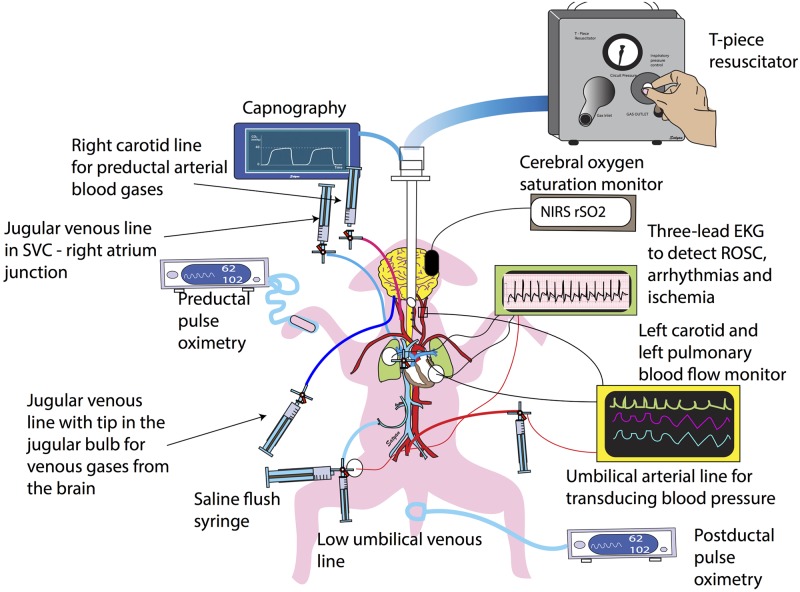
Methods: The umbilical cord was occluded in 22 lambs to induce asphyxial cardiac arrest. Following five minutes of asystole, resuscitation as per AHA-Neonatal Resuscitation Program guidelines was initiated. Hemodynamic parameters and serial arterial blood gases were assessed during resuscitation.
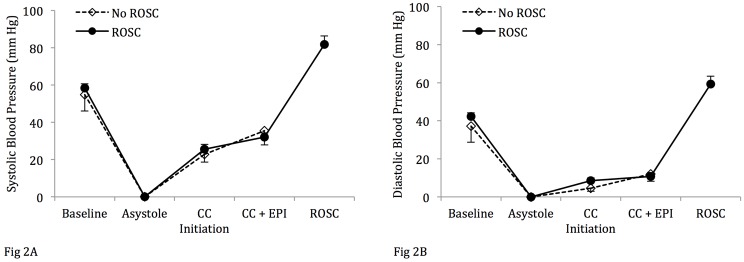
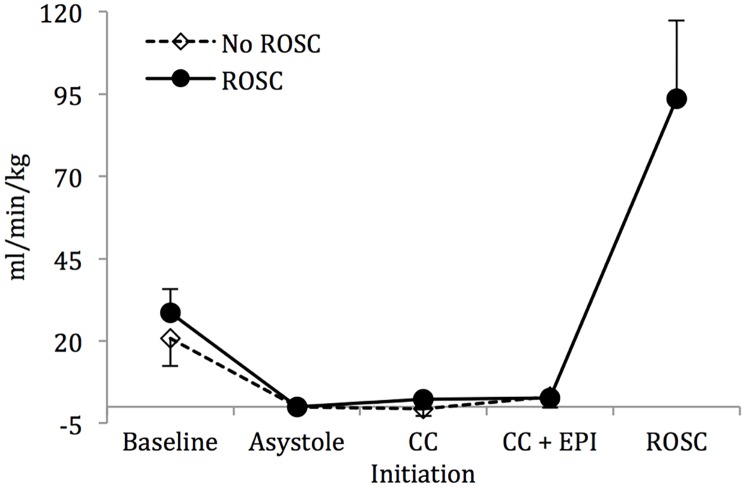
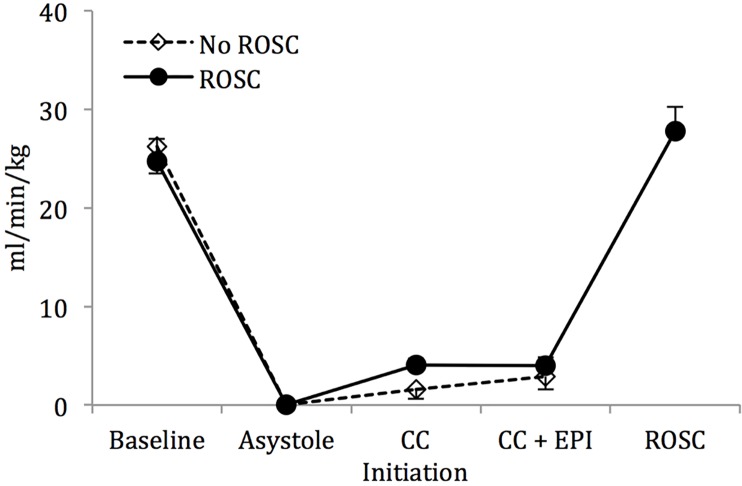
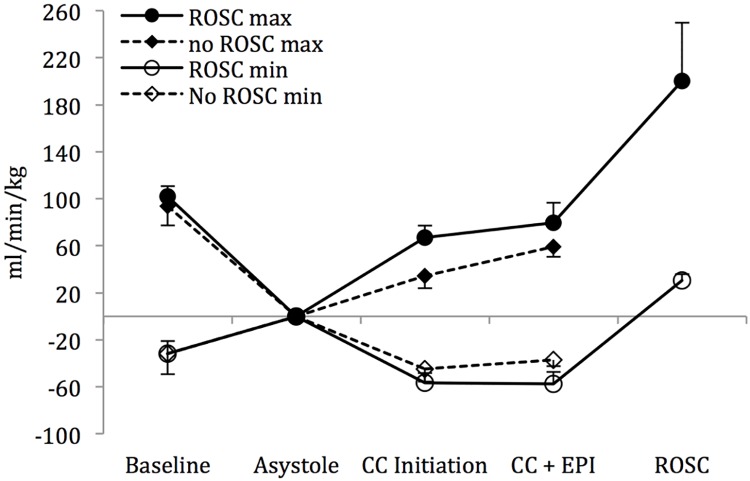
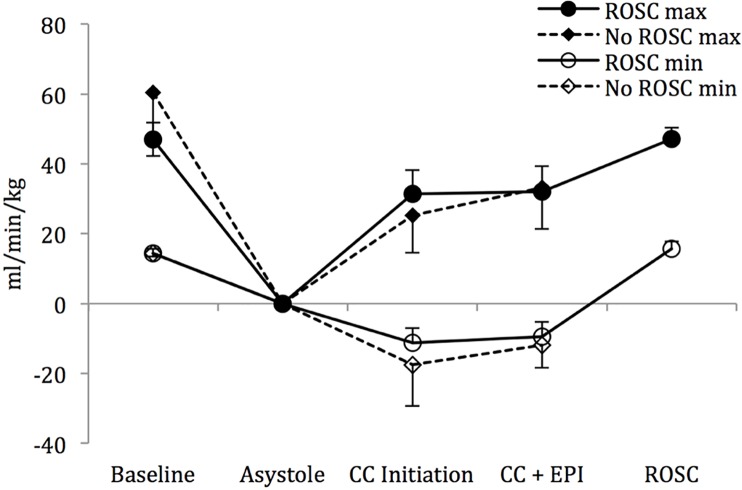
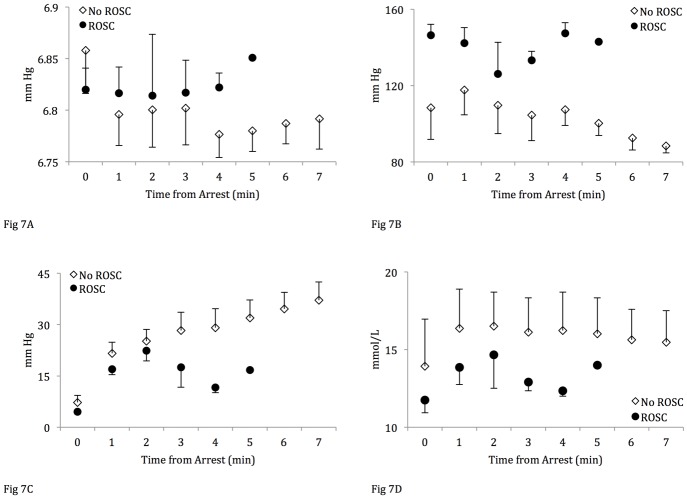
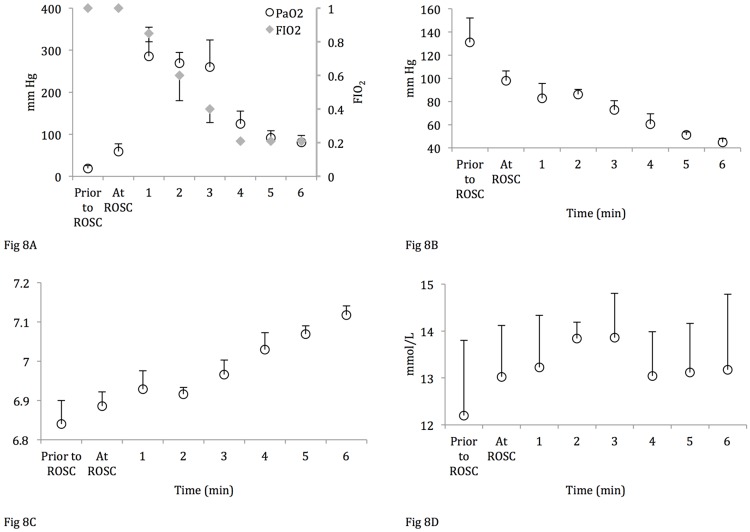
Results: ROSC occurred in 18 lambs (82%) at a median (IQR) time of 120 (105-180) seconds. There were no differences in hemodynamic parameters at baseline and at any given time point during resuscitation between the lambs that achieved ROSC and those that did not. Blood gases at arrest prior to resuscitation were comparable between groups. However, lambs that achieved ROSC had lower PaO2, higher PaCO2, and lower lactate during resuscitation. Increase in diastolic blood pressures induced by epinephrine in lambs that achieved ROSC (11 ±4 mmHg) did not differ from those that were not resuscitated (10 ±6 mmHg). Low diastolic blood pressures were adequate to achieve ROSC.
Conclusions: Hemodynamic parameters in a neonatal lamb asphyxia model with transitioning circulation did not predict success of ROSC. Lactic acidosis, higher PaO2 and lower PaCO2 observed in the lambs that did not achieve ROSC may represent a state of inadequate tissue perfusion and/or mitochondrial dysfunction.
Conflict of interest statement
Figures
References
-
- Harrington DJ, Redman CW, Moulden M, Greenwood CE. The long-term outcome in surviving infants with Apgar zero at 10 minutes: a systematic review of the literature and hospital-based cohort. Am J Obstet Gynecol. 2007;196(5):463.e1–5. - PubMed
-
- Traub E, Dick W, Lotz P, Lindner KH, Engels K. Investigations on neonatal cardiopulmonary reanimation using an animal model. J Perinat Med. 1983;11(2):103–13. - PubMed
-
- Houri PK, Frank LR, Menegazzi JJ, Taylor R. A randomized, controlled trial of two-thumb vs two-finger chest compression in a swine infant model of cardiac arrest [see comment]. Prehosp Emerg Care. 1997;1(2):65–7. - PubMed
MeSH terms
Grants and funding
LinkOut - more resources
Full Text Sources
Other Literature Sources
Medical
