


Evaluation of the Probiotic Strain Bifidobacterium longum subsp. Infantis CECT 7210 Capacities to Improve Health Status and Fight Digestive Pathogens in a Piglet Model
- PMID: 28443068
- PMCID: PMC5386966
- DOI: 10.3389/fmicb.2017.00533
Evaluation of the Probiotic Strain Bifidobacterium longum subsp. Infantis CECT 7210 Capacities to Improve Health Status and Fight Digestive Pathogens in a Piglet Model
Abstract
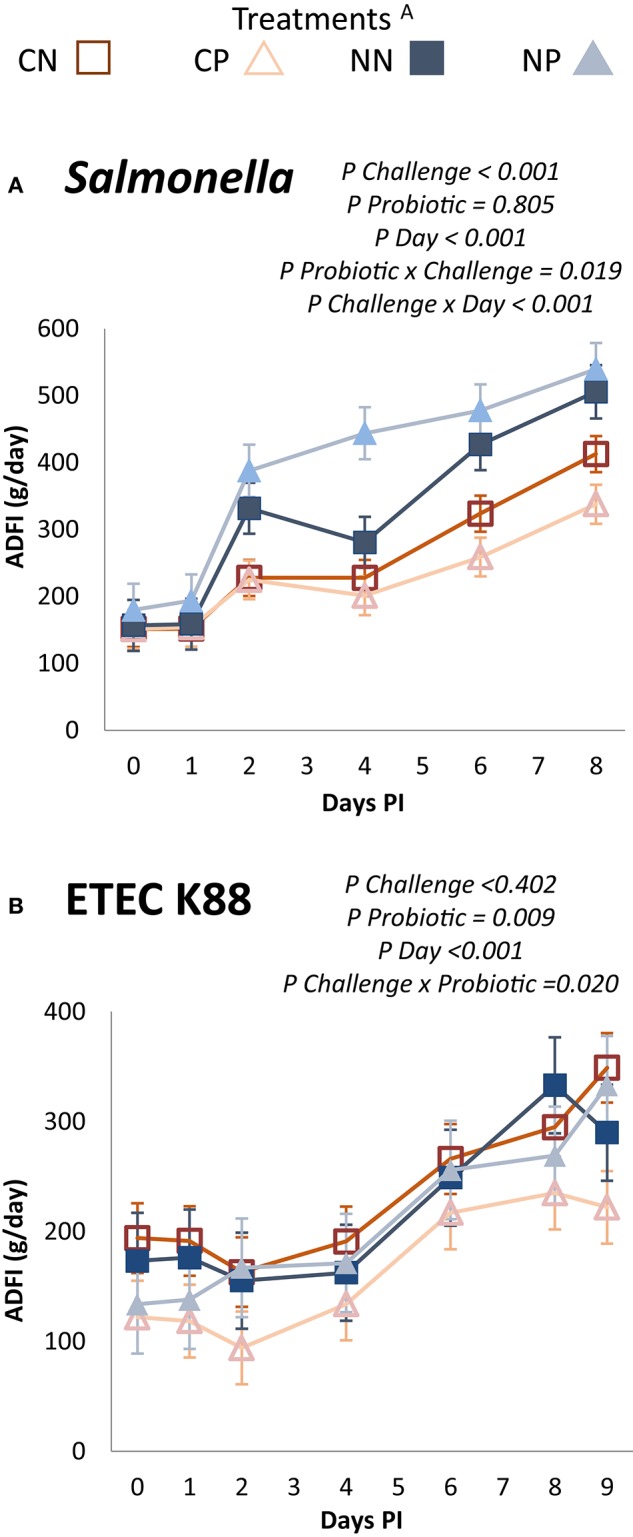
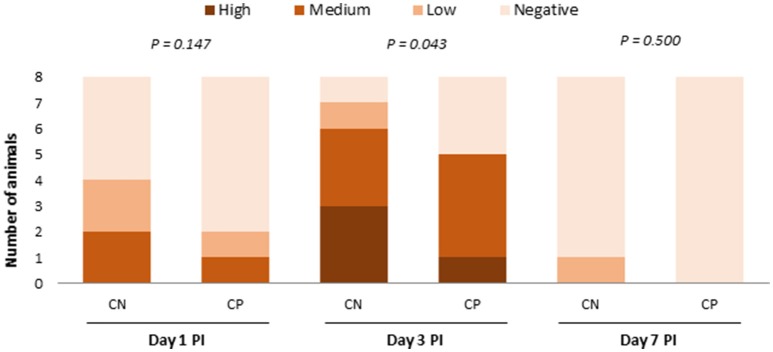
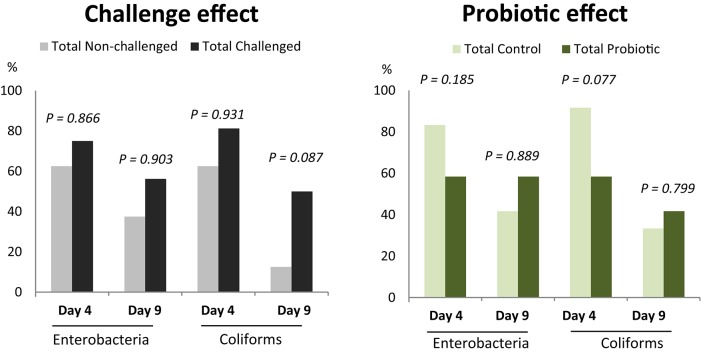
Probiotics have been demonstrated to be useful to enhance gut health and prevent gastrointestinal infections. The objective of this study is to demonstrate the potential of the probiotic strain Bifidobacterium longum subsp. infantis CECT 7210 (B. infantis IM1) to prevent and fight intestinal disease by using a Salmonella Typhimurium (Trial 1) or an enterotoxigenic Escherichia coli K88 (Trial 2) oral challenge in a weaning piglet model. Seventy-two piglets were used in each trial. After an adaptation period, animals were orally challenged. One animal per pen was euthanized at Days 4 and 8/9 (Trial 1/Trial 2) post-inoculation (PI). Animal performance, clinical signs, pathogen excretion, fermentation, immune response, and intestinal morphology were evaluated. In Trial 1, most parameters responded to the challenge, whereas, in Trial 2, effects were much milder. Consistent effects of the probiotic were detected in both experiments: Reduction of pathogen excretion (P = 0.043 on Day 3 PI, Trial 1) or ileal colonization (33% reduction of animals with countable coliforms; P = 0.077, Trial 2); increases in intraepithelial lymphocytes (P = 0.002 on Day 8 PI in Trial 1, P = 0.091 on Day 4 PI in Trial 2), and improvement of the fermentation profile by increasing butyric acid in non-challenged animals [P challenge × probiotic (interaction) = 0.092 in Trial 1 and P = 0.056 in Trial 2] concomitant with an enhancement of the villus:crypt ratio on Day 8/9 PI (P interaction = 0.091 for Trial 1 and P = 0.006 for Trial 2). Challenged animals treated with the probiotic showed reduced feed intakes (P interaction = 0.019 in Trial 1 and P = 0.020 in Trial 2) and had lower short-chain fatty acid concentrations in the colon (P interaction = 0.008 in Trial 1 and P = 0.082 in Trial 2). In conclusion, this probiotic demonstrated potential to reduce the intestinal colonization by pathogens and to stimulate local immune response. However, effects on feed intake, microbial fermentation, and intestinal architecture showed a differential pattern between challenged and non-challenged animals. Effects of the probiotic intervention were dependent on the structure of the ecosystem in which it was applied.
Keywords: Escherichia coli; Salmonella Typhimurium; diarrhea; infant; microbiota; pig-model; probiotic.
Figures
References
-
- AOAC International (1995). Official Methods of Analysis of AOAC International. Washington, DC.
-
- Belenguer A., Duncan S. H., Calder A. G., Holtrop G., Louis P., Lobley G. E., et al. (2006). Two routes of metabolic cross-feeding between Bifidobacterium adolescentis and butyrate-producing anaerobes from the human gut. Appl. Environ. Microbiol. 72, 3593–3599. 10.1128/AEM.72.5.3593-3599.2006 - DOI - PMC - PubMed
LinkOut - more resources
Full Text Sources
Other Literature Sources
Research Materials
Miscellaneous
