


Association Between the Inflammatory Biomarkers and Left Ventricular Systolic Dysfunction in Patients with Exacerbations of Chronic Obstructive Pulmonary Disease
- PMID: 28443567
- PMCID: PMC5450862
- DOI: 10.4274/balkanmedj.2016.1114
Association Between the Inflammatory Biomarkers and Left Ventricular Systolic Dysfunction in Patients with Exacerbations of Chronic Obstructive Pulmonary Disease
Abstract
Background: Cardiovascular diseases are an important cause of morbidity and mortality in chronic obstructive pulmonary disease patients. The increased inflammatory biomarker levels predict exacerbations and are associated with cardiovascular diseases in stable chronic obstructive pulmonary disease patients but their role in the settings of acute chronic obstructive pulmonary disease exacerbations has not been determined.
Aims: To analyse the association between inflammatory biomarkers and heart failure and also to determine the predictors of mortality in patients with exacerbations of chronic obstructive pulmonary disease.
Study design: Prospective observational study.
Methods: We analysed 194 patients admitted for acute exacerbation of chronic obstructive pulmonary disease at The Institute for Pulmonary Diseases of Vojvodina, Sremska Kamenica, Serbia. In all patients, C-reactive protein, fibrinogen, N-terminal of the pro-hormone brain natriuretic peptide and white blood count were measured and transthoracic echocardiography was performed.
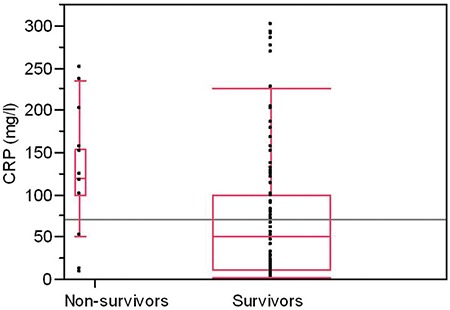
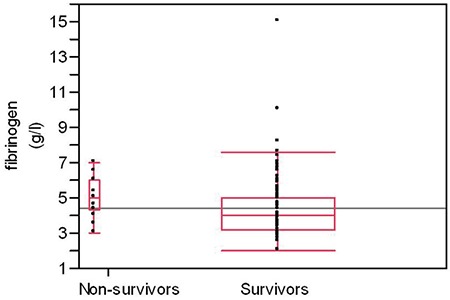
Results: There were 119 men (61.3%) and the median age was 69 years (interquartile range 62-74). Left ventricular systolic dysfunction (ejection fraction <50%) was present in 47 (24.2%) subjects. Patients with left ventricular systolic dysfunction had higher C-reactive protein levels (median 100 vs. 31 mg/L, p=0.001) and fibrinogen (median 5 vs. 4 g/L, p=<0.001) compared to those with preserved ejection fraction. The overall hospital mortality was 8.2% (16/178). The levels of C-reactive protein, fibrinogen, N-terminal pro-brain natriuretic peptide and ejection fraction predicted hospital mortality in univariate analysis. After adjusting for age, hypoxemia and C-reactive protein, ejection fraction remained significant predictors of hospital mortality (OR 3.89, 95% CI 1.05-15.8).
Conclusion: Nearly a quarter of patients with the exacerbation of chronic obstructive pulmonary disease present with left ventricular systolic dysfunction which may be associated with mortality.
Keywords: Chronic obstructive pulmonary disease; inflammatory biomarkers heart failure..
Conflict of interest statement
Figures
References
-
- Global initiative for chronic Obstructive Lung Disease. 2015 Global strategy for the diagnosis, management, and prevention of chronic obstructive lung disease. [Internet] Available at website: www.goldcopd.org/guidelines-global-strategy-for-di... . - PubMed
-
- Vestbo J, Hurd SS, Agustí AG, Jones PW, Vogelmeier C, Anzueto A, et al. Global strategy for the diagnosis, management and prevention of chronic obstructive pulmonary disease, GOLD executive summary. Am J Respir Crit Care Med. 2013;187:347–65. - PubMed
-
- Halpern MT, Stanford RH, Borker R. The burden of COPD in the U.S.A: results from the confronting COPD survey. Respir Med. 2003;97(Suppl C):81–9. - PubMed
-
- Thomsen M, Ingebrigtsen TS, Marott JL, Dahl M, Lange P, Vestbo J, et al. Inflamatory biomarkers and exacerbations in chronic obstructive pulmonary disease. JAMA. 2013;309:2353–61. - PubMed
Publication types
MeSH terms
Substances
LinkOut - more resources
Full Text Sources
Other Literature Sources
Medical
Research Materials
