


Genotypic variation in transpiration efficiency due to differences in photosynthetic capacity among sugarcane-related clones
- PMID: 28444313
- PMCID: PMC5447891
- DOI: 10.1093/jxb/erx107
Genotypic variation in transpiration efficiency due to differences in photosynthetic capacity among sugarcane-related clones
Abstract
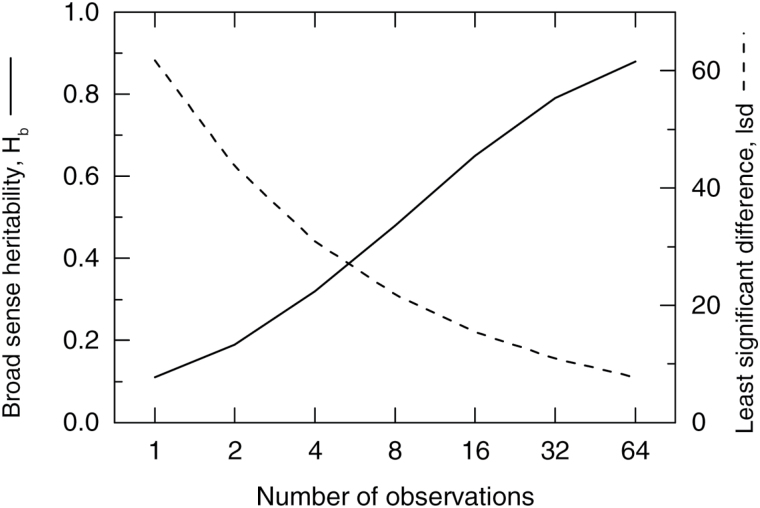
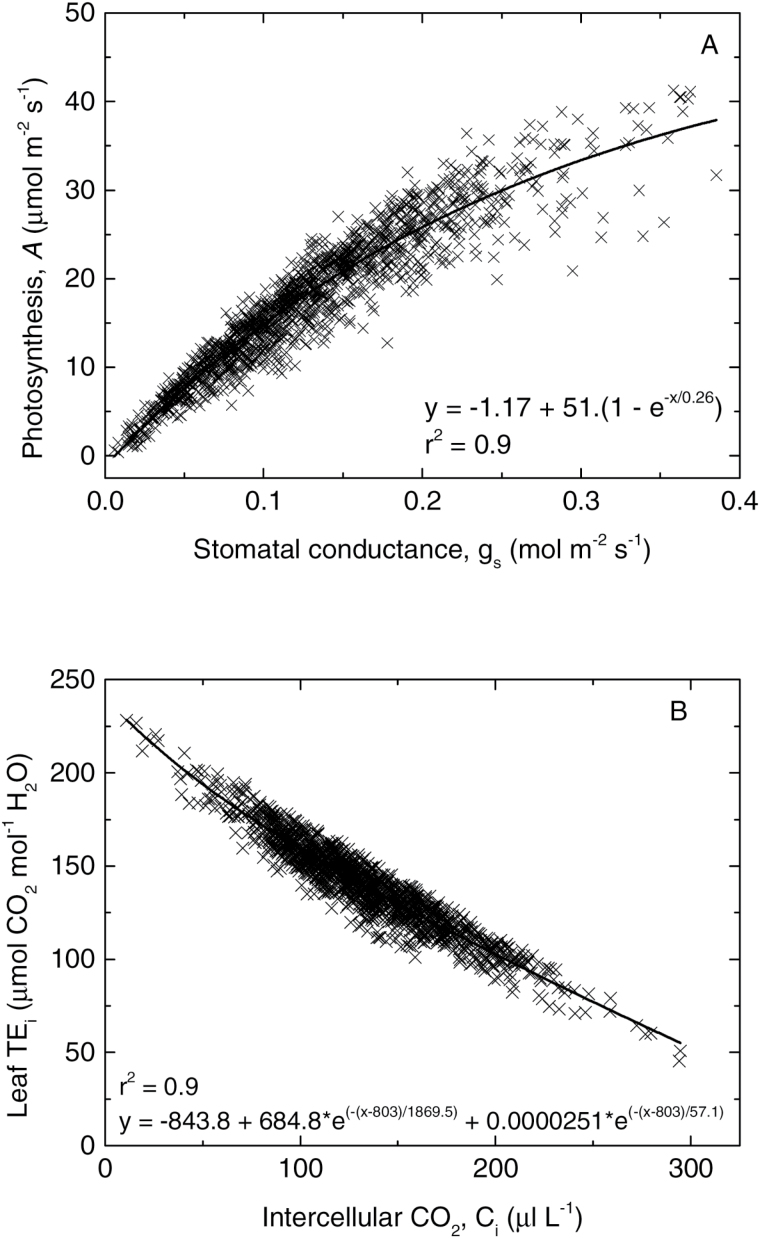
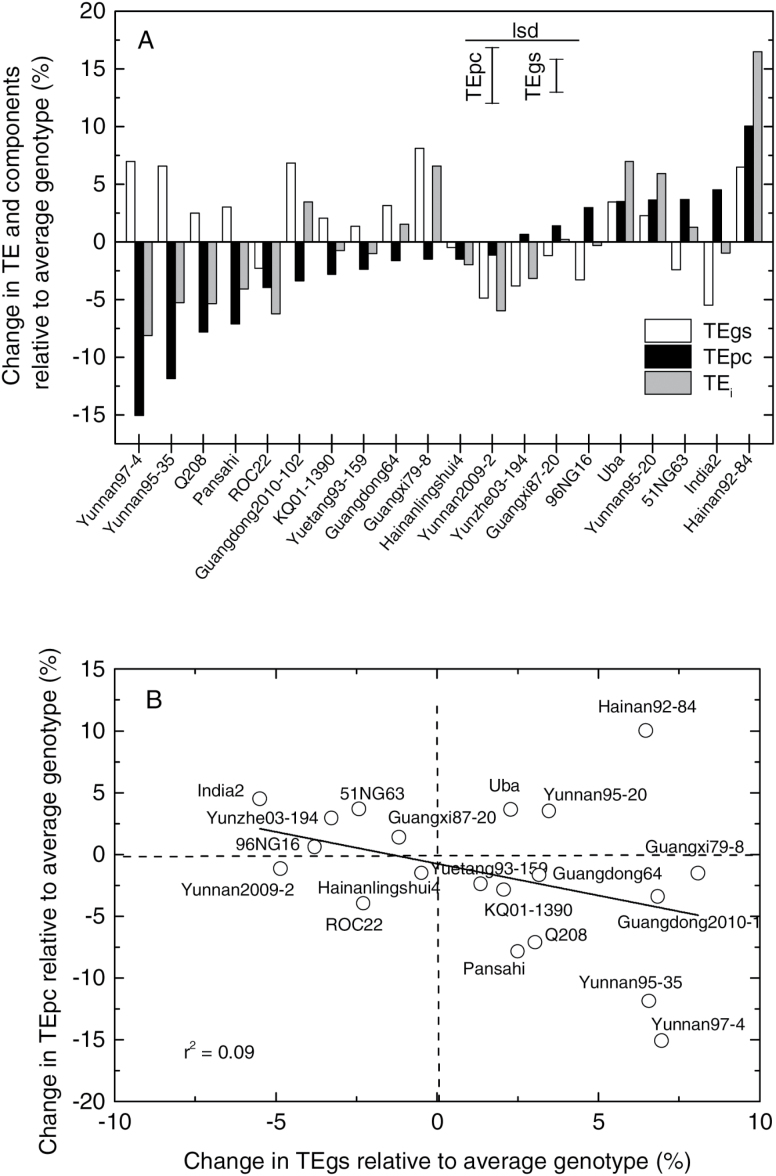
Sugarcane, derived from the hybridization of Saccharum officinarum×Saccharum spontaneum, is a vegetative crop in which the final yield is highly driven by culm biomass production. Cane yield under irrigated or rain-fed conditions could be improved by developing genotypes with leaves that have high intrinsic transpiration efficiency, TEi (CO2 assimilation/stomatal conductance), provided this is not offset by negative impacts from reduced conductance and growth rates. This study was conducted to partition genotypic variation in TEi among a sample of diverse clones from the Chinese collection of sugarcane-related germplasm into that due to variation in stomatal conductance versus that due to variation in photosynthetic capacity. A secondary goal was to define protocols for optimized larger-scale screening of germplasm collections. Genotypic variation in TEi was attributed to significant variation in both stomatal and photosynthetic components. A number of genotypes were found to possess high TEi as a result of high photosynthetic capacity. This trait combination is expected to be of significant breeding value. It was determined that a small number of observations (16) is sufficient for efficiently screening TEi in larger populations of sugarcane genotypes The research methodology and results reported are encouraging in supporting a larger-scale screening and introgression of high transpiration efficiency in sugarcane breeding. However, further research is required to quantify narrow sense heritability as well as the leaf-to-field translational potential of genotypic variation in transpiration efficiency-related traits observed in this study.
Keywords: Breeding; genotypic variation; photosynthesis; sugarcane; transpiration efficiency..
© The Author 2017. Published by Oxford University Press on behalf of the Society for Experimental Biology.
Figures
References
-
- Bange GGJ. 1953. On the quantitative explanation of stomatal transpiration. Acta Botanica Neerlandica 2, 255–297.
-
- Belko N, Zaman-Allah M, Cisse N, Diop NN, Zombre G, Ehlers JD, Vadez V. 2012. Lower soil moisture threshold for transpiration decline under water deficit correlates with lower canopy conductance and higher transpiration efficiency in drought-tolerant cowpea. Functional Plant Biology 39, 306–322. - PubMed
-
- Belko N, Zaman-Allah M, Diop NN, Cisse N, Zombre G, Ehlers JD, Vadez V. 2013. Restriction of transpiration rate under high vapour pressure deficit and non-limiting water conditions is important for terminal drought tolerance in cowpea. Plant Biology 15, 304–316. - PubMed
-
- Berding N, Roach BT. 1987. Germplasm collection, maintenance, and use. In: Heinz D, ed, Sugarcane improvement through breeding, Vol. 143 Amsterdam: Elsevier, p 210.
-
- Blum A. 2005. Drought resistance, water-use efficiency, and yield potential—are they compatible, dissonant, or mutually exclusive? Australian Journal of Agricultural Research 56, 1159.
Publication types
MeSH terms
LinkOut - more resources
Full Text Sources
Other Literature Sources
