


Age-dependent alterations in osteoblast and osteoclast activity in human cancellous bone
- PMID: 28444839
- PMCID: PMC5661248
- DOI: 10.1111/jcmm.13192
Age-dependent alterations in osteoblast and osteoclast activity in human cancellous bone
Abstract
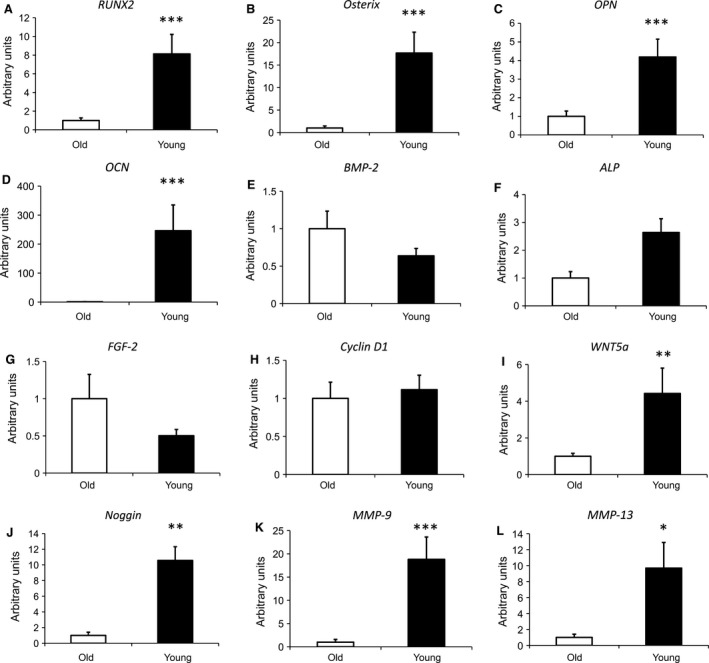
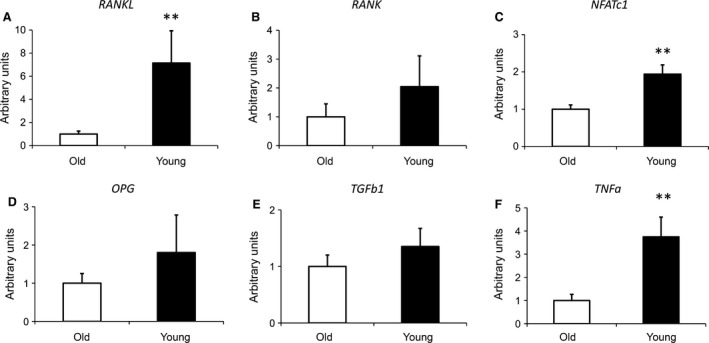
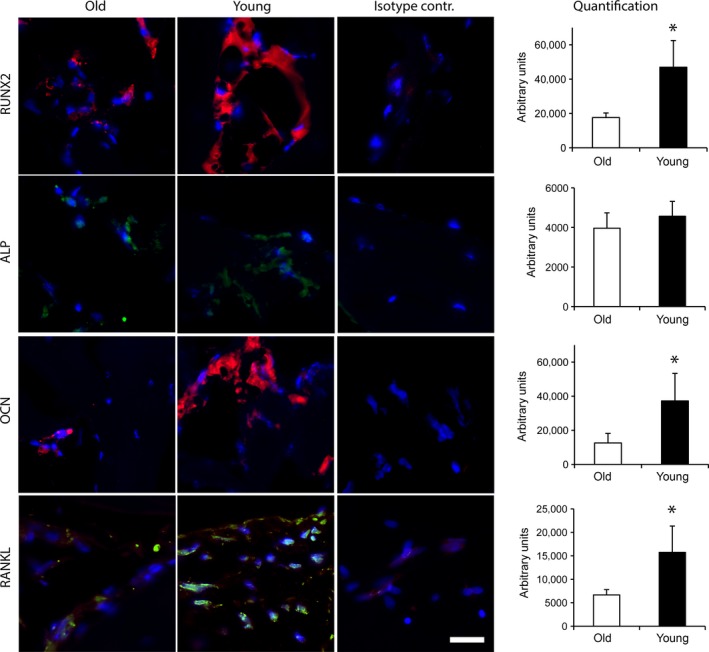
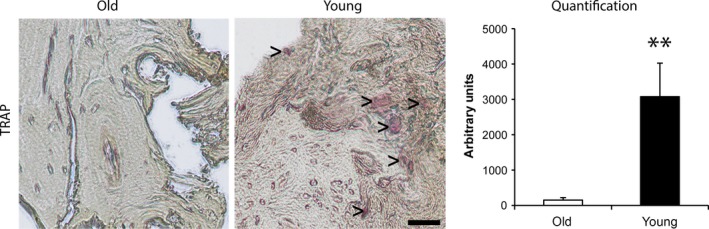
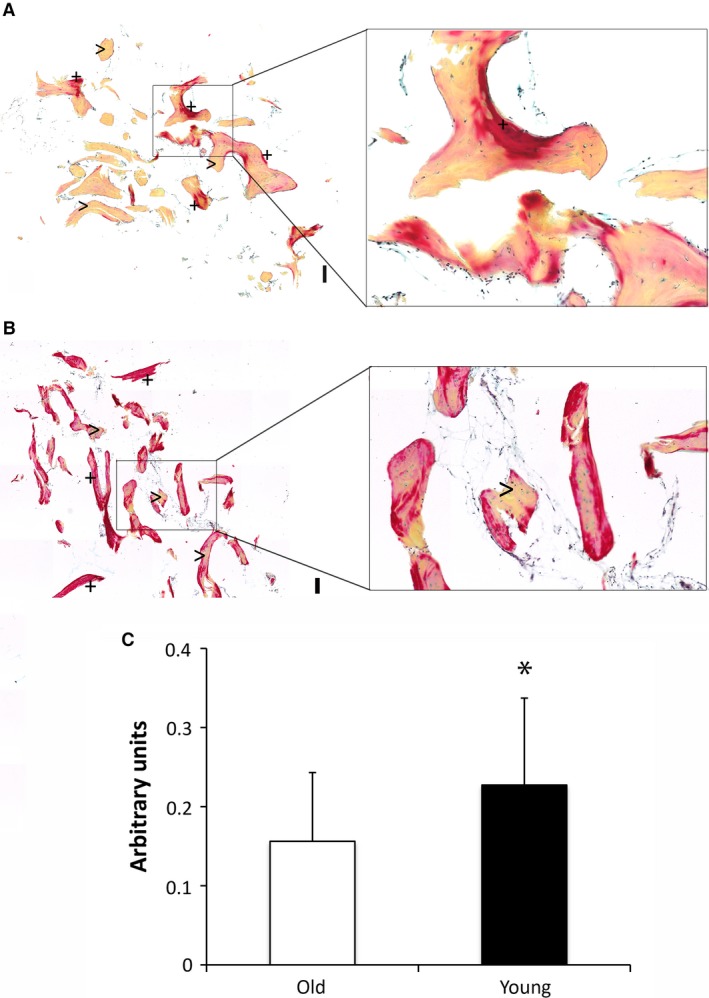
It is assumed that the activity of osteoblasts and osteoclasts is decreased in bone tissue of aged individuals. However, detailed investigation of the molecular signature of human bone from young compared to aged individuals confirming this assumption is lacking. In this study, quantitative expression analysis of genes related to osteogenesis and osteoclastogenesis of human cancellous bone derived from the distal radius of young and aged individuals was performed. Furthermore, we additionally performed immunohistochemical stainings. The young group included 24 individuals with an average age of 23.2 years, which was compared to cancellous bone derived from 11 body donators with an average age of 81.0 years. In cancellous bone of young individuals, the osteogenesis-related genes RUNX-2, OSTERIX, OSTEOPONTIN and OSTEOCALCIN were significantly up-regulated compared to aged individuals. In addition, RANKL and NFATc1, both markers for osteoclastogenesis, were significantly induced in cancellous bone of young individuals, as well as the WNT gene family member WNT5a and the matrix metalloproteinases MMP-9. However, quantitative RT-PCR analysis of BMP-2, ALP, FGF-2, CYCLIN-D1, MMP-13, RANK, OSTEOPROTEGERIN and TGFb1 revealed no significant difference. Furthermore, Tartrate-resistant acid phosphatase (TRAP) staining was performed which indicated an increased osteoclast activity in cancellous bone of young individuals. In addition, pentachrome stainings revealed significantly less mineralized bone matrix, more osteoid and an increased bone density in young individuals. In summary, markers related to osteogenesis as well as osteoclastogenesis were significantly decreased in the aged individuals. Thus, the present data extends the knowledge about reduced bone regeneration and healing capacity observed in aged individuals.
Keywords: RANKL; RUNX-2; bone ageing; osteoblasts; osteoclasts.
© 2017 The Authors. Journal of Cellular and Molecular Medicine published by John Wiley & Sons Ltd and Foundation for Cellular and Molecular Medicine.
Figures
References
-
- Kanis JA. Diagnosis of osteoporosis and assessment of fracture risk. Lancet. 2002; 359: 1929–36. - PubMed
-
- Aalami OO, Nacamuli RP, Lenton KA, et al Applications of a mouse model of calvarial healing: differences in regenerative abilities of juveniles and adults. Plast Reconstr Surg. 2004; 114: 713–20. - PubMed
Publication types
MeSH terms
Substances
LinkOut - more resources
Full Text Sources
Other Literature Sources
Medical
Research Materials
Miscellaneous
