


Clinical analysis and prognosis of synchronous and metachronous multiple primary malignant tumors
- PMID: 28445321
- PMCID: PMC5413286
- DOI: 10.1097/MD.0000000000006799
Clinical analysis and prognosis of synchronous and metachronous multiple primary malignant tumors
Abstract
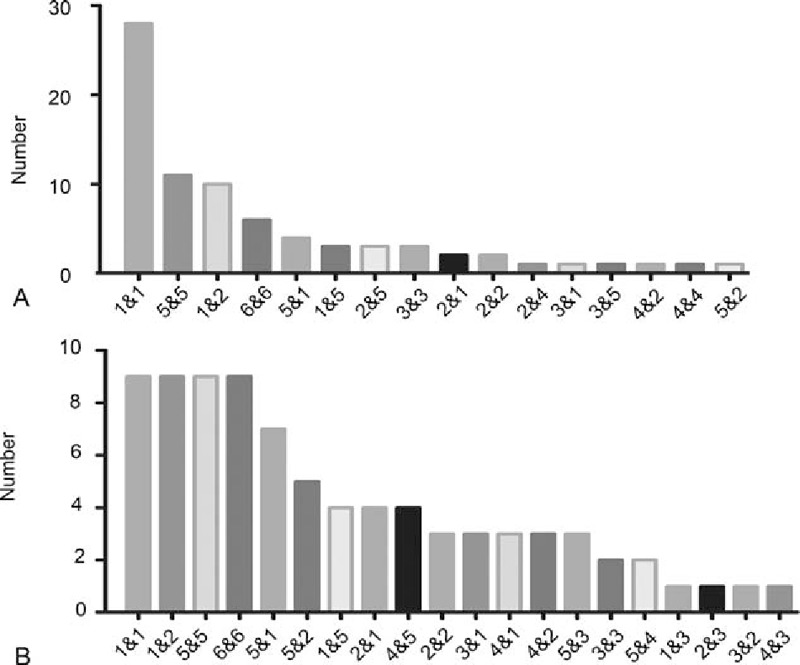
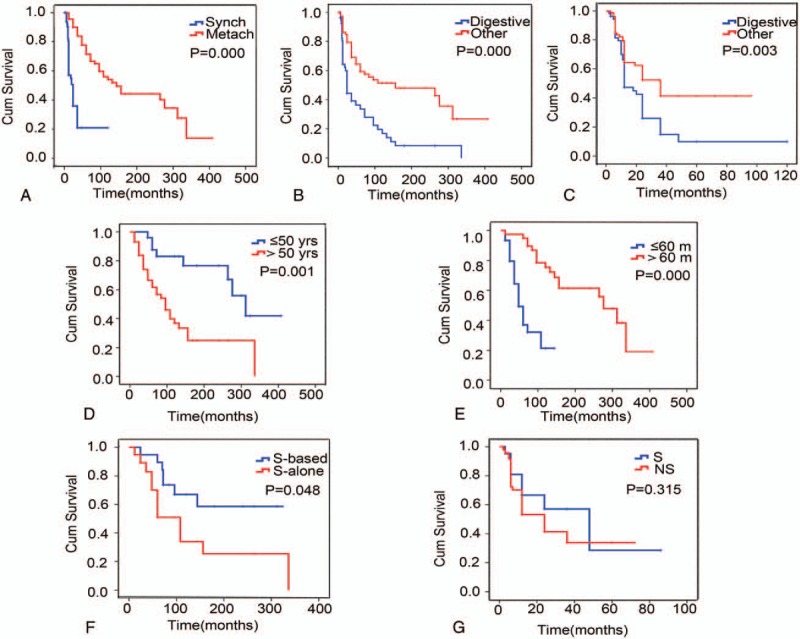
The aim of this study was to determine the clinical features, treatment factors, and prognosis of patients with multiple primary malignant tumors (MPMTs). In total, 161 patients with MPMTs at our hospital (The First Affiliated Hospital of Xi'an Jiaotong University, Xi'an, Shaanxi, China) were analyzed in this study. We found that among 161 patients with MPMTs, 78 (48.4%) patients had synchronous tumors and 83 (51.6%) patients had metachronous tumors. Most clinical and pathological features were similar in both groups. Most patients with MPMTs were men and older patients (>50 years old), and adenocarcinoma was the most frequent pathology type. The most frequent location of all MPMTs was the digestive system. The leading tumor association was between digestive-digestive tumors, also. However, patients with synchronous tumors and MPMTs of the digestive system showed a shorter survival time. In the metachronous cancer group, the median interval time was 60 months, and a short interval time (≤60 months) was associated with a shorter survival time. In addition, survival time was increased in the younger age group (≤50 years old) and in patients who accepted surgery-based comprehensive therapy. However, only interval time (≤60 months) was an independent prognostic factor associated with survival for the metachronous cancer group. Therefore, careful surveillance and follow-up are especially important in these patients.
Conflict of interest statement
The authors have no funding and conflicts of interest to disclose.
Figures
References
-
- Chen W, Zheng R, Baade PD, et al. Cancer statistics in China, 2015. CA Cancer J Clin 2016;66:115–32. - PubMed
-
- Siegel RL, Miller KD, Jemal A. Cancer statistics, 2015. CA Cancer J Clin 2015;65:5–29. - PubMed
-
- Kilciksiz S, Gokce T, Baloglu A, et al. Characteristics of synchronous- and metachronous-type multiple primary neoplasms: a study of hospital-based cancer registry in Turkey. Clin Genitourin Cancer 2007;5:438–45. - PubMed
-
- Billroth T. Reimer G. Die allgemeine chirurgische pathologie und therapie. 51 Vorlesungen-Ein Handbuch fur Studierende und Artze, 14. Berlin: Auflage; 1889. 908.
-
- Warren S, Gates O. Multiple primary malignant tumors: a survey of the literature and a statistical study. Am J Cancer 1932;16:1358–414.
Publication types
MeSH terms
LinkOut - more resources
Full Text Sources
Other Literature Sources
