


A Review Study on Macrolides Isolated from Cyanobacteria
- PMID: 28445442
- PMCID: PMC5450532
- DOI: 10.3390/md15050126
A Review Study on Macrolides Isolated from Cyanobacteria
Abstract
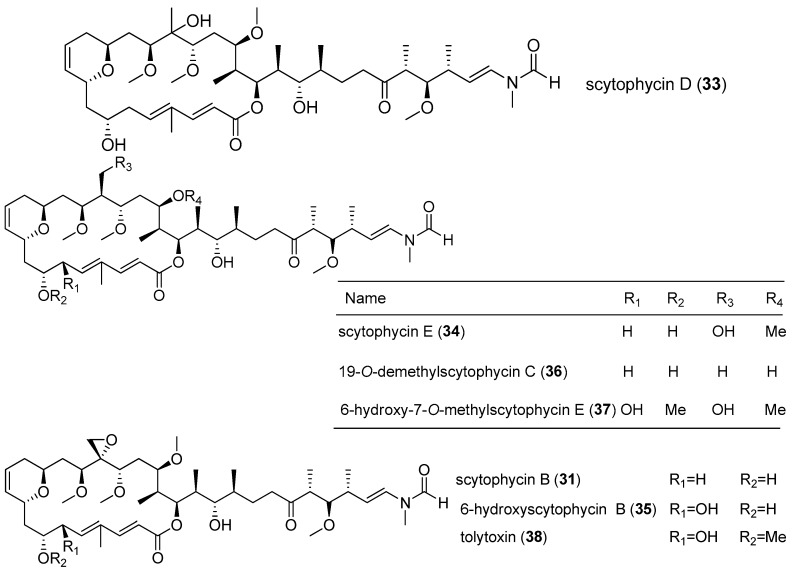
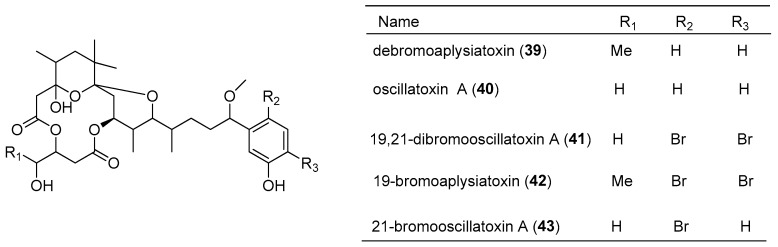
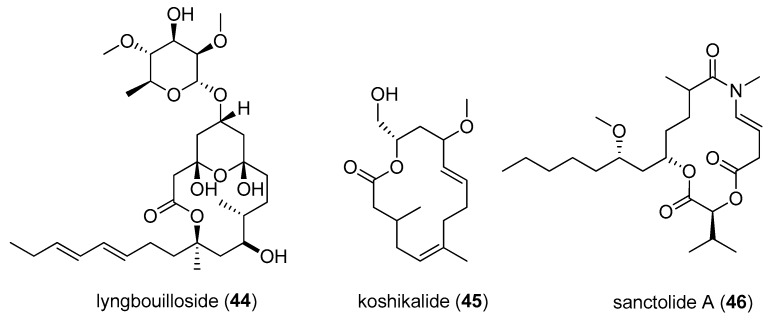
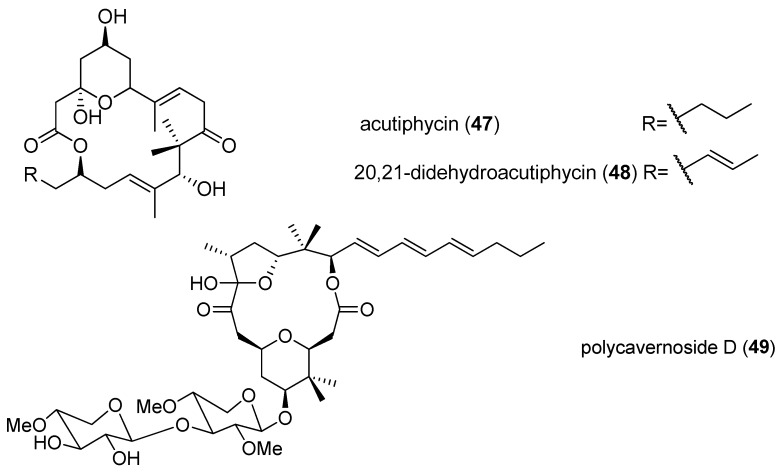
Cyanobacteria are rich sources of structurally-diverse molecules with promising pharmacological activities. Marine cyanobacteria have been proven to be true producers of some significant bioactive metabolites from marine invertebrates. Macrolides are a class of bioactive compounds isolated from marine organisms, including marine microorganisms in particular. The structural characteristics of macrolides from cyanobacteria mainly manifest in the diversity of carbon skeletons, complexes of chlorinated thiazole-containing molecules and complex spatial configuration. In the present work, we systematically reviewed the structures and pharmacological activities of macrolides from cyanobacteria. Our data would help establish an effective support system for the discovery and development of cyanobacterium-derived macrolides.
Keywords: bioactivity; cyanobacteria; macrolides; secondary metabolites.
Conflict of interest statement
The authors declare no conflict of interest.
Figures
References
-
- Capper A., Erickson A.A., Ritson-Williams R., Becerro M.A., Arthur K.A., Paul V.J. Palatability and chemical defences of benthic cyanobacteria to a suite of herbivores. J. Exp. Mar. Biol. Ecol. 2016;474:100–108. doi: 10.1016/j.jembe.2015.09.008. - DOI
-
- Belakhov V.V., Garabadzhiu A.V. Polyene macrolide antibiotics: mechanisms of inactivation, ways of stabilization, and methods of disposal of unusable drugs (review) Russ. J. Gen. Chem. 2015;85:2985–3001. doi: 10.1134/S1070363215130174. - DOI
Publication types
MeSH terms
Substances
LinkOut - more resources
Full Text Sources
Other Literature Sources
