. 2017 May 18;545(7654):350-354.
doi: 10.1038/nature22331. Epub 2017 Apr 26.

Floor-plate-derived netrin-1 is dispensable for commissural axon guidance

Affiliations

Floor-plate-derived netrin-1 is dispensable for commissural axon guidance

Chloé Dominici et al. Nature. .

Abstract

Netrin-1 is an evolutionarily conserved, secreted extracellular matrix protein involved in axon guidance at the central nervous system midline. Netrin-1 is expressed by cells localized at the central nervous system midline, such as those of the floor plate in vertebrate embryos. Growth cone turning assays and three-dimensional gel diffusion assays have shown that netrin-1 can attract commissural axons. Loss-of-function experiments further demonstrated that commissural axon extension to the midline is severely impaired in the absence of netrin-1 (refs 3, 7, 8, 9). Together, these data have long supported a model in which commissural axons are attracted by a netrin-1 gradient diffusing from the midline. Here we selectively ablate netrin-1 expression in floor-plate cells using a Ntn1 conditional knockout mouse line. We find that hindbrain and spinal cord commissural axons develop normally in the absence of floor-plate-derived netrin-1. Furthermore, we show that netrin-1 is highly expressed by cells in the ventricular zone, which can release netrin-1 at the pial surface where it binds to commissural axons. Notably, Ntn1 deletion from the ventricular zone phenocopies commissural axon guidance defects previously described in Ntn1-knockout mice. These results show that the classical view that attraction of commissural axons is mediated by a gradient of floor-plate-derived netrin-1 is inaccurate and that netrin-1 primarily acts locally by promoting growth cone adhesion.


Conflict of interest statement

The authors declare no competing interest.

Figures
Extended Data Figure 1
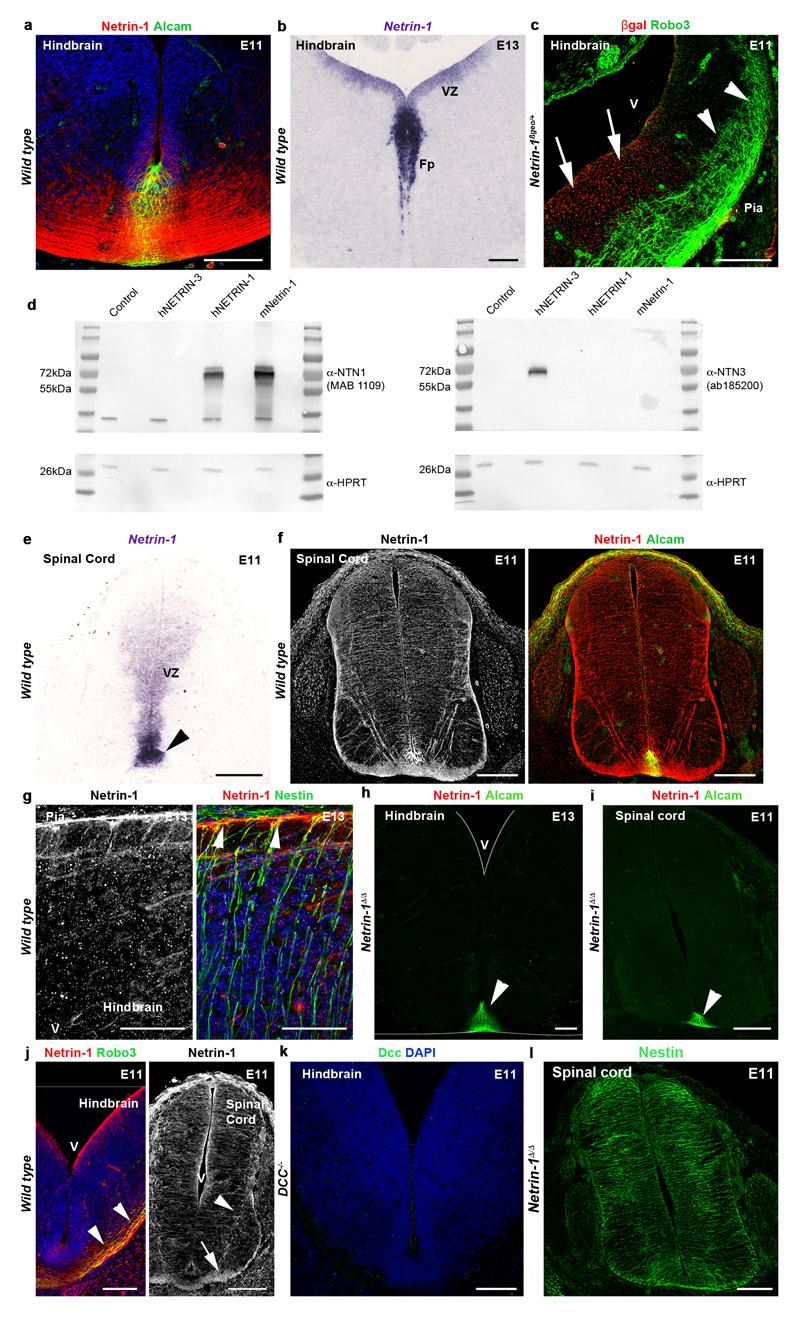
Extended Data Figure 1. Netrin-1 distribution in Hindbrain and Spinal Cord
Coronal cryostat sections of the hindbrain and spinal cord (brachial level) of E11 and E13 embryos. a, At E11, the floor plate (Alcam+ positive cells in green) but also commissural axons are immunoreactive for netrin-1 (n=6). b, At E13 netrin-1 mRNA is still expressed in the floor plate (Fp) and VZ of the basal plate (n=6). c, In a E11 Netrin1ßgeo/+, Robo3+ commissural neurons in the dorsal hindbrain (arrowheads) are not immunoreactive for ßgal unlike the basal plate neuroepithelium (arrows; n=6). d, Western blot analysis of HEK-293T cells overexpressing hNETRIN-3, hNETRIN-1 or mNetrin-1 proteins (n=3). Left, the monoclonal anti-NTN1 antibody (MAB1109) specifically recognizes Netrin-1 proteins (human and mouse) and not Netrin-3. Right, Netrin-3 is specifically recognized by the polyclonal anti-NTN3 antibody (ab185200) unlike Netrin-1. e, At E11, netrin-1 is expressed in the spinal cord by floor plate (arrowhead) and VZ progenitors (n=6). f, The floor plate (Alcam+), commissural axons, radial processes of neural progenitors and basal lamina are immunoreactive for netrin-1 (n=6). g, At E13 (n=7), netrin-1 is still highly distributed in Nestin+ radial processes of neural progenitors and at the pial surface. h,i Netrin-1 protein is absent from the hindbrain of Netrin-1Δ/Δ at E13 (h) and the spinal cord at E11 (i) (n=6 for each). Floor plate cells (arrowhead) still express Alcam (green). j, Netrin-1 immunostaining without permeabilization at E11. Commissural axons are still labeled (arrowheads) including post-crossing ones (arrow). Commissural axons are also stained with anti-Robo3 on the left panel. Ventricle (V). k, Shows the absence of Dcc-immunoreactivity on a hindbrain section from a DCC-/- E11 embryo (DAPI counterstaining, n=6). l, Neural progenitors radial processes are present in Netrin-1Δ/Δ embryos (n=6). Scale bars, 100 µm except in g, 50 µm.
Extended Data Figure 2
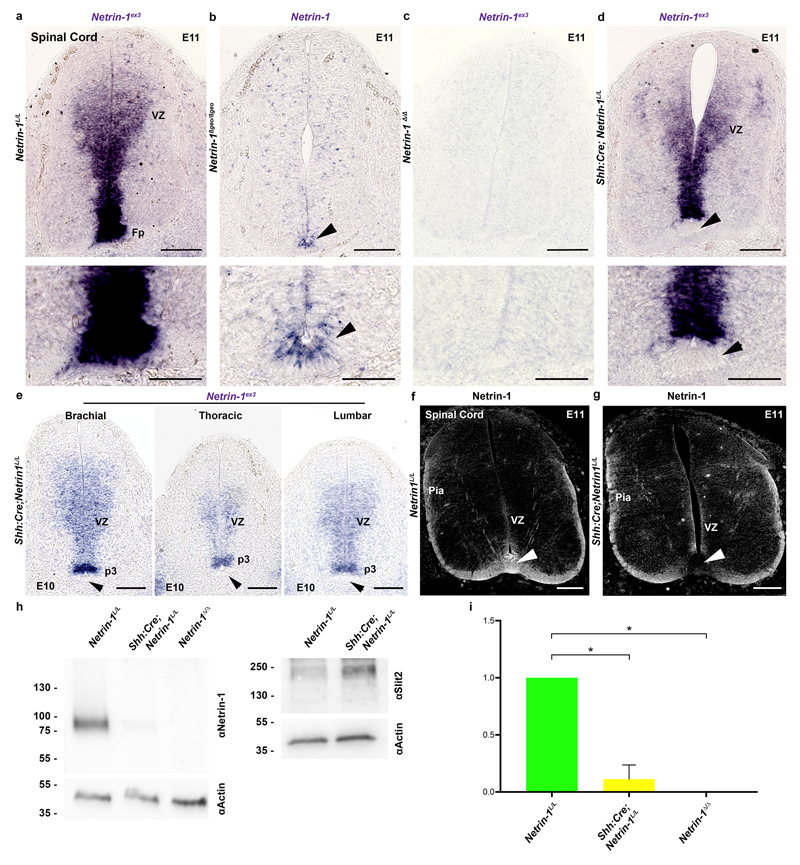
Extended Data Figure 2. Floor plate-specific deletion of netrin-1 in Shh:Cre;Netrin1lox mutants.
Coronal cryostat sections of the hindbrain and spinal cord of E10 and E11 embryos. a-d, In situ hybridization for netrin-1 on E11 spinal cord (brachial level). In Netrin-1L/L embryo (a) netrin-1 mRNA is highly expressed in floor plate (Fp) and ventricular zone (VZ) (n=6). A weak netrin-1 expression is still detected in the floor plate (arrowhead) of a Netrin1ßgeo/ßgeo hypomorph (b) (n=5), whereas no signal is seen in a Netrin-1Δ/Δ (c) embryo (n=6). In Shh:Cre;Netrin1L/L embryo (d), netrin-1 mRNA is not expressed in the floor plate (arrowhead) but still present in the VZ (n=6). e, E10 Shh:Cre;NetrinL/L spinal cord sections at brachial, thoracic and lumbar levels. At all levels, Netrin-1 is found in the VZ, with the highest levels in the p3 progenitor domain, but is absent from the floor plate (arrowheads, n=6). f,g, In Netrin-1L/L (f) commissural axons, basal lamina (Pia) and floor plate (arrowhead in f) are immunoreactive for netrin-1. By contrast, the floor plate is not labeled in Shh:Cre;Netrin1L/L embryos (arrowhead in g) whereas netrin-1 remains expressed along neural progenitor processes and basal lamina (Pia; n=6/6). h, Western blot with Netrin-1 antibody on floor plate extracts from Netrin-1L/L, Shh:Cre;NetrinL/L and Netrin-1Δ/Δ E11 embryo hindbrain and spinal cord (at least 3 cases for each from 3 independent experiments). Netrin-1 is undetectable in Netrin-1Δ/Δ and reduced of 90% in Shh:Cre;NetrinL/L. i, Western blot quantification. Wild type values were normalized to 1 and mutant values were compared to it using a non-parametric Mann-Whitney test. Mutant values are represented as the mean ± SEM (*P<0.05). Scale bars, 100 µm, except on a, b, c and d higher magnifications, 50 µm.
Extended Data Figure 3
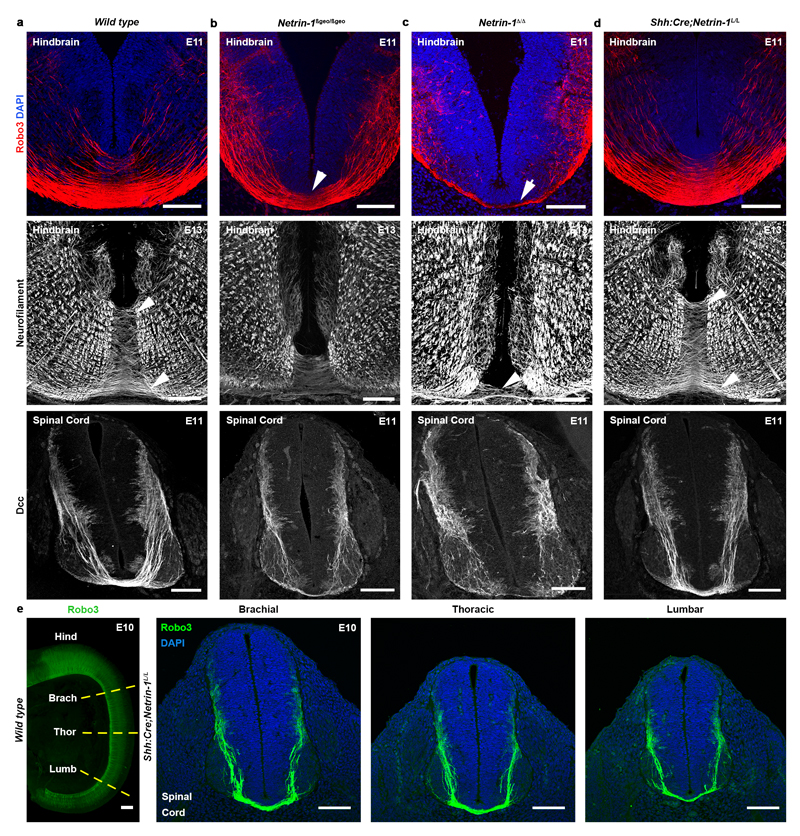
Extended Data Figure 3. Floor plate-derived netrin-1 is not necessary for the midline crossing in hindbrain and spinal cord.
Coronal cryostat sections of the hindbrain and spinal cord (brachial level) of E10, E11 and E13 embryos . a-d, E11 and E13 hindbrain sections (upper and middle panels) and E11 spinal cord sections (lower panels). In wild type (a) Robo3+ and Dcc+ commissural axons cross the floor plate (n=6). Midline crossing is reduced in Netrin1ßgeo/ßgeo hypomorphs (b; arrowheads; n=3) and almost absent in Netrin-1Δ/Δ embryos (c; n=6). By contrast, no midline crossing defects are present in Shh:Cre;Netrin1L/L embryos (d) (n=9). e, Coronal sections at 3 rostro-caudal levels of the spinal cord of an E10 Shh:Cre;Netrin-1L/L embryo labeled with anti-Robo3. Commissural axons cross the floor plate at all levels. The dashed lines on the left panel shows the level of the sections. Abbreviations: Brach: brachial; Hind, hindbrain; Thor, thoracic; Lumb, lumbar. Scale bars, 100 µm, except on e left panel, 400 µm.
Extended Data Figure 4
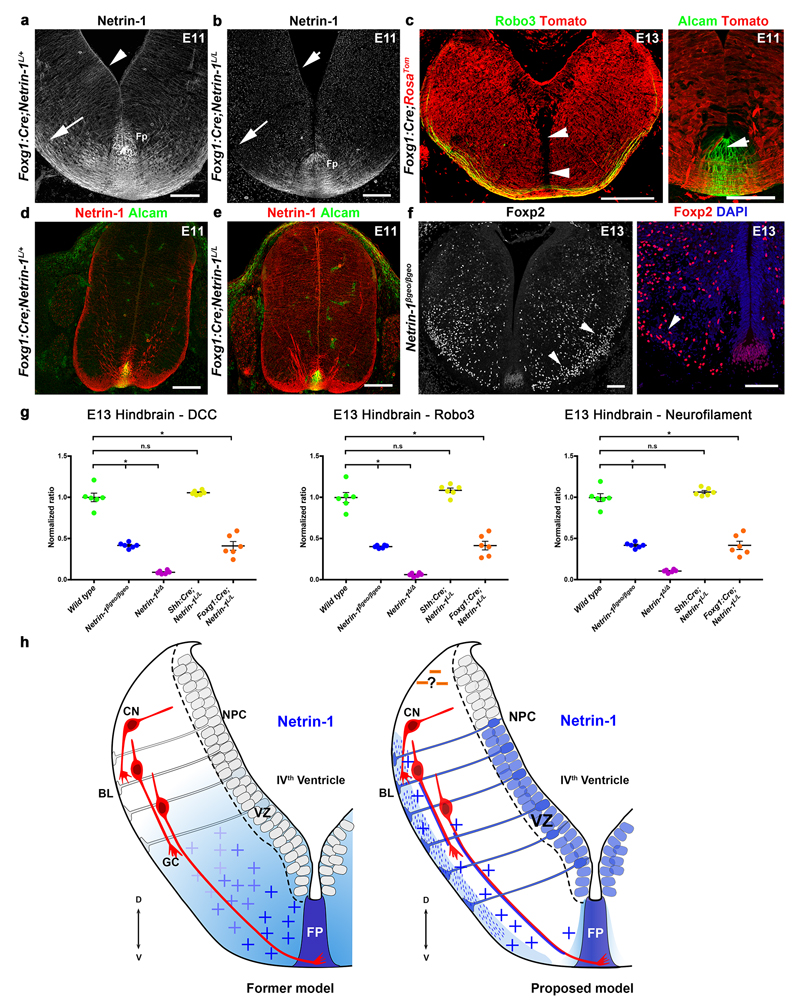
Extended Data Figure 4. Analysis of the Foxg1:Cre ;Netrin-1lox mice.
Coronal cryostat sections of the hindbrain of E11 and E13 embryos and spinal cord (brachial level) of E11 embryos . a-b, In Foxg1:Cre;Netrin-1L/+ embryos as in wild type, netrin-1 is in the hindbrain VZ (arrowhead) and commissural axons (arrow). This is not the case in Foxg1:Cre;Netrin-1L/L mutant. The floor plate is still labelled (Fp). Note that netrin-1 is present in the vicinity of the Fp (n=6). c, Foxg1:Cre drives Cre expression in E13 (left) and E11 (right) hindbrain cells (Tomato+ cells in red) but not in the floor plate (arrowheads; n=3/3). A few Alcam+ floor plate cells are Tomato+. d, e, Netrin-1 distribution is similar in the spinal cord of Foxg1:Cre;Netrin-1L/+ (d) and Foxg1:Cre;Netrin-1L/L (e) embryos (n=5). f, In Netrin1ßgeo/ßgeo, Foxp2+ olivary neurons fail to migrate (arrowheads) ventrally and only few of them are able to reach to the floor plate (arrowheads; n=6). g, Quantification of the size of hindbrain commissures in the different mutants compared to controls. Six embryos of each genotype and 9 sections from each were quantified. Data are normalized with the wt and are represented as the mean ± SEM (One-way Kruskal-Wallis with Mann-Whitney post-test, *P<0.05, ns, not significant). h, Netrin-1 guidance mechanisms of hindbrain commissural axons: past and current models. In the initial model, soluble netrin-1 secreted by floor plate (FP) forms a ventro-dorsal gradient, which attracts ventrally commissural axon (CN) growth cones (GC). In the revised model, pioneer CN axons form in a superficial region containing high levels of netrin-1 produced by neural progenitor cells (NPCs) extending from the ventricular zone (VZ) to the basal lamina (BL) at the surface of the hindbrain. CN axons might also capture Netrin-1 and establish a netrin-1-rich pathway guiding follower axons. Their ventral extension might be facilitated by chemorepellents (question mark) produced in the dorsal hindbrain. Scale bars, 100µm.
Figure 1
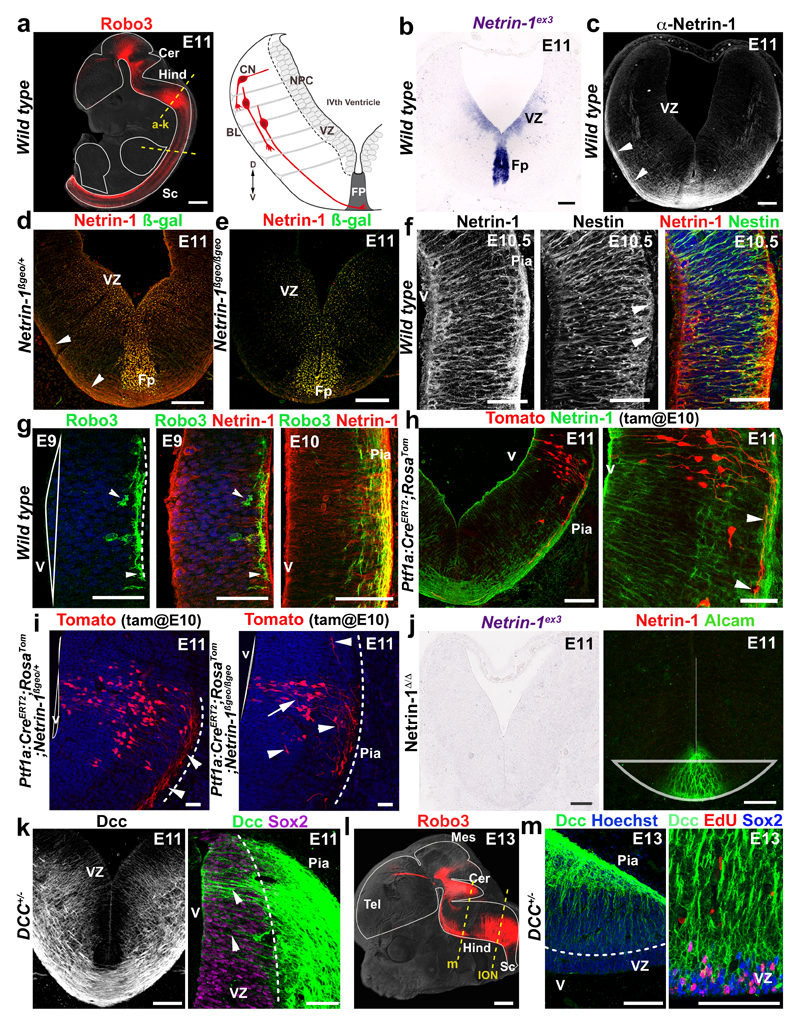
Figure 1. Netrin-1 is expressed by ventricular zone neural progenitors.
a Robo3+ commissural axons (left) and hindbrain schematic (right). Dashed lines show section levels. b, In wild type, netrin-1 mRNA is in VZ and Fp (n=6). c, Netrin-1 protein is in Fp and commissural axons (arrowheads; n=6). d,e, In Netrin-1ßgeo/+ (d) and Netrin-1ßgeo/ßgeo (e), the netrin-1-ß-gal protein is in the VZ and Fp (n=6 and 6). Commissural axons (arrowheads) are netrin-1+ but ßgal-. f, netrin-1 is detected in Nestin+ radial processes extending to the pia (arrowheads; n=6). g, the first Robo3+ commissural growth cones (arrowheads; n=6) extend under the pia (dotted line) in a netrin-1-rich domain. h,i, Tomato+ inferior olivary growth cones (arrowheads) extend ventrally in a netrin-1-rich domain in Ptf1a:CreERT2;RosaTom and Netrin-1ßgeo/+ (n=6). In Netrin-1ßgeo/ßgeo (n=6), axons (arrowheads) stall at the pial surface and some enter the VZ (arrow). j, Absence of netrin-1 mRNA and protein (n=6 each) in Netrin-1Δ/Δ hindbrain. k, DCC labels hindbrain commissural axons and radial processes (arrowheads) extending from the Sox2+ VZ (n=6). l, Robo3+ commissural axons at E13. m, Sox2+/EdU+ cerebellar VZ progenitors express DCC (n=6). Abbreviations: Cerebellum (Cer); Hindbrain (Hind), spinal cord (Sc); Neural precursors (NPC), ventricular zone (VZ), basal lamina (BL); commissural neurons (CN), floor plate (Fp). Scale bars, 500 µm (a, l); 50 µm (g, h right panel, m); 100 µm (all other panels).
Figure 2
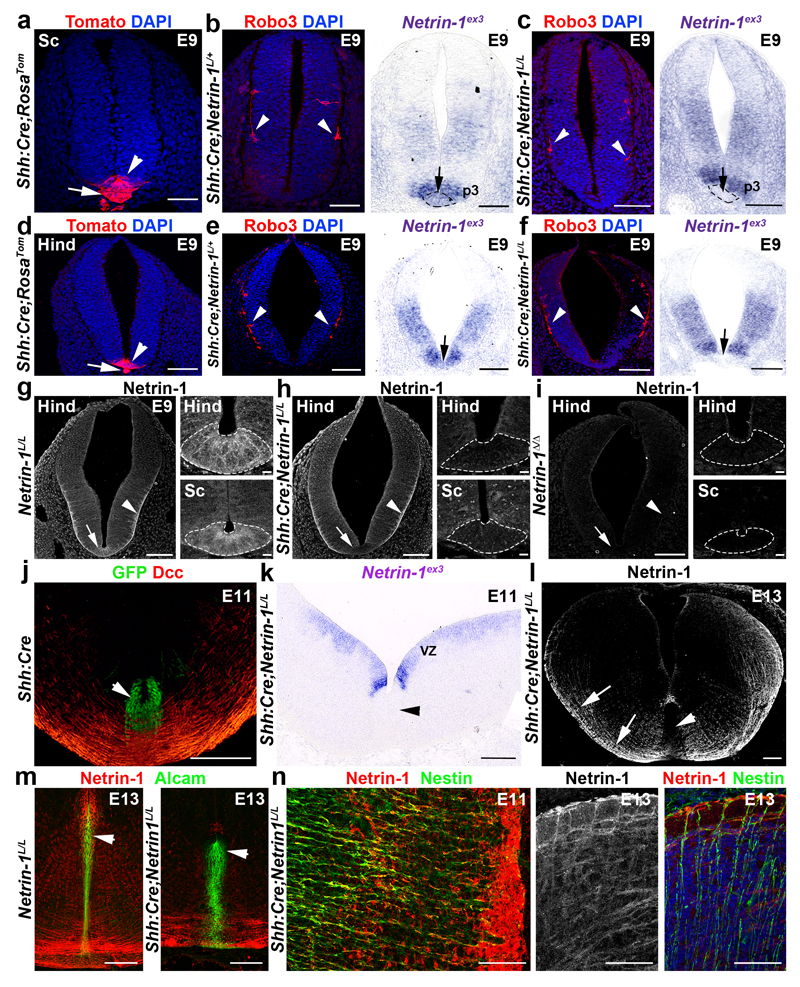
Figure 2. Floor plate-specific deletion of netrin-1 in Shh:Cre;Netrin-1lox embryos
a-f, Tomato is expressed in the floor plate (arrowhead) and notochord (arrow) in Shh:Cre;RosaTom spinal cord (a) and hindbrain (d) (n=6). Robo3+ commissural axons (arrowheads in b, c, e and f) have not reached the midline. Netrin-1 mRNA is in the floor plate (short arrows) in Shh:Cre;NetrinL/+ but not in Shh:Cre;NetrinL/L. g-i, Netrin-1 is in floor plate (arrow) and pial surface (arrowhead) in the wild type (g; n=6). In Shh:Cre;Netrin-1L/L (h; n=6), netrin-1 is absent from floor plate (arrow and dotted lines) but present at the pial surface (arrowhead). Netrin1 is completely absent in Netrin-1Δ/Δ (i; n=6). j, In Shh:Cre, GFP is in floor plate (arrowhead; n=6). Commissural axons express Dcc. k, Netrin-1 is absent from floor plate but maintained in VZ (n=6). l-n, In Shh:Cre;Netrin-1L/L, floor plate (arrowheads in l) lacks Netrin-1, but not commissural axons (short arrows in l) and Nestin+ neural progenitors (n; n=6). Alcam expression is unchanged in floor plate (arrowheads in m; n=6). In Shh:Cre;Netrin-1L/L (n) Nestin+ processes still express netrin-1 (n=6). Scale bars are 100 µm except on the higher magnifications of g, h, I where they are 10µm.
Figure 3
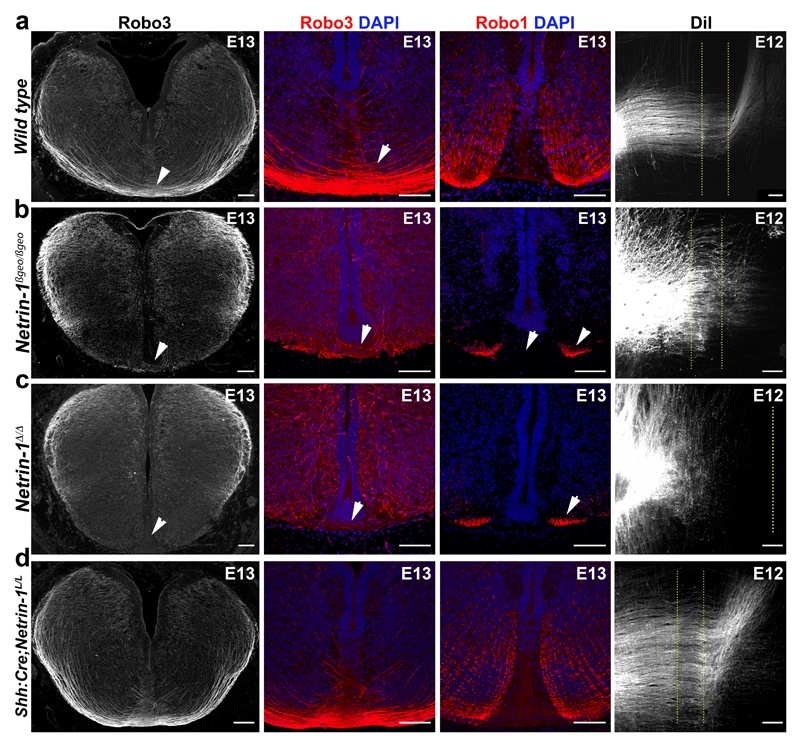
Figure 3. Commissural axons develop normally without floor plate-derived netrin-1.
Coronal sections and flat-mounts of E12 and E13 hindbrains. a, In wild type, Robo3+ commissural axons cross the floor plate (arrowheads) and Robo1 is on post-crossing axons (n=7). DiI-labeled commissural axons cross the midline (dotted lines) and turn longitudinally (n=5). b, In Netrin-1ßgeo/ßgeo, midline crossing is reduced (arrowheads) and most DiI-labeled axons fail to cross (n=3). c, Crossing is strongly reduced in Netrin-1Δ/Δ (n=6). Robo1 is still expressed on the few crossing axons (arrowheads in b and c; n=6). d, Commissures look similar to control in Shh:Cre;Netrin-1L/L (n=6). Scale bars, 100 µm.
Figure 4
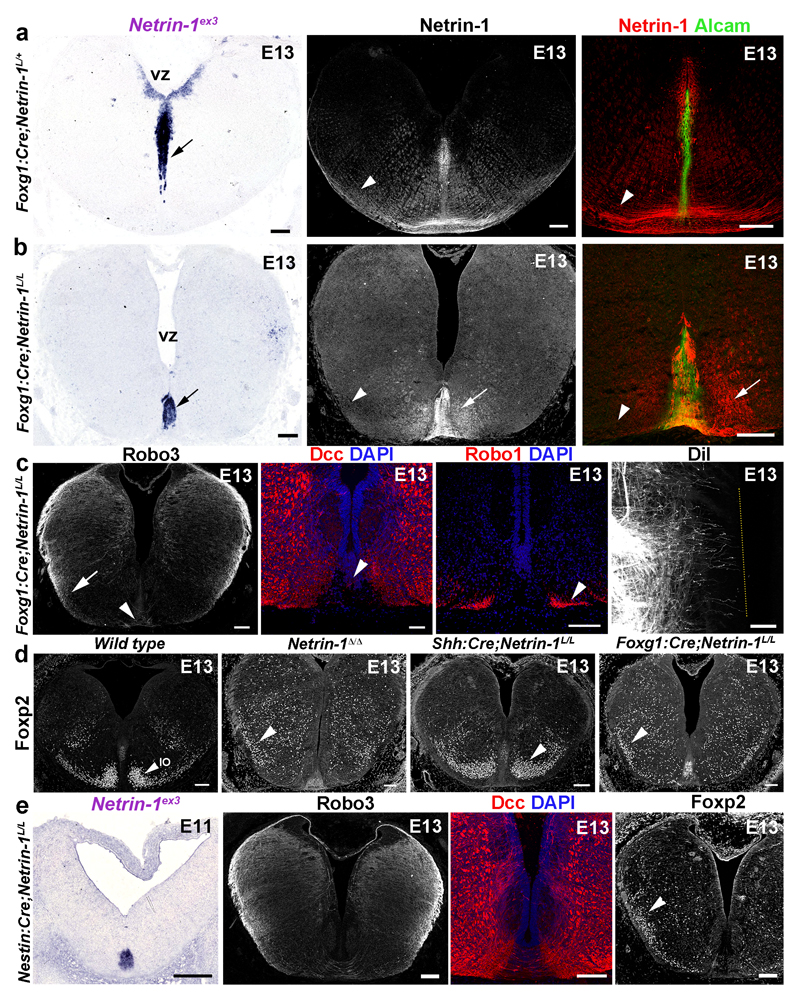
Figure 4. Ventricular zone-derived netrin-1 controls commissural axon guidance.
a, b, VZ-Netrin-1 is absent in Foxg1:Cre;Netrin-1L/L and reduced on commissural axons (arrowheads). Netrin-1 is still found in floor plate (short arrows; 5/5). c, A few commissural axons (arrowheads; n=6) cross the midline (arrow) and DiI-labeled axons fail to cross (dotted line; n=6). d, in wild type Foxp2+ olivary neurons (IO) have started to reach the floor plate (arrowhead; n=7). Most IO neurons fail to migrate ventrally (arrowheads; n=6) in Netrin-1Δ/Δ and Foxg1:Cre;Netrin-1L/L, unlike in Shh:Cre;Netrin-1L/L (n=7). e, Netrin-1 expression (n=6). Midline crossing and IO neuron migration are impaired (n=6). Scale bars,100 µm.

References

    1. Serafini T, et al. The netrins define a family of axon outgrowth-promoting proteins homologous to C. elegans UNC-6. Cell. 1994;78:409–424. - PubMed
    1. Ishii N, Wadsworth WG, Stern BD, Culotti JG, Hedgecock EM. UNC-6, a laminin-related protein, guides cell and pioneer axon migrations in C. elegans. Neuron. 1992;9:873–881. - PubMed
    1. Mitchell KJ, et al. Genetic analysis of Netrin genes in Drosophila: Netrins guide CNS commissural axons and peripheral motor axons. Neuron. 1996;17:203–215. - PubMed
    1. Kennedy TE, Serafini T, de la Torre J, Tessier-Lavigne M. Netrins are diffusible chemotropic factors for commissural axons in the embryonic spinal cord. Cell. 1994;78:425–435. - PubMed
    1. Ming GL, et al. cAMP-dependent growth cone guidance by netrin-1. Neuron. 1997;19:1225–1235. - PubMed

Publication types