


Cannabidiol-Δ9-tetrahydrocannabinol interactions on acute pain and locomotor activity
- PMID: 28445853
- PMCID: PMC5499986
- DOI: 10.1016/j.drugalcdep.2017.01.046
Cannabidiol-Δ9-tetrahydrocannabinol interactions on acute pain and locomotor activity
Abstract
Background: Previous studies suggest that cannabidiol (CBD) may potentiate or antagonize Δ9-tetrahydrocannabinol's (THC) effects. The current study examined sex differences in CBD modulation of THC-induced antinociception, hypolocomotion, and metabolism.
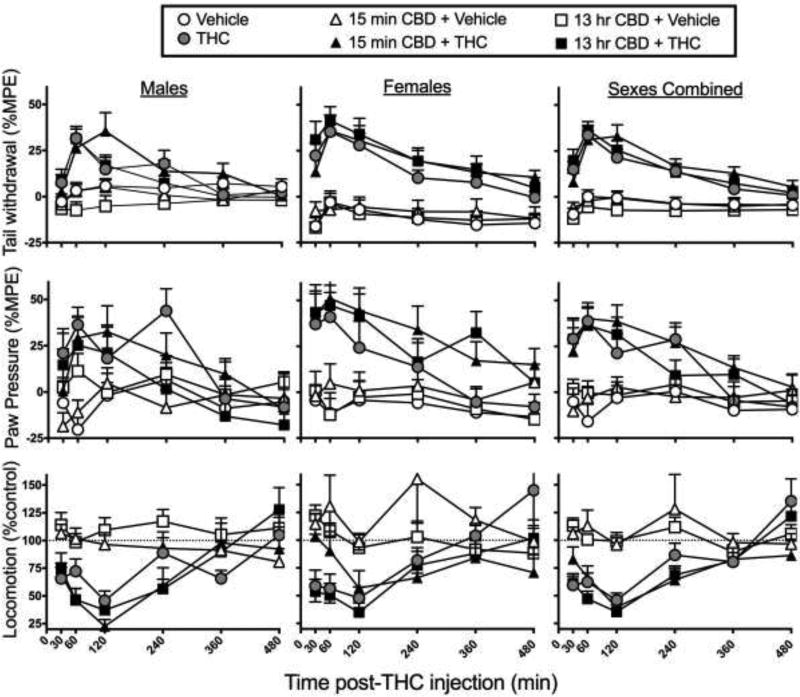
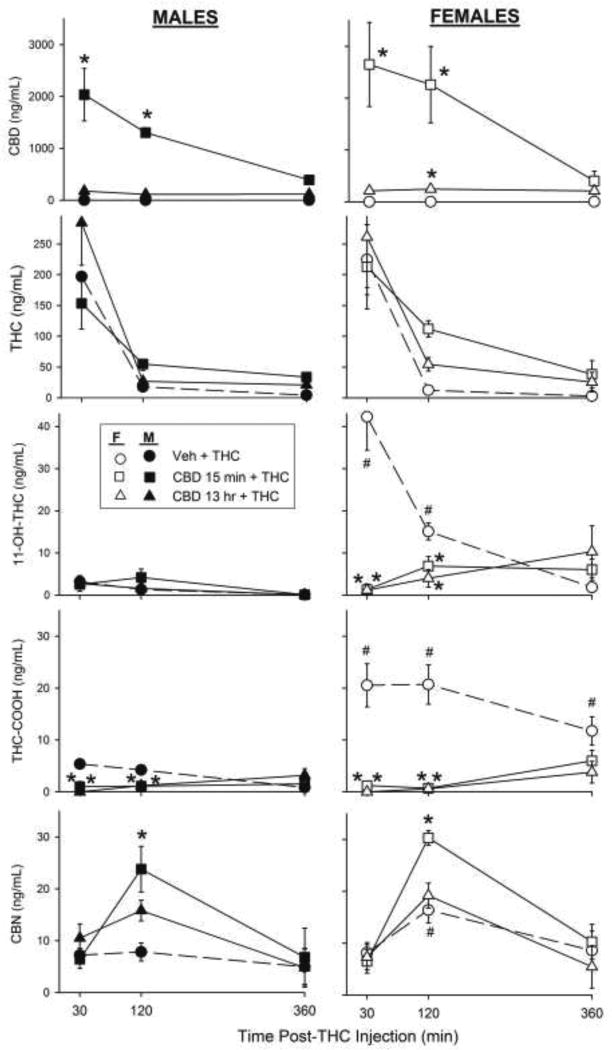
Methods: In Experiment 1, CBD (0, 10 or 30mg/kg) was administered 15min before THC (0, 1.8, 3.2, 5.6 or 10mg/kg), and rats were tested for antinociception and locomotion 15-360min post-THC injection. In Experiments 2 and 3, CBD (30mg/kg) was administered 13h or 15min before THC (1.8mg/kg); rats were tested for antinociception and locomotion 30-480min post-THC injection (Experiment 2), or serum samples were taken 30-360min post-THC injection to examine CBD modulation of THC metabolism (Experiment 3).
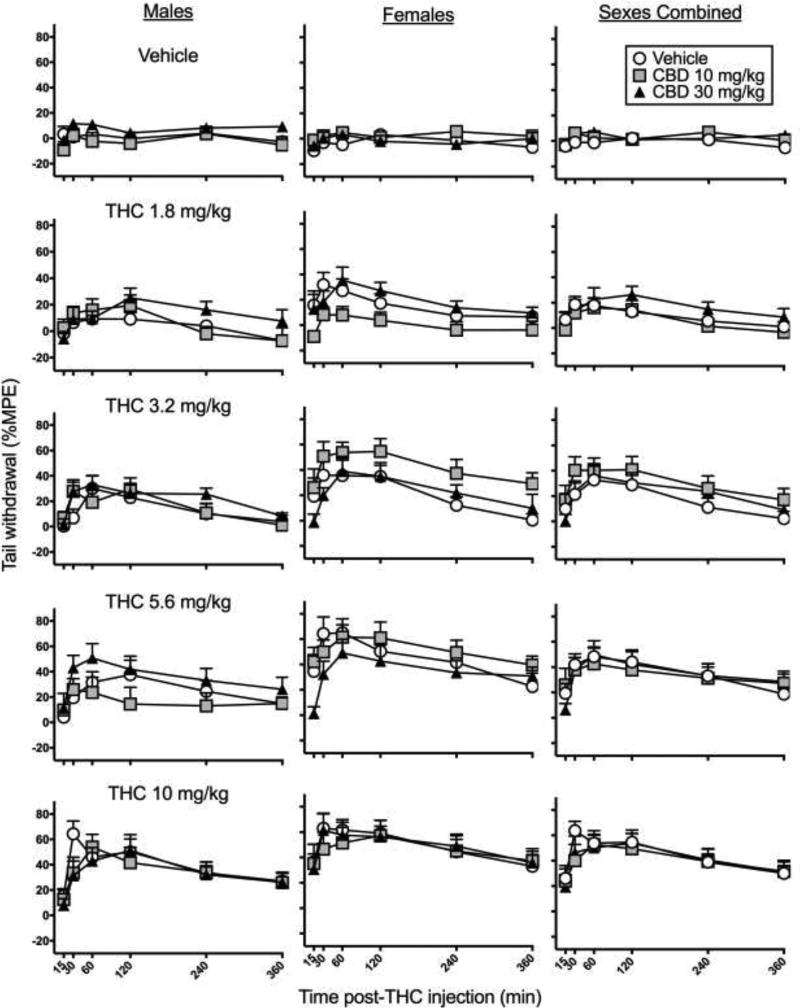
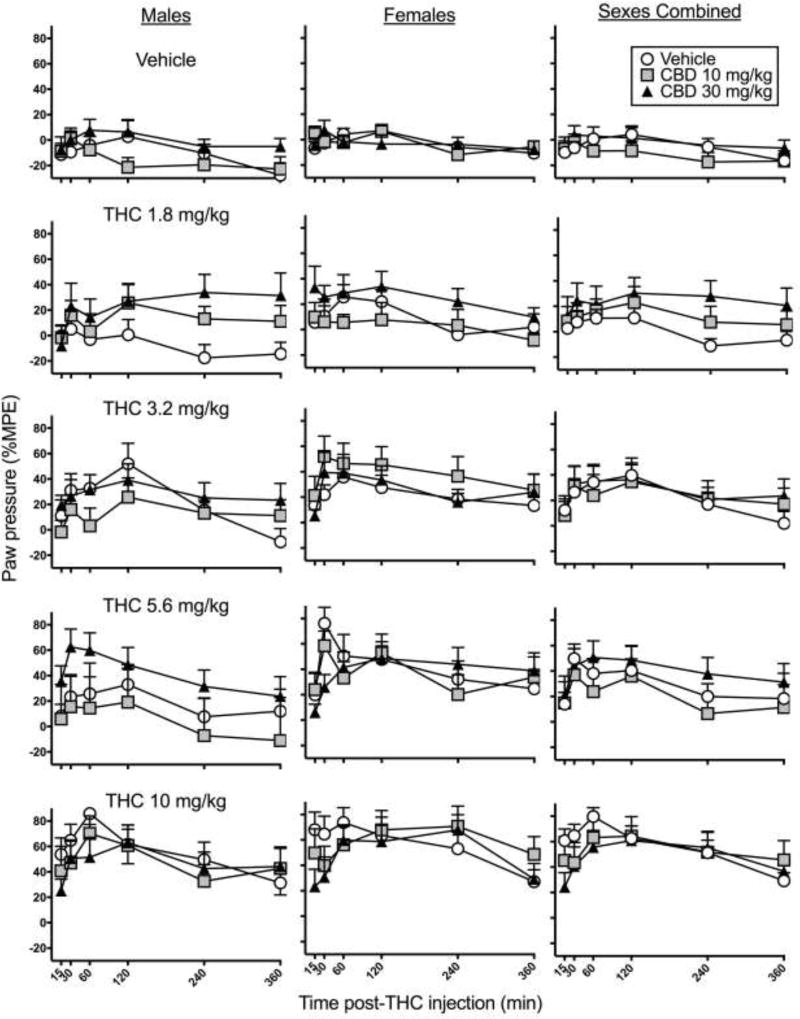
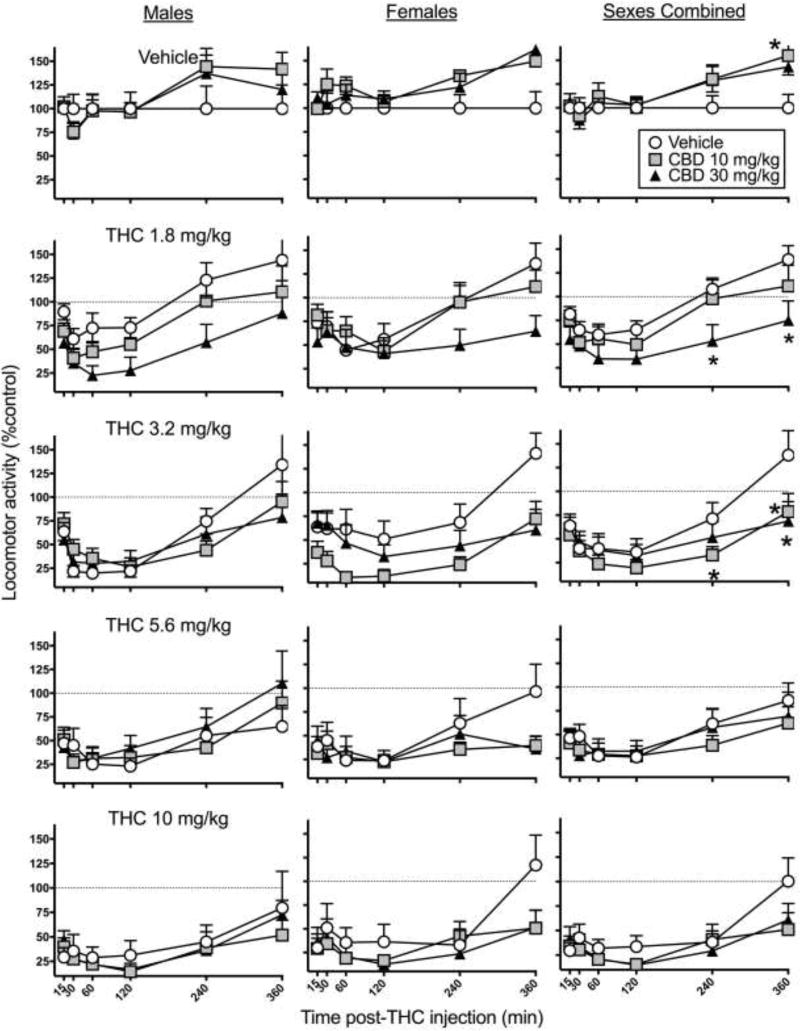
Results: In Experiment 1, CBD alone produced no antinociceptive effects, while enhancing THC-induced paw pressure but not tail withdrawal antinociception 4-6h post-THC injection. CBD alone increased locomotor activity at 6h post-injection, but enhanced THC-induced hypolocomotion 4-6h post-THC injection, at lower THC doses. There were no sex differences in CBD-THC interactions. In Experiments 2 and 3, CBD did not significantly enhance THC's effects when CBD was administered 13h or 15min before THC; however, CBD inhibited THC metabolism, and this effect was greater in females than males.
Conclusions: These results suggest that CBD may enhance THC's antinociceptive and hypolocomotive effects, primarily prolonging THC's duration of action; however, these effects were small and inconsistent across experiments. CBD inhibition of THC metabolism as well other mechanisms likely contribute to CBD-THC interactions on behavior.
Keywords: Cannabinoids; Gender; Pain; Sedation; Sex differences.
Copyright © 2017 Elsevier B.V. All rights reserved.
Conflict of interest statement
No conflict declared.
Figures
References
-
- Aggarwal SK, Carter GT, Sullivan MD, ZumBrunnen C, Morrill R, Mayer JD. Medicinal use of cannabis in the united states: Historical perspectives, current trends, and future directions. J. Opioid Manag. 2008;5:153–168. - PubMed
-
- Amaya F, Shimosato G, Kawasaki Y, Hashimoto S, Tanaka Y, Ji RR, Tanaka M. Induction of CB1 cannabinoid receptor by inflammation in primary afferent neurons facilitates antihyperalgesic effect of peripheral CB1 agonist. Pain. 2006;124:175–183. - PubMed
-
- Blake DR, Robson P, Ho M, Jubb RW, McCabe CS. Preliminary assessment of the efficacy, tolerability and safety of a cannabis-based medicine (Sativex) in the treatment of pain caused by rheumatoid arthritis. Rheumatology. 2006;45:50–52. - PubMed
-
- Bornheim LM, Kim KY, Li J, Perotti BY, Benet LZ. Effect of cannabidiol pretreatment on the kinetics of tetrahydrocannabinol metabolites in mouse brain. Drug Metab. Dispos. 1995;23:825–831. - PubMed
MeSH terms
Substances
Grants and funding
LinkOut - more resources
Full Text Sources
Other Literature Sources
Medical
