


Targeting metabotropic glutamate receptors for novel treatments of schizophrenia
- PMID: 28446243
- PMCID: PMC5405554
- DOI: 10.1186/s13041-017-0293-z
Targeting metabotropic glutamate receptors for novel treatments of schizophrenia
Abstract
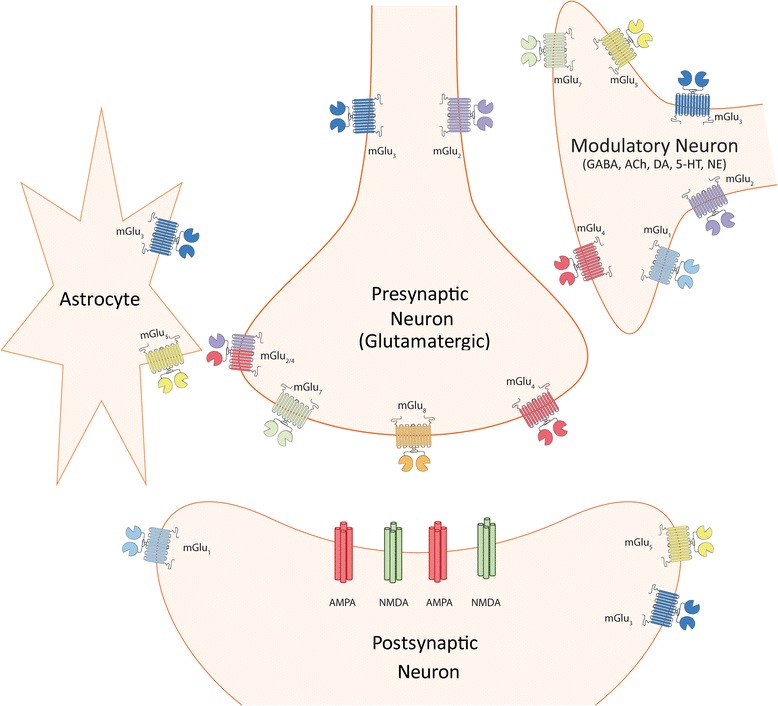
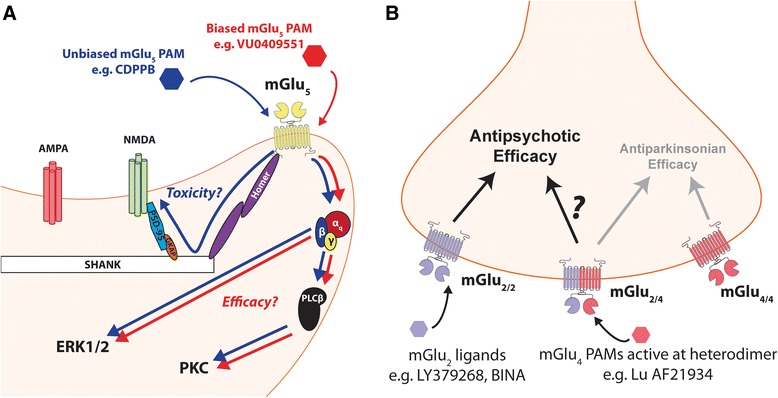
Support for the N-methyl-D-aspartate receptor (NMDAR) hypofunction hypothesis of schizophrenia has led to increasing focus on restoring proper glutamatergic signaling as an approach for treatment of this devastating disease. The ability of metabotropic glutamate (mGlu) receptors to modulate glutamatergic neurotransmission has thus attracted considerable attention for the development of novel antipsychotics. Consisting of eight subtypes classified into three groups based on sequence homology, signal transduction, and pharmacology, the mGlu receptors provide a wide range of targets to modulate NMDAR function as well as glutamate release. Recently, allosteric modulators of mGlu receptors have been developed that allow unprecedented selectivity among subtypes, not just groups, facilitating the investigation of the effects of subtype-specific modulation. In preclinical animal models, positive allosteric modulators (PAMs) of the group I mGlu receptor mGlu5 have efficacy across all three symptom domains of schizophrenia (positive, negative, and cognitive). The discovery and development of mGlu5 PAMs that display unique signal bias suggests that efficacy can be retained while avoiding the neurotoxic effects of earlier compounds. Interestingly, mGlu1 negative allosteric modulators (NAMs) appear efficacious in positive symptom models of the disease but are still in early preclinical development. While selective group II mGlu receptor (mGlu2/3) agonists have reached clinical trials but were unsuccessful, specific mGlu2 or mGlu3 receptor targeting still hold great promise. Genetic studies implicated mGlu2 in the antipsychotic effects of group II agonists and mGlu2 PAMs have since entered into clinical trials. Additionally, mGlu3 appears to play an important role in cognition, may confer neuroprotective effects, and thus is a promising target to alleviate cognitive deficits in schizophrenia. Although group III mGlu receptors (mGlu4/6/7/8) have attracted less attention, mGlu4 agonists and PAMs appear to have efficacy across all three symptoms domains in preclinical models. The recent discovery of heterodimers comprising mGlu2 and mGlu4 may explain the efficacy of mGlu4 selective compounds but this remains to be determined. Taken together, compounds targeting mGlu receptors, specifically subtype-selective allosteric modulators, provide a compelling alternative approach to fill the unmet clinical needs for patients with schizophrenia.
Keywords: Allosteric modulator; Glutamate; Heterodimer; NAM; PAM; Schizophrenia; Signal bias; mGlu receptor.
Figures
References
-
- Association AP. Diagnostic and Statistical Manual of Mental Disorders, Fourth Edition: DSM-IV-TR®. American Psychiatric Association. 2000.
-
- McEvoy JP. The costs of schizophrenia. J Clin Psychiatry. 2007;68(Suppl 14):4–7. - PubMed
Publication types
MeSH terms
Substances
Grants and funding
LinkOut - more resources
Full Text Sources
Other Literature Sources
Medical
Miscellaneous
