


Neuroprotective effects of ellagic acid on cuprizone-induced acute demyelination through limitation of microgliosis, adjustment of CXCL12/IL-17/IL-11 axis and restriction of mature oligodendrocytes apoptosis
- PMID: 28447514
- PMCID: PMC6130560
- DOI: 10.1080/13880209.2017.1319867
Neuroprotective effects of ellagic acid on cuprizone-induced acute demyelination through limitation of microgliosis, adjustment of CXCL12/IL-17/IL-11 axis and restriction of mature oligodendrocytes apoptosis
Retraction in
-
Statement of Retraction: Neuroprotective effects of ellagic acid on cuprizone-induced acute demyelination through limitation of microgliosis, adjustment of CXCL12/IL-17/IL-11 axis and restriction of mature oligodendrocytes apoptosis.Pharm Biol. 2024 Dec;62(1):562. doi: 10.1080/13880209.2024.2374677. Epub 2024 Jul 4. Pharm Biol. 2024. PMID: 38963065 Free PMC article. No abstract available.
Abstract
Context: Ellagic acid (EA) is a natural phenol antioxidant with various therapeutic activities. However, the efficacy of EA has not been examined in neuropathologic conditions.
Objective: In vivo neuroprotective effects of EA on cuprizone (cup)-induced demyelination were evaluated.
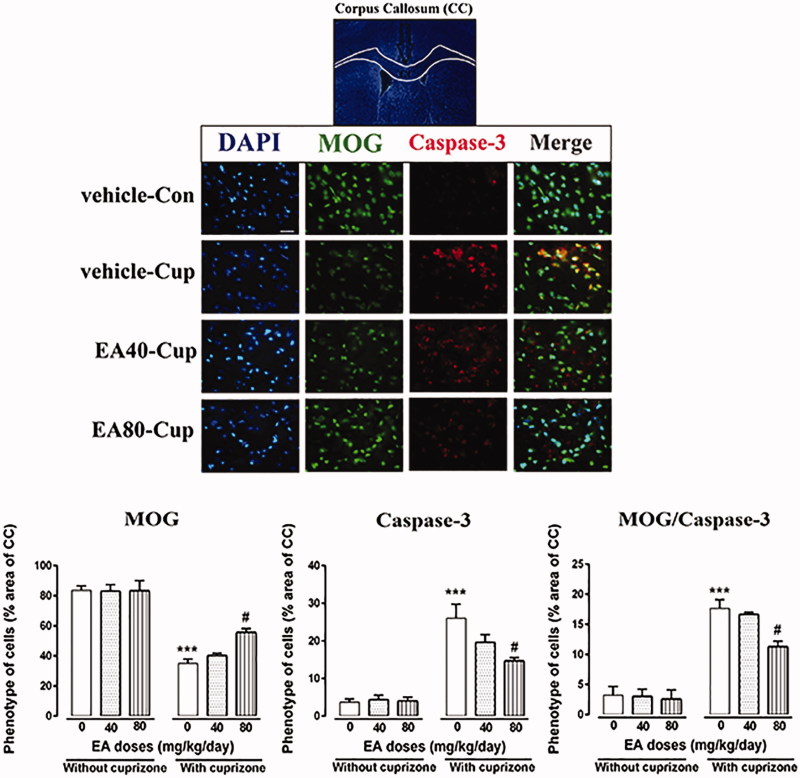
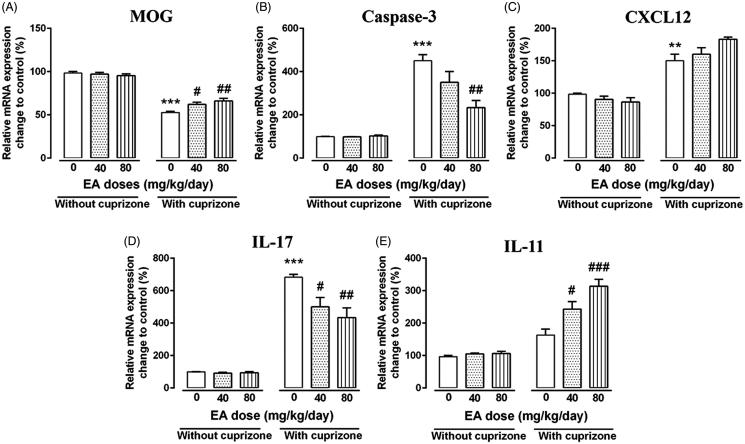
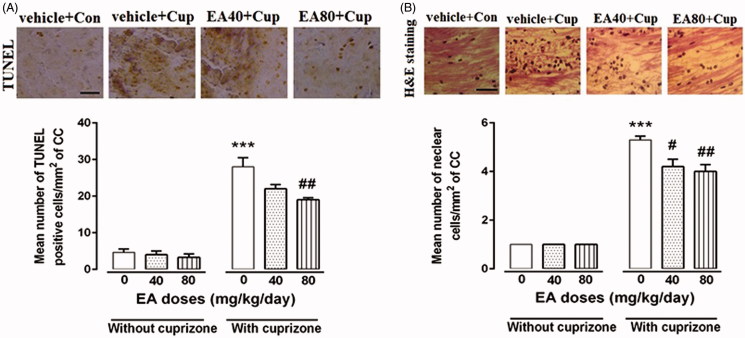
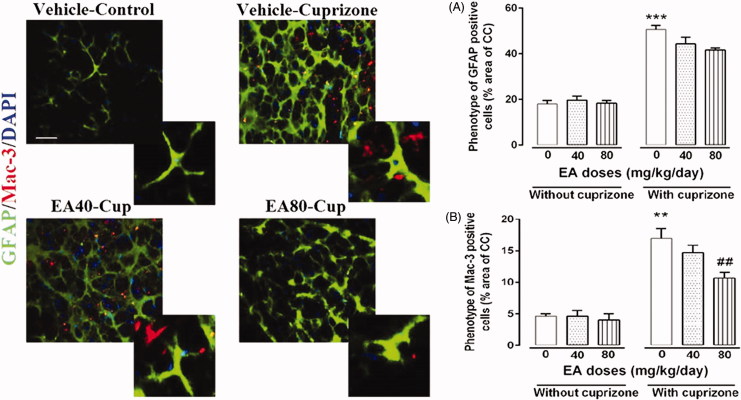
Material and methods: C57BL/6 J mice were fed with chow containing 0.2% cup for 4 weeks to induce oligodendrocytes (OLGs) depletion predominantly in the corpus callosum (CC). EA was administered at different doses (40 or 80 mg/kg body weight/day/i.p.) from the first day of cup diet. Oligodendrocytes apoptosis [TUNEL assay and myelin oligodendrocyte glycoprotein (MOG+)/caspase-3+ cells), gliosis (H&E staining, glial fibrillary acidic protein (GFAP+) and macrophage-3 (Mac-3+) cells) and inflammatory markers (interleukin 17 (IL-17), interleukin 11 (IL-11) and stromal cell-derived factor 1 α (SDF-1α) or CXCL12] during cup intoxication were examined.
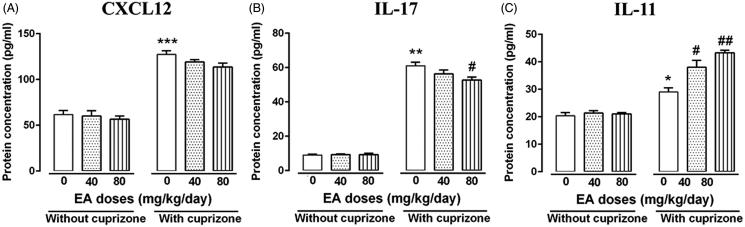
Results: High dose of EA (EA-80) increased mature oligodendrocytes population (MOG+ cells, p < 0.001), and decreased apoptosis (p < 0.05) compared with the cup mice. Treatment with both EA doses did not show any considerable effects on the expression of CXCL12, but significantly down-regulated the expression of IL-17 and up-regulated the expression of IL-11 in mRNA levels compared with the cup mice. Only treatment with EA-80 significantly decreased the population of active macrophage (MAC-3+ cells, p < 0.001) but not reactive astrocytes (GFAP+ cells) compared with the cup mice.
Discussion and conclusion: In this model, EA-80 effectively reduces lesions via reduction of neuroinflammation and toxic effects of cup on mature OLGs. EA is a suitable therapeutic agent for moderate brain damage in neurodegenerative diseases such as multiple sclerosis.
Keywords: Antioxidant; multiple sclerosis; neurodegeneration; neuroinflammation; toxic demyelination.
Figures
References
-
- Abakumova TO, Kuz'kina AA, Zharova ME, Pozdeeva DA, Gubskii IL, Shepeleva II, Antonova OM, Nukolova NV, Kekelidze ZI, Chekhonin VP.. 2015. Cuprizone model as a tool for preclinical studies of the efficacy of multiple sclerosis diagnosis and therapy. Bull Exp Biol Med. 159:111–115. - PubMed
-
- Abdul-Wahab RH, Waleed MAM, Janakat S, Sawsan AO.. 2009. Bioavailability of ellagic acid after single dose administration using HPLC. Pakistan J Nutr. 8:1661–1664.
-
- Amakura Y, Okada M, Tsuji A, Tonogai Y.. 2000. High-performance liquid chromatography determination with photodiode array detection of ellagic acid in fresh and processed fruits. J Chromatog B. 896:87–93. - PubMed
-
- Baeeri M, Momtaz S, Navaei-Nigjeh M, Niaz K, Rahimifard M, Ghasemi-Niri SF, Sanadgol N, Hodjat M, Sharifzadeh M, Abdollahi M.. 2017. Molecular evidence on the protective effect of ellagic acid on phosalone-induced senescence in rat embryonic fibroblast cells. Food Chem Toxicol. 100:8–23. - PubMed
Publication types
MeSH terms
Substances
LinkOut - more resources
Full Text Sources
Other Literature Sources
Research Materials
Miscellaneous
