Gender differences in depression in representative national samples: Meta-analyses of diagnoses and symptoms
- PMID: 28447828
- PMCID: PMC5532074
- DOI: 10.1037/bul0000102
Gender differences in depression in representative national samples: Meta-analyses of diagnoses and symptoms
Abstract
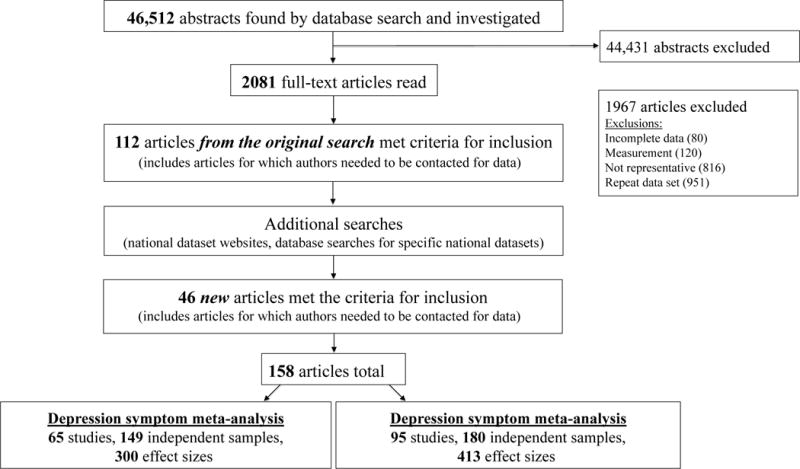
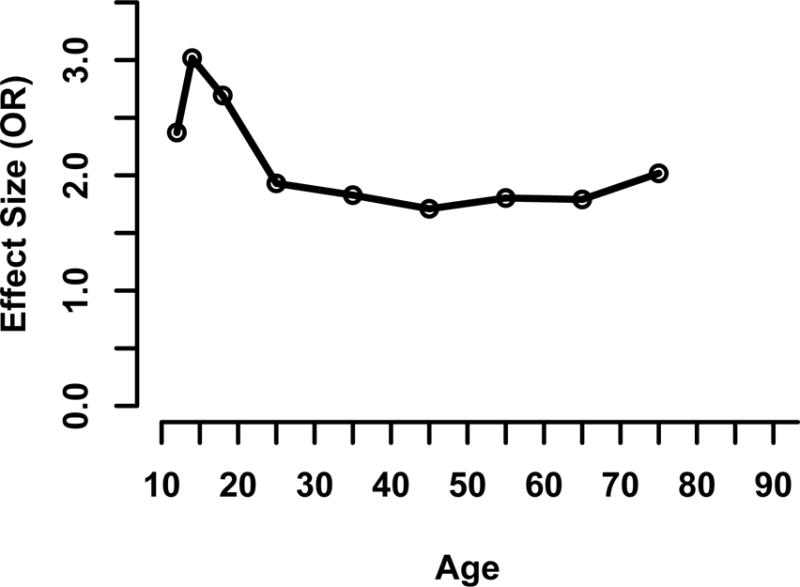
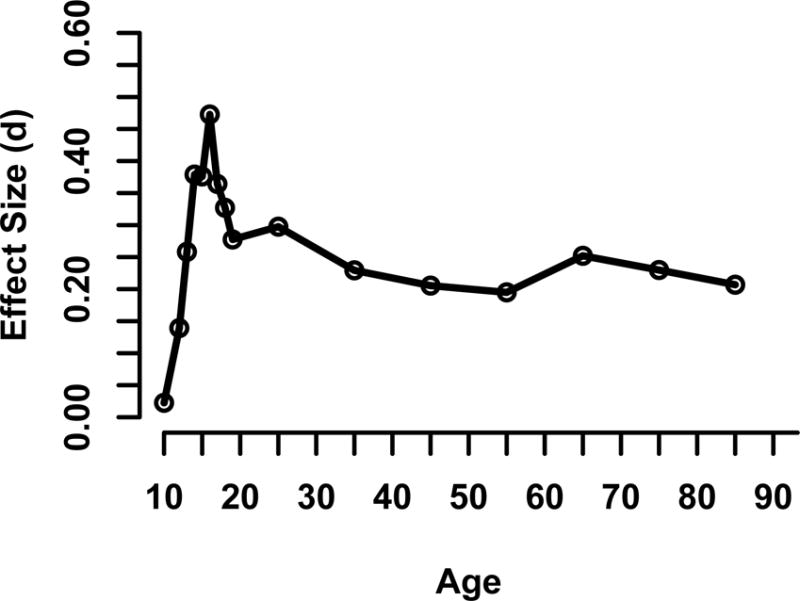
In 2 meta-analyses on gender differences in depression in nationally representative samples, we advance previous work by including studies of depression diagnoses and symptoms to (a) estimate the magnitude of the gender difference in depression across a wide array of nations and ages; (b) use a developmental perspective to elucidate patterns of gender differences across the life span; and (c) incorporate additional theory-driven moderators (e.g., gender equity). For major depression diagnoses and depression symptoms, respectively, we meta-analyzed data from 65 and 95 articles and their corresponding national data sets, representing data from 1,716,195 and 1,922,064 people in over 90 different nations. Overall, odds ratio (OR) = 1.95, 95% confidence interval (CI) [1.88, 2.03], and d = 0.27 [0.26, 0.29]. Age was the strongest predictor of effect size. The gender difference for diagnoses emerged earlier than previously thought, with OR = 2.37 at age 12. For both meta-analyses, the gender difference peaked in adolescence (OR = 3.02 for ages 13-15, and d = 0.47 for age 16) but then declined and remained stable in adulthood. Cross-national analyses indicated that larger gender differences were found in nations with greater gender equity, for major depression, but not depression symptoms. The gender difference in depression represents a health disparity, especially in adolescence, yet the magnitude of the difference indicates that depression in men should not be overlooked. (PsycINFO Database Record
(c) 2017 APA, all rights reserved).
Figures
References
-
- Aalto AM, Elovainio M, Kivimaki M, Uutela A, Pirkola S. The Beck Depression Inventory and General Health Questionnaire as measures of depression in the general population: a validation study using the Composite International Diagnostic Interview as the gold standard. Psychiatry Research. 2012;197(1–2):163–171. doi: 10.1016/j.psychres.2011.09.008. - DOI - PubMed
-
- Alaimo K, Olson CM, Frongillo EA. Family food insufficiency, but not low family income, is positively associated with dysthymia and suicide symptoms in adolescents. Journal of Nutrition. 2002;132(4):719–725. - PubMed
-
- Almqvist F, Kumpulainen K, Ikaheimo K, Linna SL, Henttonen I, Huikko E, Moilanen I. Behavioural and emotional symptoms in 8–9-year-old children. European Child Adolescent Psychiatry. 1999;8:7–16. - PubMed
-
- Alsaker FD, Dundas I, Olweus D. A growth curve approach to the study of parental relations and depression in adolescence. Paper presented in Seattle; April.1991.
Publication types
MeSH terms
Grants and funding
LinkOut - more resources
Full Text Sources
Other Literature Sources
Medical