


Benzodiazepines, Z-drugs and the risk of hip fracture: A systematic review and meta-analysis
- PMID: 28448593
- PMCID: PMC5407557
- DOI: 10.1371/journal.pone.0174730
Benzodiazepines, Z-drugs and the risk of hip fracture: A systematic review and meta-analysis
Abstract
Background: Hip fractures in the older person lead to an increased risk of mortality, poorer quality of life and increased morbidity. Benzodiazepine (BNZ) use is associated with increased hip fracture rate, consequently Z-drugs are fast becoming the physician's hypnotic prescription of choice yet data on their use is limited. We compared the risk of hip fracture associated with Z-drugs and BNZ medications, respectively, and examined if this risk varied with longer-term use.
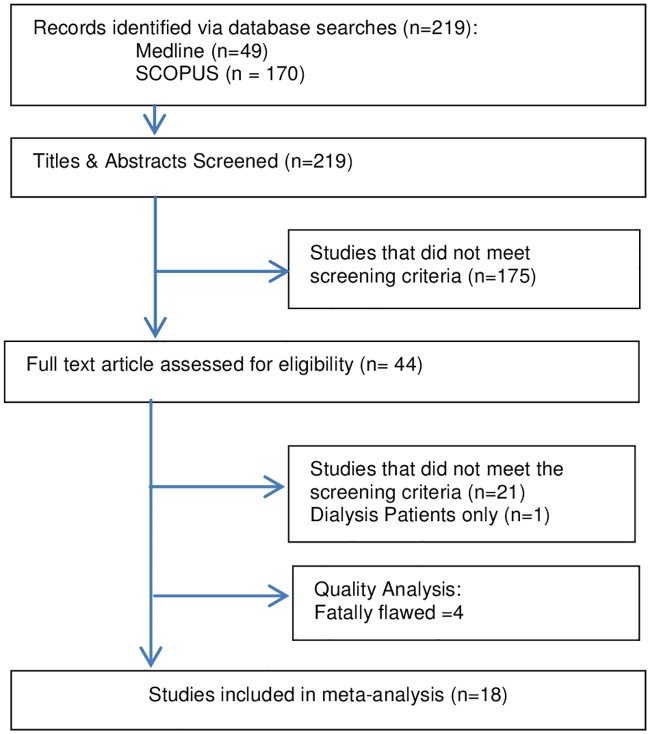
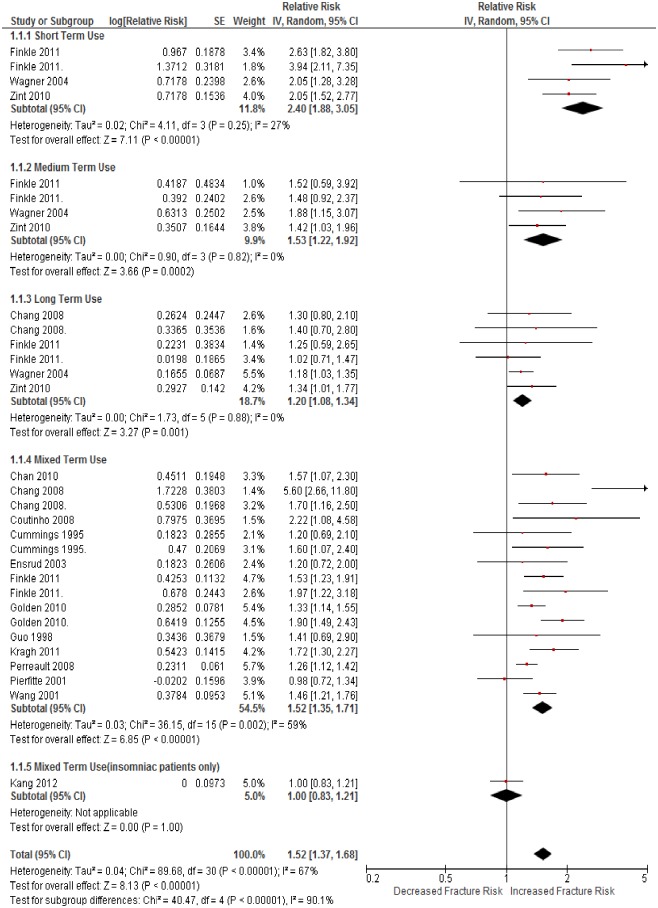
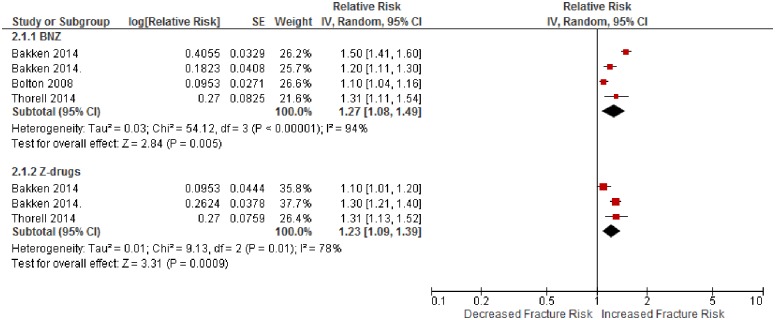
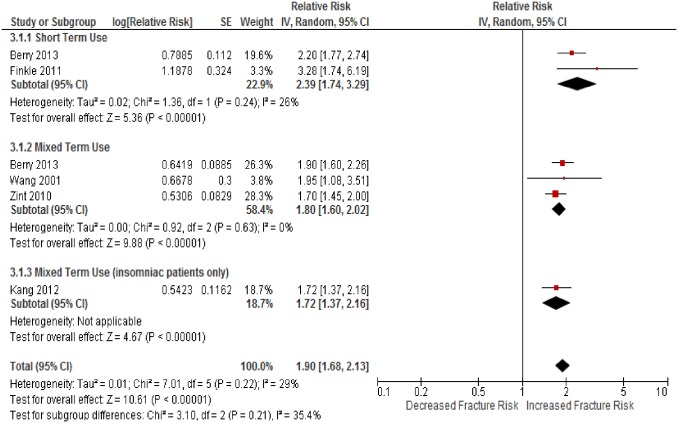
Methods and findings: We carried out a systematic review of the literature and meta-analysis. MEDLINE and SCOPUS were searched to identify studies involving BNZ or Z-drugs and the risk of hip fracture up to May 2015. Each included study was quality-assessed. A pooled relative risk of hip fracture was calculated using the generic inverse variance method, with a random effects model, with the length of hypnotic usage as a subgroup. Both BNZ, and Z-drug use respectively, were significantly associated with an increased risk of hip fracture (RR = 1.52, 95% CI 1.37-1.68; and RR = 1.90, 95% CI 1.68-2.13). Short-term use of BNZ and Z-drugs respectively, was also associated with the greatest risk of hip fracture (RR = 2.40, 95% CI 1.88-3.05 and RR = 2.39, 95% CI 1.74-3.29).
Conclusions: There is strong evidence that both BNZ and Z-drugs are associated with an increased risk of hip fracture in the older person, and there is little difference between their respective risks. Patients newly prescribed these medicines are at the greatest risk of hip fracture. Clinicians and policy makers need to consider the increased risk of fallings and hip fracture particularly amongst new users of these medications.
Conflict of interest statement
Figures
References
-
- Boddaert J, Raux M, Khiami F, Riou B. Hip fractures: Epidemiology and risk factors. Annales françaises de médecine d’urgence. 2015;5(2):119–25.
-
- National Institute of Clinical Excellence. Costing Report: Hip Fracture. London: 2011.
-
- Leibson C, Tosteson ANA, Gabriel S, Ransom J, Melton L. Mortality, disability, and nursing home use for persons with and without hip fracture: A population- based study. Journal Of The American Geriatrics Society. 2002;50(10):1644–50. - PubMed
-
- Huddleston J, Whitford K. Medical care of elderly patients with hip fractures. Mayo Clinical Proceedings. 2001;3(76):295. - PubMed
Publication types
MeSH terms
Substances
LinkOut - more resources
Full Text Sources
Other Literature Sources
Medical
