


Fresh fruit consumption and all-cause and cause-specific mortality: findings from the China Kadoorie Biobank
- PMID: 28449053
- PMCID: PMC5837264
- DOI: 10.1093/ije/dyx042
Fresh fruit consumption and all-cause and cause-specific mortality: findings from the China Kadoorie Biobank
Abstract
Background: Higher fruit consumption is associated with lower risk of cardiovascular disease (CVD). Substantial uncertainties remain, however, about the associations of fruit consumption with all-cause mortality and mortality from subtypes of CVD and major non-vascular diseases, especially in China.
Methods: In 2004-08, the nationwide China Kadoorie Biobank Study recruited > 0.5 million adults aged 30-79 years from 10 diverse localities in China. Fresh fruit consumption was estimated using an interviewer-administered electronic questionnaire, and mortality data were collected from death registries. Among the 462 342 participants who were free of major chronic diseases at baseline, 17 894 deaths were recorded during ∼ 7 years of follow-up. Cox regression yielded adjusted rate ratios (RRs) for all-cause and cause-specific mortality associated with fruit consumption.
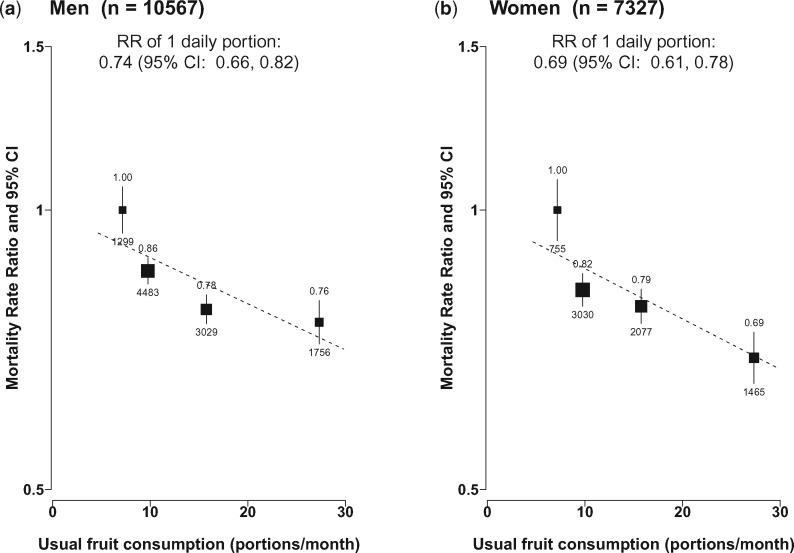
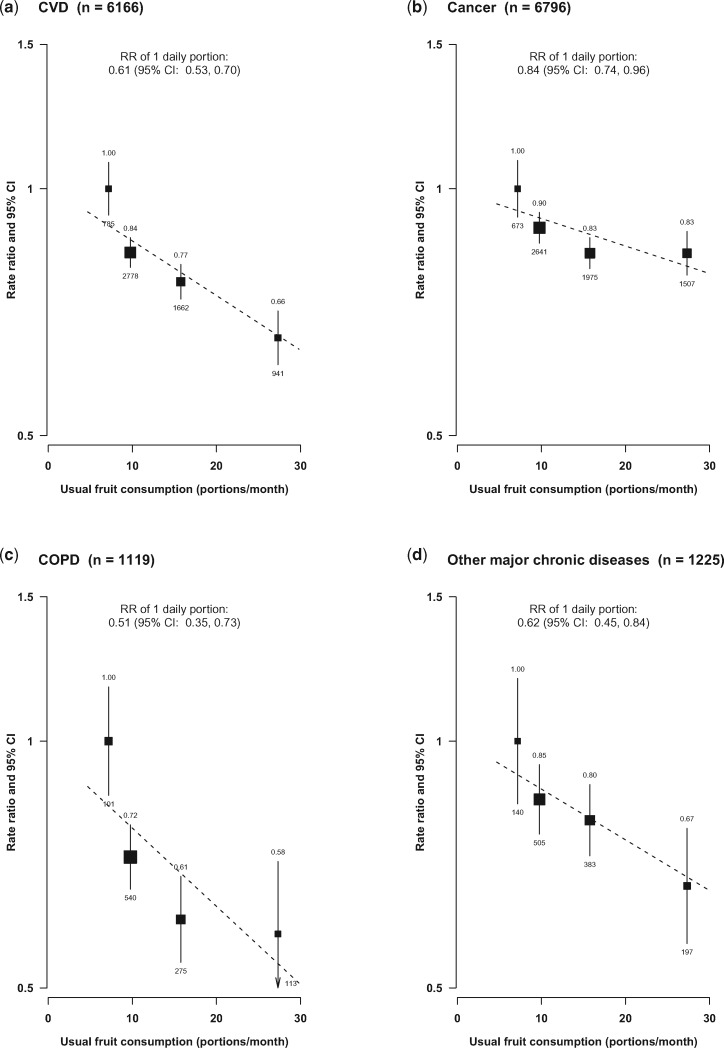
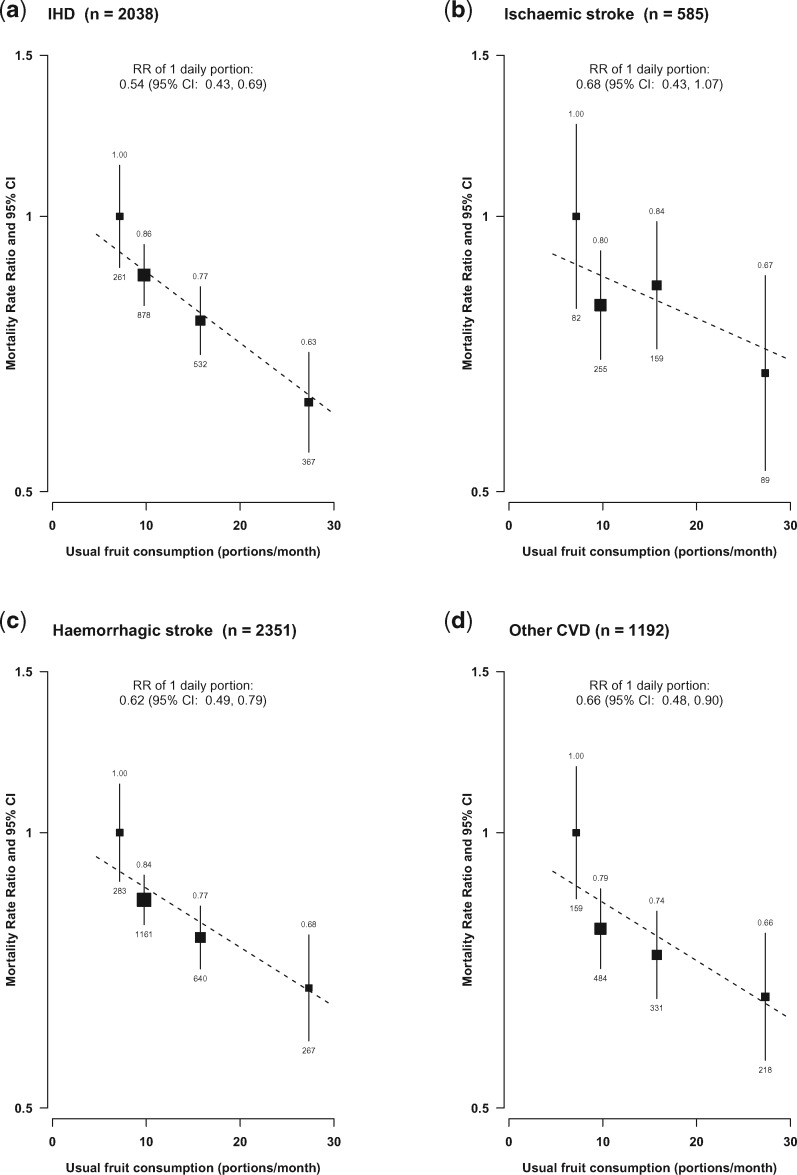
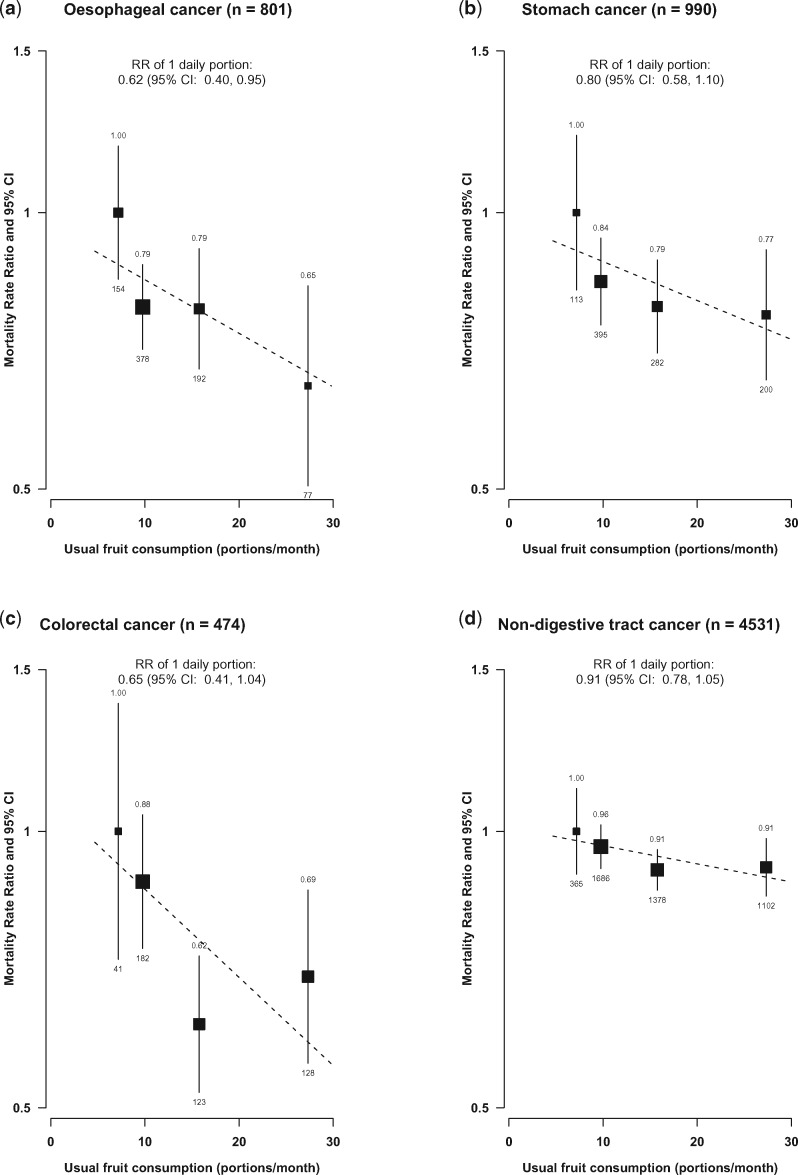
Results: At baseline, 28% of participants reported consuming fruit ≥ 4 days/week (regular consumers) and 6% reported never/rarely consuming fruit (non-consumers). Compared with non-consumers, regular consumers had 27% [RR = 0.73, 95% confidence interval (CI) 0.70-0.76] lower all-cause mortality, 34% lower CVD mortality (n = 6166; RR = 0.66, 0.61-0.71), 17% lower cancer mortality (n = 6796; RR = 0.83, 0.78-0.89) and 42% lower mortality from chronic obstructive pulmonary disease (COPD) (n = 1119; RR = 0.58, 0.47-0.71). For each of the above, there was an approximately log-linear dose-response relationship with amount consumed. For mortality from site-specific cancers, fruit consumption was inversely associated with digestive tract cancer (n = 2265; RR = 0.72, 0.64-0.81), particularly oesophageal cancer (n = 801; RR = 0.65, 0.50-0.83), but not with cancer of lung or liver.
Conclusions: Among Chinese adults, higher fresh fruit consumption was associated with significantly lower mortality from several major vascular and non-vascular diseases. Given the current low population level of fruit consumption, substantial health benefits could be gained from increased fruit consumption in China.
Keywords: China; Fruit; cohort studies; mortality; prospective studies.
© The Author 2017; Published by Oxford University Press on behalf of the International Epidemiological Association
Figures
References
-
- Xiao Y, Su C, Ouyang Y, Zhang B. Trend of vegetables and fruits consumption among Chinese adults aged 18 to 44 years old from 1991 to 2011. Chin J Epidemiol 2015;36:232–36. - PubMed
Publication types
MeSH terms
Grants and funding
LinkOut - more resources
Full Text Sources
Other Literature Sources
