


A randomized, placebo- and sitagliptin-controlled trial of the safety and efficacy of omarigliptin, a once-weekly dipeptidyl peptidase-4 inhibitor, in Japanese patients with type 2 diabetes
- PMID: 28449368
- PMCID: PMC5655696
- DOI: 10.1111/dom.12988
A randomized, placebo- and sitagliptin-controlled trial of the safety and efficacy of omarigliptin, a once-weekly dipeptidyl peptidase-4 inhibitor, in Japanese patients with type 2 diabetes
Abstract
Aims: To assess the safety and efficacy of omarigliptin in Japanese patients with type 2 diabetes (T2D).
Methods: In a 24-week double-blind trial, 414 patients with T2D were randomized to omarigliptin 25 mg once weekly, sitagliptin 50 mg once daily or placebo. The double-blind period was followed by a 28-week open-label extension during which all patients received omarigliptin 25 mg once weekly. Efficacy endpoints were glycated haemoglobin (HbA1c), 2-hour postprandial glucose (PPG) and fasting plasma glucose (FPG) levels.
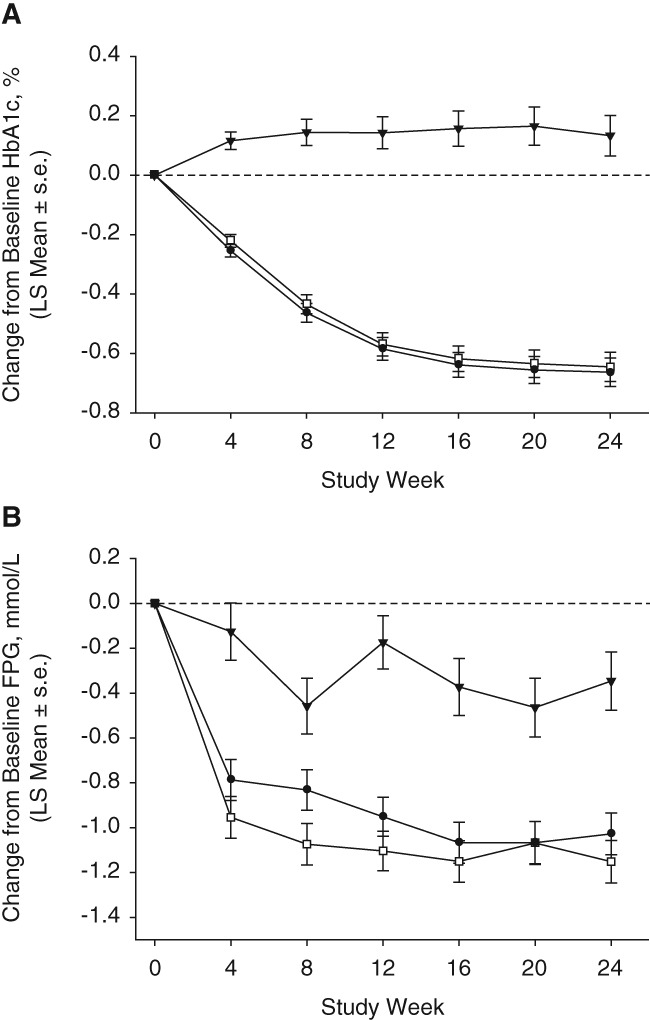
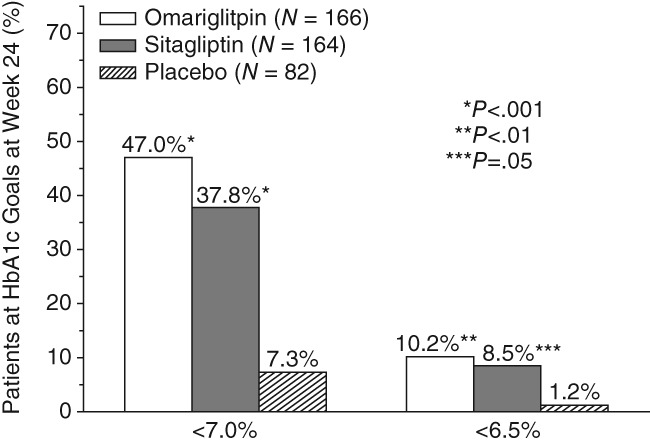
Results: After 24 weeks, the least squares (LS) mean change from baseline in HbA1c was -0.66% for omarigliptin, -0.65% for sitagliptin and 0.13% for placebo. The difference in LS mean for omarigliptin vs placebo was -0.80% ( P < .001). The difference in LS mean for omarigliptin vs sitagliptin was -0.02% (95% confidence interval -0.15, 0.12), which met the criterion for non-inferiority to sitagliptin. Both active treatments provided significant reductions in FPG and 2-hour PPG compared with placebo (P < .001). Over the 24-week double-blind period, there were no clinically meaningful differences in the incidence rates of adverse events among the treatment groups. There was 1 episode of symptomatic hypoglycaemia in the sitagliptin group and none in the omarigliptin or placebo groups. In the 28-week open-label period, omarigliptin provided persistent improvements in glycaemic control without notable change in safety profile compared with the double-blind period. Omarigliptin had no meaningful effect on body weight.
Conclusions: In Japanese patients with T2D, omarigliptin 25 mg once weekly provided significant glucose-lowering compared with placebo and was non-inferior to sitagliptin 50 mg once daily. Omarigliptin was generally well tolerated for up to 52 weeks.
Trial registration: ClinicalTrials.gov NCT01703221.
Keywords: MK-3102; incretins; oral antihyperglycaemic agent.
© 2017 The Authors. Diabetes, Obesity and Metabolism published by John Wiley & Sons Ltd.
Conflict of interest statement
All authors are employees of MSD K.K. or Merck Sharp & Dohme Corp., subsidiaries of Merck & Co., Inc., Kenilworth, New Jersey, who may own stock and/or hold stock options in the Company.
Figures
References
-
- Biftu T, Sinha‐Roy R, Chen P, et al. Omarigliptin (MK‐3102): a novel long‐acting DPP‐4 inhibitor for once weekly treatment of type 2 diabetes. J Med Chem. 2014;57(8):3205‐3212. - PubMed
-
- Pratley RE, Salsali A. Inhibition of DPP‐4: a new therapeutic approach for the treatment of type 2 diabetes. Curr Med Res Opin. 2007;23(4):919‐931. - PubMed
-
- Liang KY, Zeger SL. Longitudinal data analysis of continuous and discrete responses for pre‐post designs. Indian J Stat. 2000;62:134‐148.
-
- Miettinen O, Nurminen M. Comparative analysis of two rates. Stat Med. 1985;4(2):213‐226. - PubMed
Publication types
MeSH terms
Substances
Associated data
LinkOut - more resources
Full Text Sources
Other Literature Sources
Medical
Miscellaneous
