Effect of Proparacaine in a Mouse Model of Allergic Rhinitis
- PMID: 28449552
- PMCID: PMC5678040
- DOI: 10.21053/ceo.2017.00101
Effect of Proparacaine in a Mouse Model of Allergic Rhinitis
Abstract
Objectives: Lidocaine, a local anaesthetic is a treatment option in uncontrolled asthma due to its immunomodulatory effects. In the present study, proparacaine (PPC), a derivative of lidocaine was examined for its therapeutic application in a mouse model of allergic rhinitis.
Methods: The mice were grouped into 4 groups: control group, allergic rhinitis (AR) group, ciclesonide (CIC) group, and PPC group. Nasal symptom scores, eosinophil counts, goblet cell counts, and mast cells counts in the nasal mucosa were measured. Serum ovalbumin (OVA)-specific immunoglobulin (Ig) E, OVA-specific IgG1, OVA-specific IgG2a, interleukin (IL)-4, IL-5, and cortisol levels were measured.
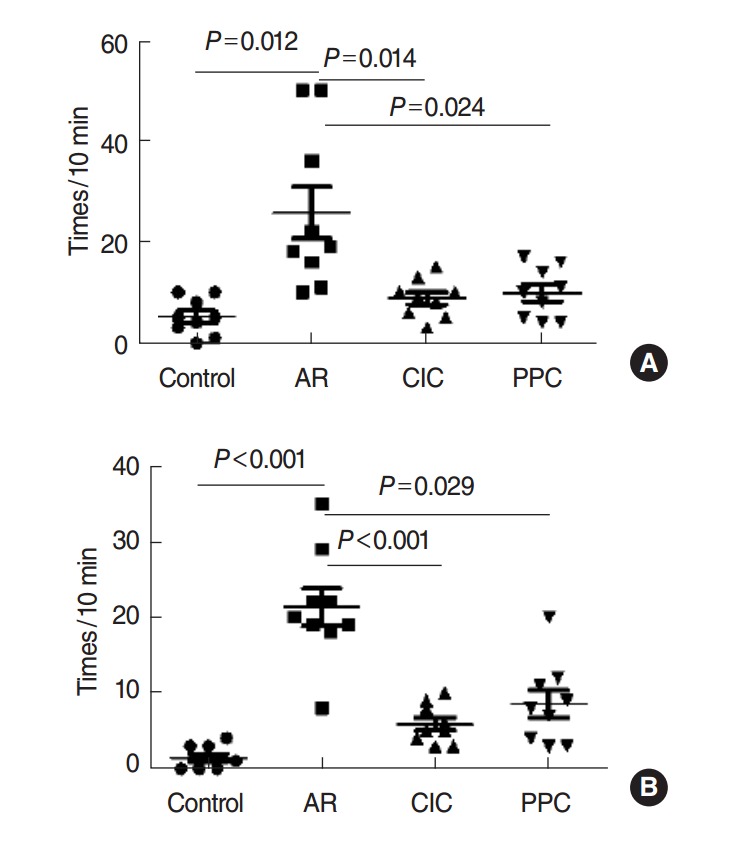
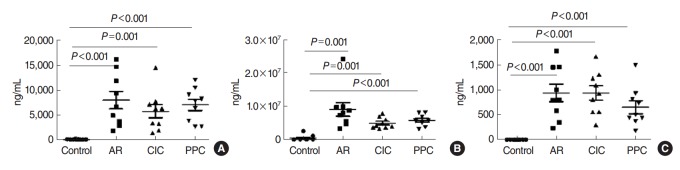
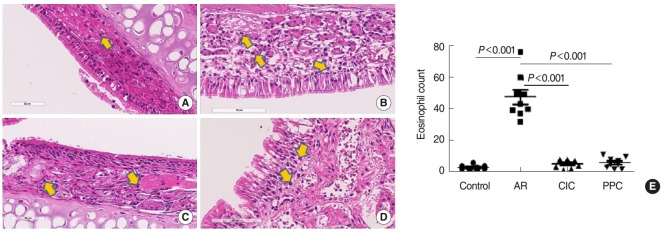
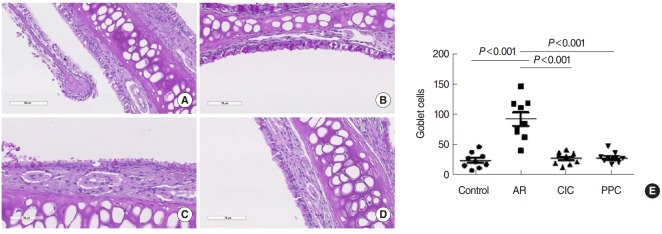
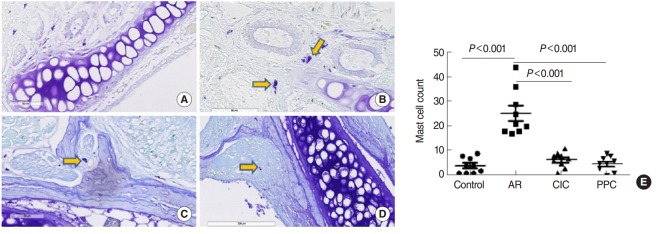
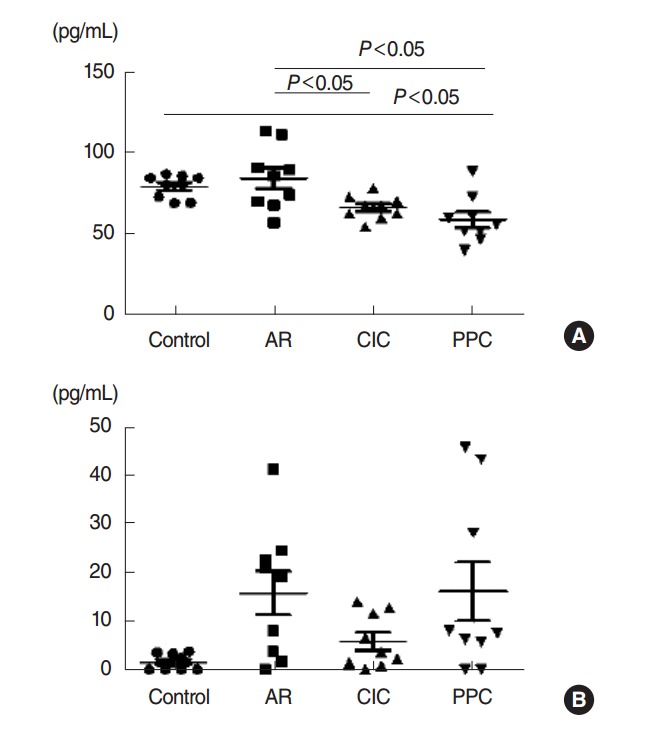
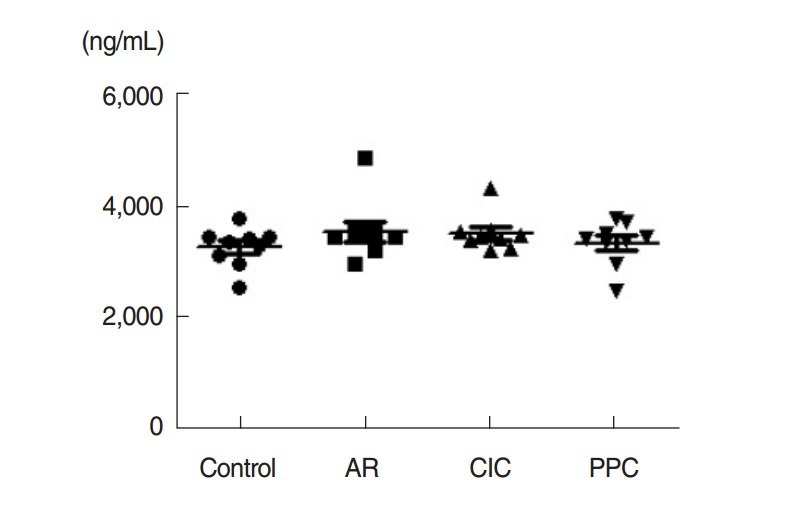
Results: Intranasal administration of PPC significantly decreased nasal symptoms, number of eosinophils, goblet cells, and mast cells in the lamina propria of the nasal mucosa. Serum OVA-specific IgE, OVA-specific IgG1, OVA-specific IgG2a was significantly higher in the AR compared with the control group. Serum level of IL-4 was significantly lower in the CIC group and PPC group in comparison with AR group. Serum IL-5 showed no significant difference among all groups. No significant difference in serum cortisol levels was observed among the 4 groups.
Conclusion: PPC appears to have a therapeutic potential in treatment of allergic rhinitis in a mouse model by reducing eosinophil, goblet cell, and mast cell infiltration in the nasal mucosa.
Keywords: Allergic Rhinitis; Ciclesonide; Mice; Ovalbumin; Proparacaine.
Conflict of interest statement
No potential conflict of interest relevant to this article was reported.
Figures
References
-
- Bousquet J, Khaltaev N, Cruz AA, Denburg J, Fokkens WJ, Togias A, et al. Allergic Rhinitis and its Impact on Asthma (ARIA) 2008 update (in collaboration with the World Health Organization, GA(2)LEN and AllerGen) Allergy. 2008 Apr;63 Suppl 86:8–160. - PubMed
-
- Nicolaizik WH, Marchant JL, Preece MA, Warner JO. Endocrine and lung function in asthmatic children on inhaled corticosteroids. Am J Respir Crit Care Med. 1994 Sep;150(3):624–8. - PubMed
-
- Phillip M, Aviram M, Leiberman E, Zadik Z, Giat Y, Levy J, et al. Integrated plasma cortisol concentration in children with asthma receiving long-term inhaled corticosteroids. Pediatr Pulmonol. 1992 Feb;12(2):84–9. - PubMed
-
- Toogood JH, Jennings B, Hodsman AB, Baskerville J, Fraher LJ. Effects of dose and dosing schedule of inhaled budesonide on bone turnover. J Allergy Clin Immunol. 1991 Oct;88(4):572–80. - PubMed
-
- Okada S, Hagan JB, Kato M, Bankers-Fulbright JL, Hunt LW, Gleich GJ, et al. Lidocaine and its analogues inhibit IL-5-mediated survival and activation of human eosinophils. J Immunol. 1998 Apr;160(8):4010–7. - PubMed
LinkOut - more resources
Full Text Sources
Other Literature Sources
Research Materials
Miscellaneous