


Utility of Post-Mortem Genetic Testing in Cases of Sudden Arrhythmic Death Syndrome
- PMID: 28449774
- PMCID: PMC5405216
- DOI: 10.1016/j.jacc.2017.02.046
Utility of Post-Mortem Genetic Testing in Cases of Sudden Arrhythmic Death Syndrome
Abstract
Background: Sudden arrhythmic death syndrome (SADS) describes a sudden death with negative autopsy and toxicological analysis. Cardiac genetic disease is a likely etiology.
Objectives: This study investigated the clinical utility and combined yield of post-mortem genetic testing (molecular autopsy) in cases of SADS and comprehensive clinical evaluation of surviving relatives.
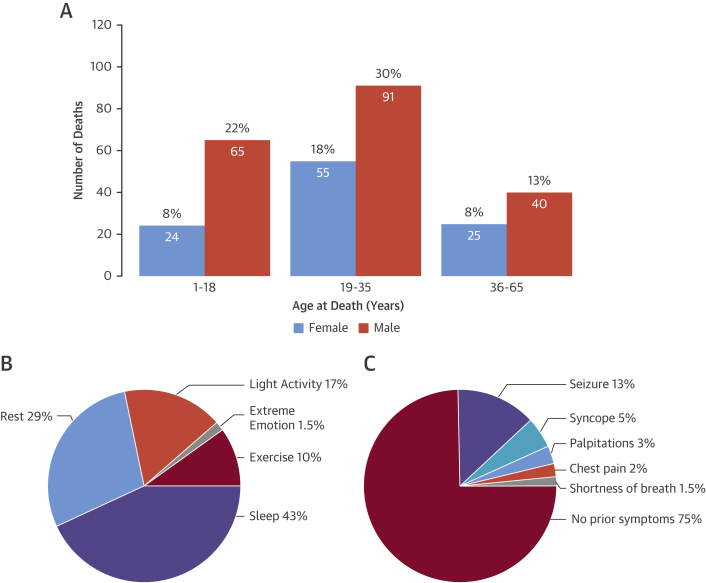
Methods: We evaluated 302 expertly validated SADS cases with suitable DNA (median age: 24 years; 65% males) who underwent next-generation sequencing using an extended panel of 77 primary electrical disorder and cardiomyopathy genes. Pathogenic and likely pathogenic variants were classified using American College of Medical Genetics (ACMG) consensus guidelines. The yield of combined molecular autopsy and clinical evaluation in 82 surviving families was evaluated. A gene-level rare variant association analysis was conducted in SADS cases versus controls.
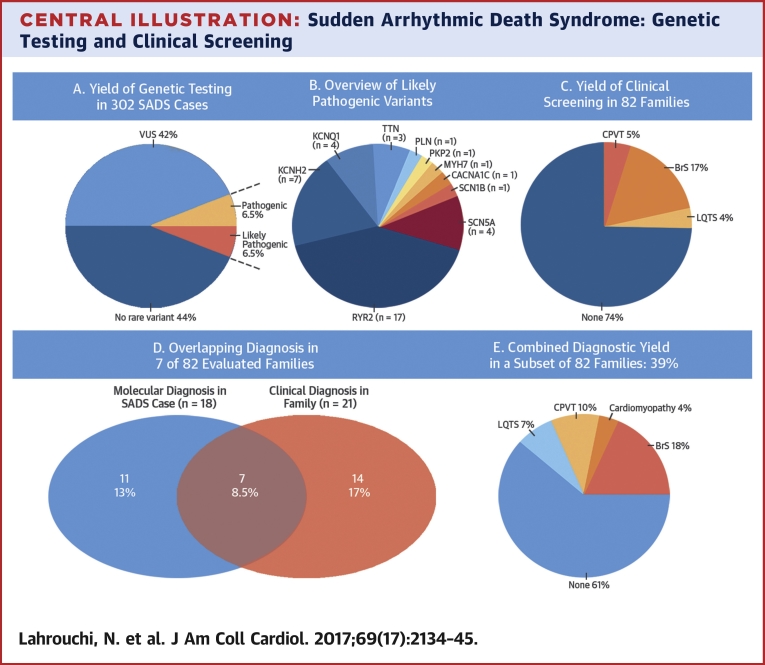
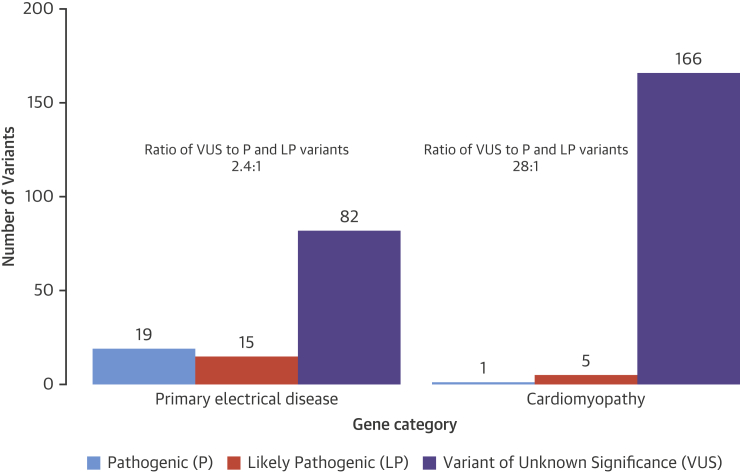
Results: A clinically actionable pathogenic or likely pathogenic variant was identified in 40 of 302 cases (13%). The main etiologies established were catecholaminergic polymorphic ventricular tachycardia and long QT syndrome (17 [6%] and 11 [4%], respectively). Gene-based rare variants association analysis showed enrichment of rare predicted deleterious variants in RYR2 (p = 5 × 10⁻⁵). Combining molecular autopsy with clinical evaluation in surviving families increased diagnostic yield from 26% to 39%.
Conclusions: Molecular autopsy for electrical disorder and cardiomyopathy genes, using ACMG guidelines for variant classification, identified a modest but realistic yield in SADS. Our data highlighted the predominant role of catecholaminergic polymorphic ventricular tachycardia and long QT syndrome, especially the RYR2 gene, as well as the minimal yield from other genes. Furthermore, we showed the enhanced utility of combined clinical and genetic evaluation.
Keywords: cardiomyopathy; channelopathy; molecular autopsy; next-generation sequencing; unexplained sudden death.
Copyright © 2017 The Authors. Published by Elsevier Inc. All rights reserved.
Figures
Comment in
-
Holistic Approach to Determine Cause of Autopsy-Negative Sudden Natural Death.J Am Coll Cardiol. 2017 May 2;69(17):2146-2148. doi: 10.1016/j.jacc.2017.01.068. J Am Coll Cardiol. 2017. PMID: 28449775 No abstract available.
References
-
- Bagnall R.D., Weintraub R.G., Ingles J. A prospective study of sudden cardiac death among children and young adults. N Engl J Med. 2016;374:2441–2452. - PubMed
-
- Semsarian C., Ingles J., Wilde A.A.M. Sudden cardiac death in the young: the molecular autopsy and a practical approach to surviving relatives. Eur Heart J. 2015;36:1290–1296. - PubMed
-
- Priori S.G., Wilde A.A., Horie M. HRS/EHRA/APHRS expert consensus statement on the diagnosis and management of patients with inherited primary arrhythmia syndromes. Heart Rhythm. 2013;10:1932–1963. - PubMed
-
- Bezzina C.R., Lahrouchi N., Priori S.G. Genetics of sudden cardiac death. Circ Res. 2015;116:1919–1936. - PubMed
MeSH terms
Grants and funding
LinkOut - more resources
Full Text Sources
Other Literature Sources
Medical
